
Pulp Fiction, 1924 · page 133 of 204
Adventure Magazine Cover — page 133: what you’re looking at
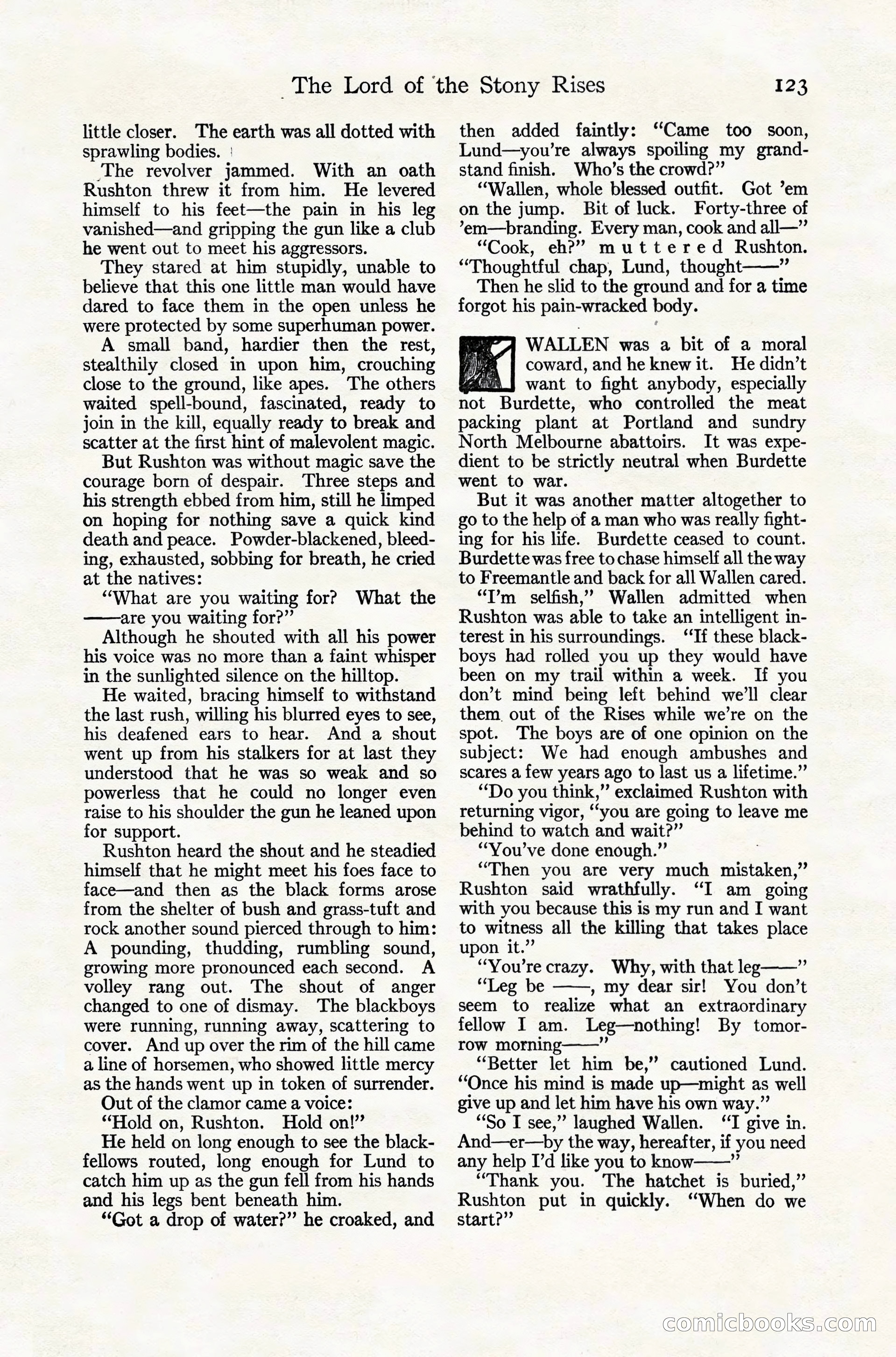
A restored page from Pulp Fiction, 1924. Page through the whole issue in the reader above.
📄 Transcribed text from this page (OCR, searchable)
Machine-transcribed from the original scan — historical spelling and the odd misread are preserved.
The Lord of the Stony Rises little closer. The earth was all dotted with sprawling bodies. | The revolver jammed. With an oath Rushton threw it from him. He levered himself to his feet—the pain in his leg vanished—and gripping the gun like a club he went out to meet his aggressors. They stared at him stupidly, unable to believe that this one little man would have dared to face them in the open unless he were protected by some superhuman power. A small band, hardier then the rest, stealthily closed in upon him, crouching close to the ground, like apes. The others waited spell-bound, fascinated, ready to join in the kill, equally ready to break and scatter at the first hint of malevolent magic. But Rushton was without magic save the courage born of despair. Three steps and his strength ebbed from him, still he limped on hoping for nothing save a quick kind death and peace. Powder-blackened, bleed- ing, exhausted, sobbing for breath, he cried at the natives: “What are you waiting for? What the are you waiting for?” Although he shouted with all his power his voice was no more than a faint whisper in the sunlighted silence on the hilltop. He waited, bracing himself to withstand the last rush, willing his blurred eyes to see, his deafened ears to hear. And a shout went up from his stalkers for at last they understood that he was so weak and so powerless that he could no longer even raise to his shoulder the gun he leaned upon for support. Rushton heard the shout and he steadied himself that he might meet his foes face to face—and then as the black forms arose from the shelter of bush and grass-tuft and rock another sound pierced through to him: A pounding, thudding, rumbling sound, growing more pronounced each second. A volley rang out. The shout of anger changed to one of dismay. The blackboys were running, running away, scattering to cover. And up over the rim of the hill came a line of horsemen, who showed little mercy as the hands went up in token of surrender. Out of the clamor came a voice: “Hold on, Rushton. Hold on!” He held on long enough to see the black- fellows routed, long enough for Lund to catch him up as the gun fell from his hands and his legs bent beneath him. “Got a drop of water?” he croaked, and 123 then added faintly: ‘Came too soon, Lund—you’re always spoiling my grand- stand finish. Who’s the crowd?” ‘Wallen, whole blessed outfit. Got ’em on the jump. Bit of luck. Forty-three of ’em—branding. Every man, cook and all—”’ “Cook, eh?”?’ muttered Rushton. “Thoughtful chap, Lund, thought——” Then he slid to the ground and for a time forgot his pain-wracked body. WALLEN was a bit of a moral coward, and he knewit. He didn’t <i} want to fight anybody, especially hot Burdette, who controlled the meat packing plant at Portland and sundry North Melbourne abattoirs. It was expe- dient to be strictly neutral when Burdette went to war. But it was another matter altogether to go to the help of a man who was really fight- ing for his life. Burdette ceased to count. Burdette was free to chase himself all the way to Freemantle and back for all Wallen cared. “I’m selfish,” Wallen admitted when Rushton was able to take an intelligent in- terest in his surroundings. ‘‘If these black- boys had rolled you up they would have been on my trail within a week. If you don’t mind being left behind we'll clear them out of the Rises while we’re on the spot. The boys are of one opinion on the subject: We had enough ambushes and scares a few years ago to last us a lifetime.” “Do you think,” exclaimed Rushton with returning vigor, “‘you are going to leave me behind to watch and wait?” ‘“You’ve done enough.” “Then you are very much mistaken,” Rushton said wrathfully. “I am _ going with you because this is my run and I want to witness all the killing that takes place upon it.” “You're crazy. Why, with that lege——”’ “Leg be , my dear sir! You don’t seem to realize what an extraordinary fellow I am. Leg—nothing! By tomor- row morning——”’ “Better let him be,’ cautioned Lund. “Once his mind is made up—might as well give up and let him have his own way.” “So I see,” laughed Wallen. “TI give in. And—er—by the way, hereafter, if you need any help I’d like you to know “Thank you. The hatchet is buried,” Rushton put in quickly. ‘When do we start?” NOOK 1 @)