
Pulp Fiction, 1924 · page 91 of 204
Adventure Magazine Cover — page 91: what you’re looking at
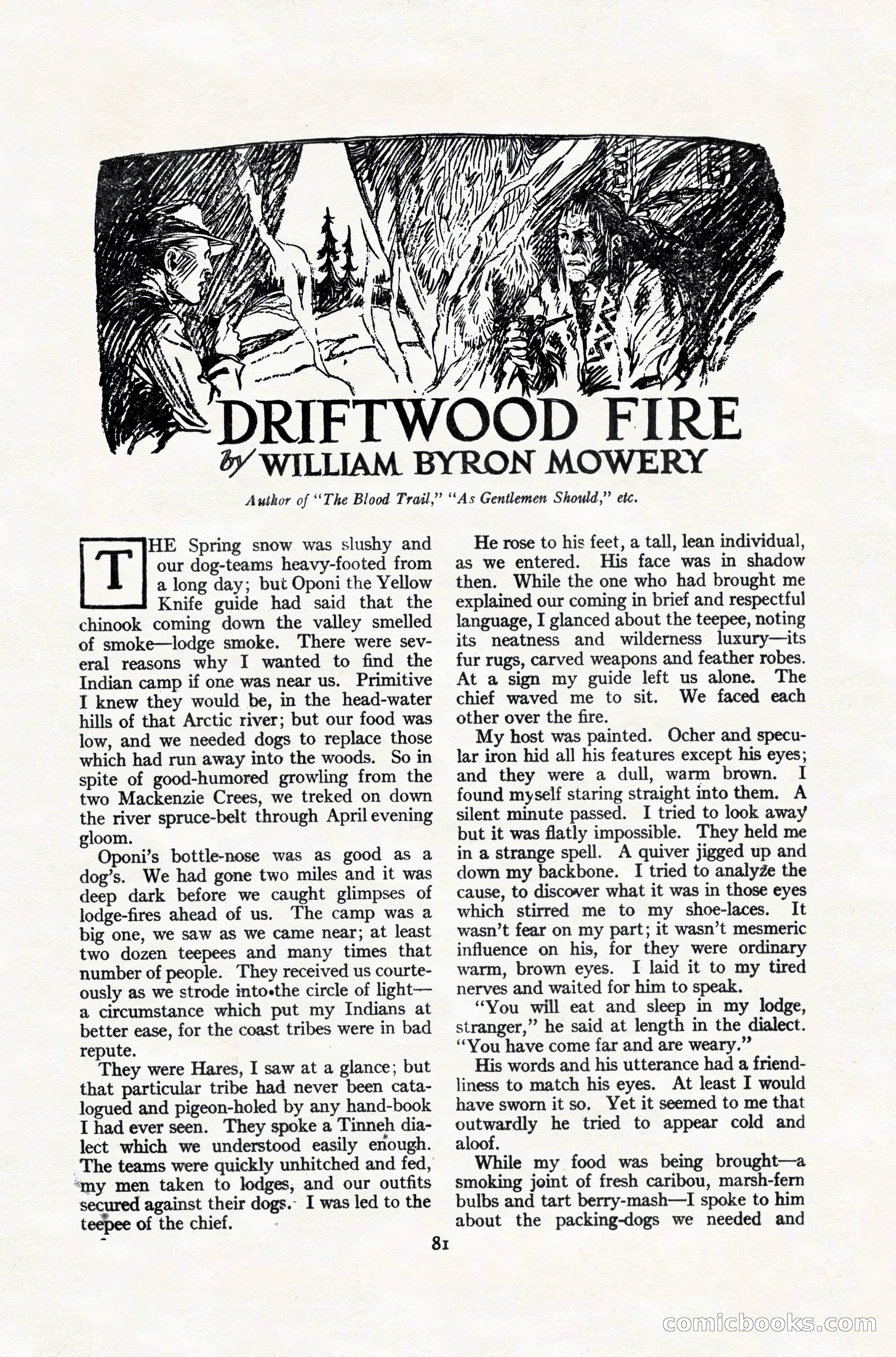
A restored page from Pulp Fiction, 1924. Page through the whole issue in the reader above.
📄 Transcribed text from this page (OCR, searchable)
Machine-transcribed from the original scan — historical spelling and the odd misread are preserved.
iY f' i Cas \ 7 .N N D\\ ‘\ ; A / ys te = F f; YY, ‘h BN i We ae, Ae A \ P ek, ; & “A SA ‘ . AAE ‘4 ce & * 4/5 me) | x ; N \ « i J eet cg * ory r 44.0 e om) P . g , ‘| ° aay a <a +i f yf FIR bY WILLIAM BYRON MOWERY Author of ‘The Blood Trail,” ‘“‘As Gentlemen Should,” etc. HE Spring snow was slushy and T our dog-teams heavy-footed from a long day; but Oponi the Yellow Knife guide had said that the chinook coming down the valley smelled of smoke—lodge smoke. There were sev- eral reasons why I wanted to find the Indian camp if one was near us. Primitive I knew they would be, in the head-water hills of that Arctic river; but our food was low, and we needed dogs to replace those which had run away into the woods. So in spite of good-humored growling from the two Mackenzie Crees, we treked on down the river spruce-belt through April evening gloom. Oponi’s bottle-nose was as good as a dog’s. We had gone two miles and it was deep dark before we caught glimpses of lodge-fires ahead of us. The camp was a big one, we saw as we came near; at least two dozen teepees and many times that number of people. They received us courte- ously as we strode intoethe circle of light— a circumstance which put my Indians at better ease, for the coast tribes were in bad repute. They were Hares, I saw at a glance; but that particular tribe had never been cata- logued and pigeon-holed by any hand-book I had ever seen. They spoke a Tinneh dia- lect which we understood easily enough. The teams were quickly unhitched and fed, ‘my men taken to lodges, and our outfits secured against their dogs.- I was led to the teepee of the chief. 81 He rose to his feet, a tall, lean individual, as we entered. His face was in shadow then. While the one who had brought me explained our coming in brief and respectful language, I glanced about the teepee, noting its neatness and wilderness luxury—its fur rugs, carved weapons and feather robes. At a sign my guide left us alone. The chief waved me to sit. We faced each other over the fire. My host was painted. Ocher and specu- lar iron hid all his features except his eyes; and they were a dull, warm brown. I found myself staring straight into them. A silent minute passed. I tried to look away but it was flatly impossible. They held me in a strange spell. A quiver jigged up and down my backbone. I tried to analyZe the cause, to discover what it was in those eyes which stirred me to my shoe-laces. It wasn’t fear on my part; it wasn’t mesmeric influence on his, for they were ordinary warm, brown eyes. [I laid it to my tired nerves and waited for him to speak. “Vou will eat and sleep in my lodge, stranger,” he said at length in the dialect. “You have come far and are weary.” His words and his utterance had a friend- liness to match his eyes. At least I would have sworn it so. Yet it seemed to me that outwardly he tried to appear cold and aloof. While my food was being brought—a smoking joint of fresh caribou, marsh-fern bulbs and tart berry-mash—I spoke to him about the packing-dogs we needed and Go NOOK C©