
Pulp Fiction, 1924 · page 124 of 194
Adventure Magazine Cover, November 10, 1924 — page 124: what you’re looking at
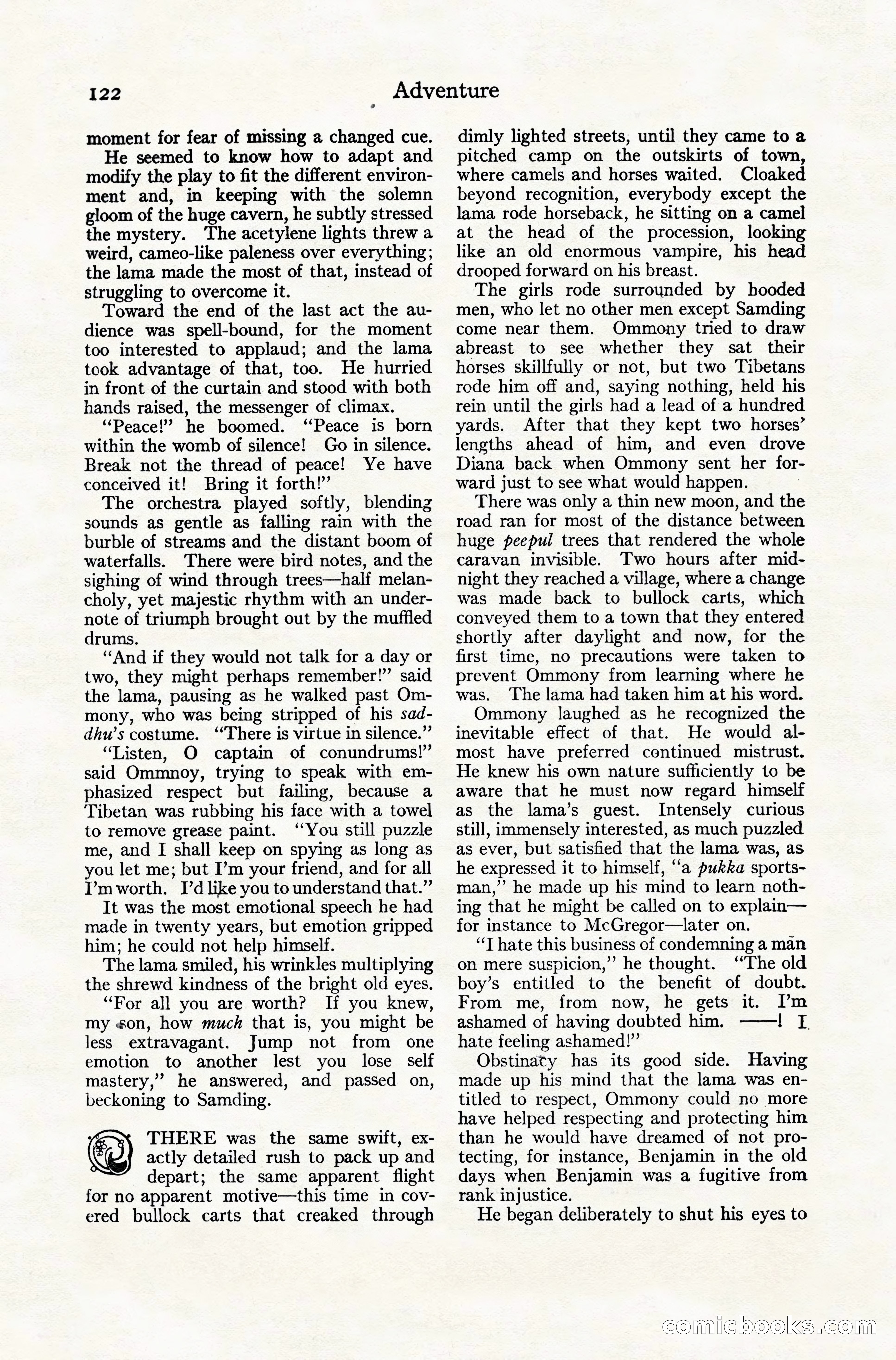
A restored page from Pulp Fiction, 1924. Page through the whole issue in the reader above.
📄 Transcribed text from this page (OCR, searchable)
Machine-transcribed from the original scan — historical spelling and the odd misread are preserved.
122 moment for fear of missing 2 changed cue. He seemed to know how to adapt and modify the play to fit the different environ- ment and, in keeping with the solemn gloom of the huge cavern, he subtly stressed the mystery. The acetylene lights threw a weird, cameo-like paleness over everything; the lama made the most of that, instead of struggling to overcome it. Toward the end of the last act the au- dience was spell-bound, for the moment too interested to applaud; and the lama took advantage of that, too. He hurried in front of the curtain and stood with both hands raised, the messenger of climax. ‘“‘Peace!” he boomed. ‘Peace is born within the womb of silence! Go in silence. Break not the thread of peace! Ye have conceived it! Bring it forth!” The orchestra played softly, blending sounds as gentle as falling rain with the burble of streams and the distant boom of waterfalls. There were bird notes, and the sighing of wind through trees—half melan- choly, yet majestic rhythm with an under- note of triumph brought out by the muffled drums. “And if they would not talk for a day or two, they might perhaps remember!” said the lama, pausing as he walked past Om- mony, who was being stripped of his sad- dhu’s costume. ‘There is virtue in silence.”’ “Listen, O captain of conundrums!” said Ommnoy, trying to speak with em- phasized respect but failing, because a Tibetan was rubbing his face with a towel to remove grease paint. ‘You still puzzle me, and I shall keep on spying as long as you let me; but I’m your friend, and for all V’mworth. Id like you to understand that.” It was the most emotional speech he had made in twenty years, but emotion gripped him; he could not help himself. The lama smiled, his wrinkles multiplying the shrewd kindness of the bright old eyes. “For all you are worth? If you knew, my son, how much that is, you might be less extravagant. Jump not from one emotion to another lest you lose self mastery,” he answered, and passed on, beckoning to Samding. &) actly detailed rush to pack up and depart; the same apparent flight for no apparent motive—this time in cov- ered bullock carts that creaked through THERE was the same swift, ex- Adventure dimly lighted streets, until they came to a pitched camp on the outskirts of town, where camels and horses waited. Cloaked beyond recognition, everybody except the lama rode horseback, he sitting on a camel at the head of the procession, looking like an old enormous vampire, his head drooped forward on his breast. The girls rode surrounded by hooded men, who let no other men except Samding come near them. Ommony tried to draw abreast to see whether they sat their horses skillfully or not, but two Tibetans rode him off and, saying nothing, held his rein until the girls had a lead of a hundred yards. After that they kept two horses’ lengths ahead of him, and even drove Diana back when Ommony sent her for- ward just to see what would happen. There was only a thin new moon, and the road ran for most of the distance between huge peepul trees that rendered the whole caravan invisible. Two hours after mid- night they reached a village, where a change was made back to bullock carts, which conveyed them to a town that they entered shortly after daylight and now, for the first time, no precautions were taken to prevent Ommony from learning where he was. The lama had taken him at his word. Ommony laughed as he recognized the inevitable effect of that. He would al- most have preferred continued mistrust. He knew his own nature sufficiently to be aware that he must now regard himself as the lama’s guest. Intensely curious still, immensely interested, as much puzzled as ever, but satisfied that the lama was, as he expressed it to himself, “a pukka sports- man,” he made up his mind to learn noth- ing that he might be called on to explain— for instance to McGregor—later on. “T hate this business of condemning a man on mere suspicion,” he thought. ‘The old boy’s entitled to the benefit of doubt. From me, from now, he gets it. [I’m ashamed of having doubted him. ——! I. hate feeling ashamed!” Obstinaty has its good side. Having made up his mind that the lama was en- titled to respect, Ommony could no more have helped respecting and protecting him than he would have dreamed of not pro- tecting, for instance, Benjamin in the old days when Benjamin was a fugitive from rank injustice. He began deliberately to shut his eyes to CoMmicboolk ) CO 5}