
Pulp Fiction, 1924 · page 96 of 194
Adventure Magazine Cover, November 10, 1924 — page 96: what you’re looking at
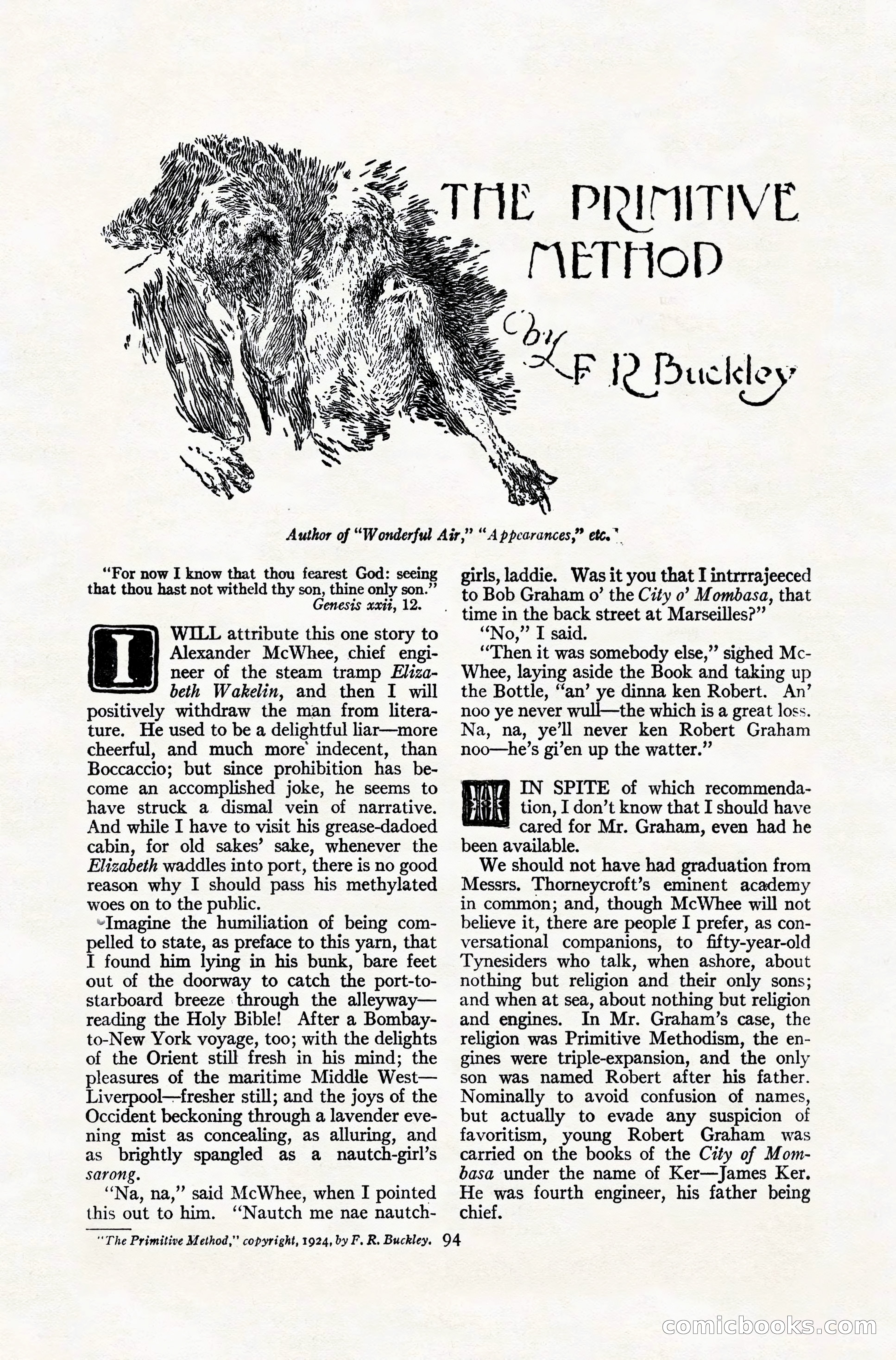
A restored page from Pulp Fiction, 1924. Page through the whole issue in the reader above.
📄 Transcribed text from this page (OCR, searchable)
Machine-transcribed from the original scan — historical spelling and the odd misread are preserved.
tte wy ue LAN ve Pe TNE PRIMITIVE METHOD i aN a Se an Ny ey i ed Weis eee hf ate ’ x tne rae = Som be Ke us i Mi 6 : | ‘ \S Ih Fr | 7 \ \ \\ % a | aN ay o.%, Ne Ye | ‘DEN <p I2 Duckley Author of “Wonderful Air,” “Appearances,” ete.” “For now I know that thou fearest God: seeing that thou hast not witheld thy son, thine only son.”’ Genesis xxit, 12. WILL attribute this one story to Alexander McWhee, chief engi- neer of the steam tramp Eliza- beth Wakelin, and then I will positively withdraw the man from litera- ture. He used to be a delightful liar—more cheerful, and much more’ indecent, than Boccaccio; but since prohibition has _ be- come an accomplished joke, he seems to have struck a dismal vein of narrative. And while I have to visit his grease-dadoed cabin, for old sakes’ sake, whenever the Elizabeth waddles into port, there is no good reason why I should pass his methylated woes on to the public. -Imagine the humiliation of being com- pelled to state, as preface to this yarn, that I found him lying in his bunk, bare feet out of the doorway to catch the port-to- starboard breeze through the alleyway— reading the Holy Bible! After a Bombay- to-New York voyage, too; with the delights of the Orient still fresh in his mind; the pleasures of the maritime Middle West— Liverpool—fresher still; and the joys of the Occident beckoning through a lavender eve- ning mist as concealing, as alluring, and as brightly spangled as a nautch-girl’s sarong. ‘“‘Na, na,” said McWhee, when I pointed this out to him. ‘“‘Nautch me nae nautch- girls, laddie. Was it you that I intrrrajeeced to Bob Graham o’ the City o’ Mombasa, that time in the back street at Marseilles?”’ “No,”’ I said. ‘“‘Then it was somebody else,” sighed Mc- Whee, laying aside the Book and taking up the Bottle, “an’ ye dinna ken Robert. An’ noo ye never wull—the which is a great loss. Na, na, ye’ll never ken Robert Graham noo—he’s gi’en up the watter.” yl iq tion, I don’t know that I should have * cared for Mr. Graham, even had he been available. We should not have had graduation from Messrs. Thorneycroft’s eminent academy in common; and, though McWhee will not believe it, there are people I prefer, as con- versational companions, to fifty-year-old Tynesiders who talk, when ashore, about nothing but religion and their only sons; and when at sea, about nothing but religion and engines. In Mr. Graham’s case, the religion was Primitive Methodism, the en- gines were triple-expansion, and the only son was named Robert after his father. Nominally to avoid confusion of names, but actually to evade any suspicion of favoritism, young Robert Graham was carried on the books of the City of Mom- basa under the name of Ker—James Ker. He was fourth engineer, his father being chief. ita IN SPITE of which recommenda- The Primitive Method,” copyright, 1924, by F. R. Buckley. 94 Go [NOO CO 5}