
Pulp Fiction, 1924 · page 89 of 216
Adventure Magazine, December 10, 1924 — page 89: what you’re looking at
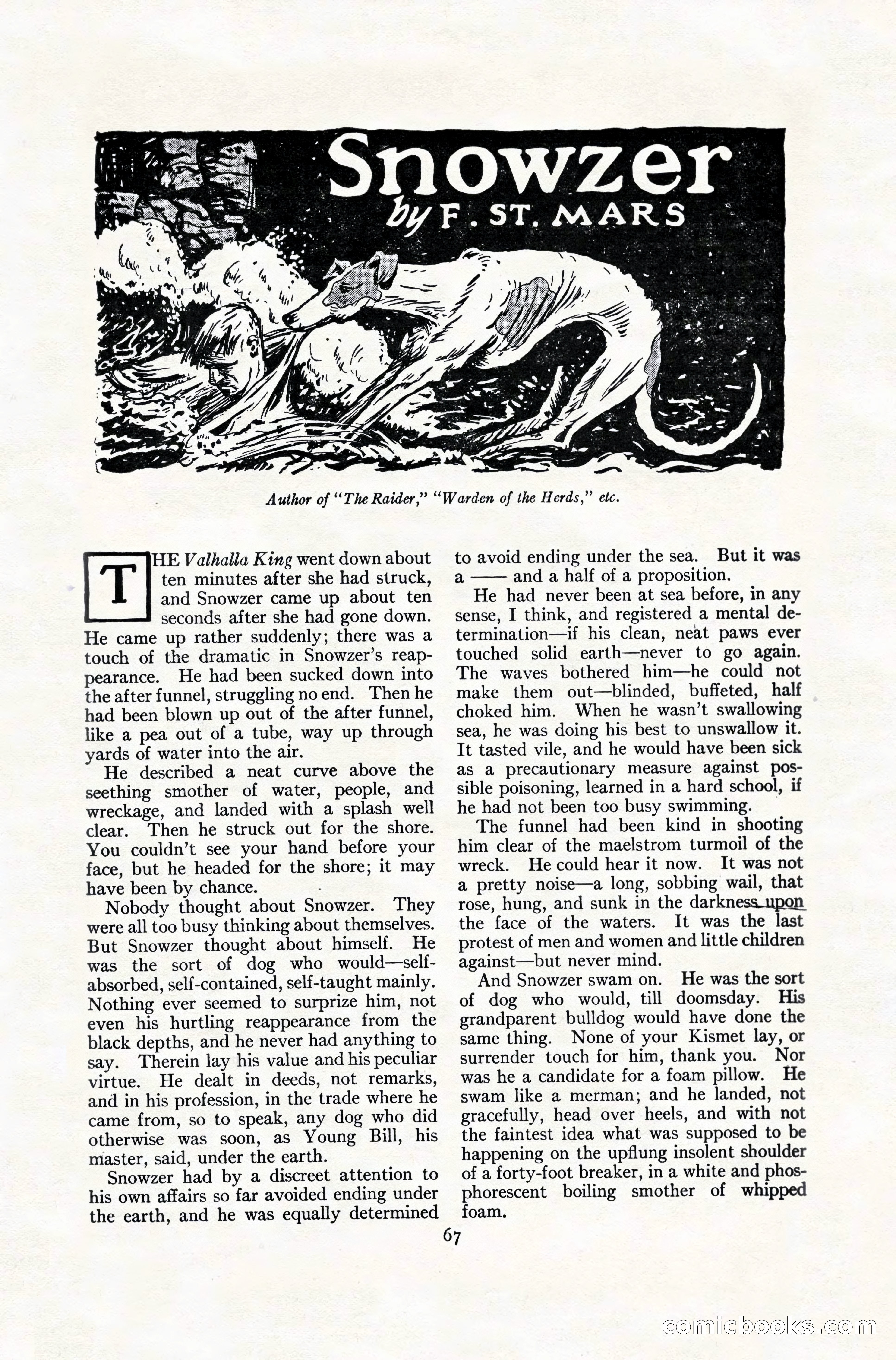
A restored page from Pulp Fiction, 1924. Page through the whole issue in the reader above.
📄 Transcribed text from this page (OCR, searchable)
Machine-transcribed from the original scan — historical spelling and the odd misread are preserved.
Ae a: a> : ve 3 MKS 1 fee, as t ‘ Author of ‘The Raider,” “Warden of the Herds,” etc. HE Valhalla King went down about T ten minutes after she had struck, and Snowzer came up about ten seconds after she had gone down. He came up rather suddenly; there was a touch of the dramatic in Snowzer’s reap- pearance. He had been sucked down into the after funnel, struggling noend. Then he had been blown up out of the after funnel, like a pea out of a tube, way up through yards of water into the air. He described a neat curve above the seething smother of water, people, and wreckage, and landed with a splash well clear. Then he struck out for the shore. You couldn’t see your hand before your face, but he headed for the shore; it may have been by chance. : Nobody thought about Snowzer. They were all too busy thinking about themselves. But Snowzer thought about himself. He was the sort of dog who would—self- absorbed, self-contained, self-taught mainly. Nothing ever seemed to surprize him, not even his hurtling reappearance from the black depths, and he never had anything to say. Therein lay his value and his peculiar virtue. He dealt in deeds, not remarks, and in his profession, in the trade where he came from, so to speak, any dog who did otherwise was soon, as Young Bill, his master, said, under the earth. Snowzer had by a discreet attention to his own affairs so far avoided ending under the earth, and he was equally determined But it was and a half of a proposition. He had never been at sea before, in any sense, I think, and registered a mental de- termination—if his clean, neat paws ever touched solid earth—never to go again. The waves bothered him—he could not make them out—blinded, buffeted, half choked him. When he wasn’t swallowing sea, he was doing his best to unswallow it. It tasted vile, and he would have been sick as a precautionary measure against pos- sible poisoning, learned in a hard school, if he had not been too busy swimming. The funnel had been kind in shooting him clear of the maelstrom turmoil of the wreck. He could hear it now. It was not a pretty noise—a long, sobbing wail, that rose, hung, and sunk in the darkness_upon the face of the waters. It was the last protest of men and women and little children against—but never mind. And Snowzer swam on. He was the sort of dog who would, till doomsday. His grandparent bulldog would have done the same thing. None of your Kismet lay, or surrender touch for him, thank you. Nor was he a candidate for a foam pillow. He swam like a merman; and he landed, not gracefully, head over heels, and with not the faintest idea what was supposed to be happening on the upflung insolent shoulder of a forty-foot breaker, in a white and phos- phorescent boiling smother of whipped foam. to avoid ending under the sea. a Eo [DOO S CO 5}