
Pulp Fiction, 1925 · page 151 of 212
Adventure Magazine Cover, March 20, 1925 — page 151: what you’re looking at
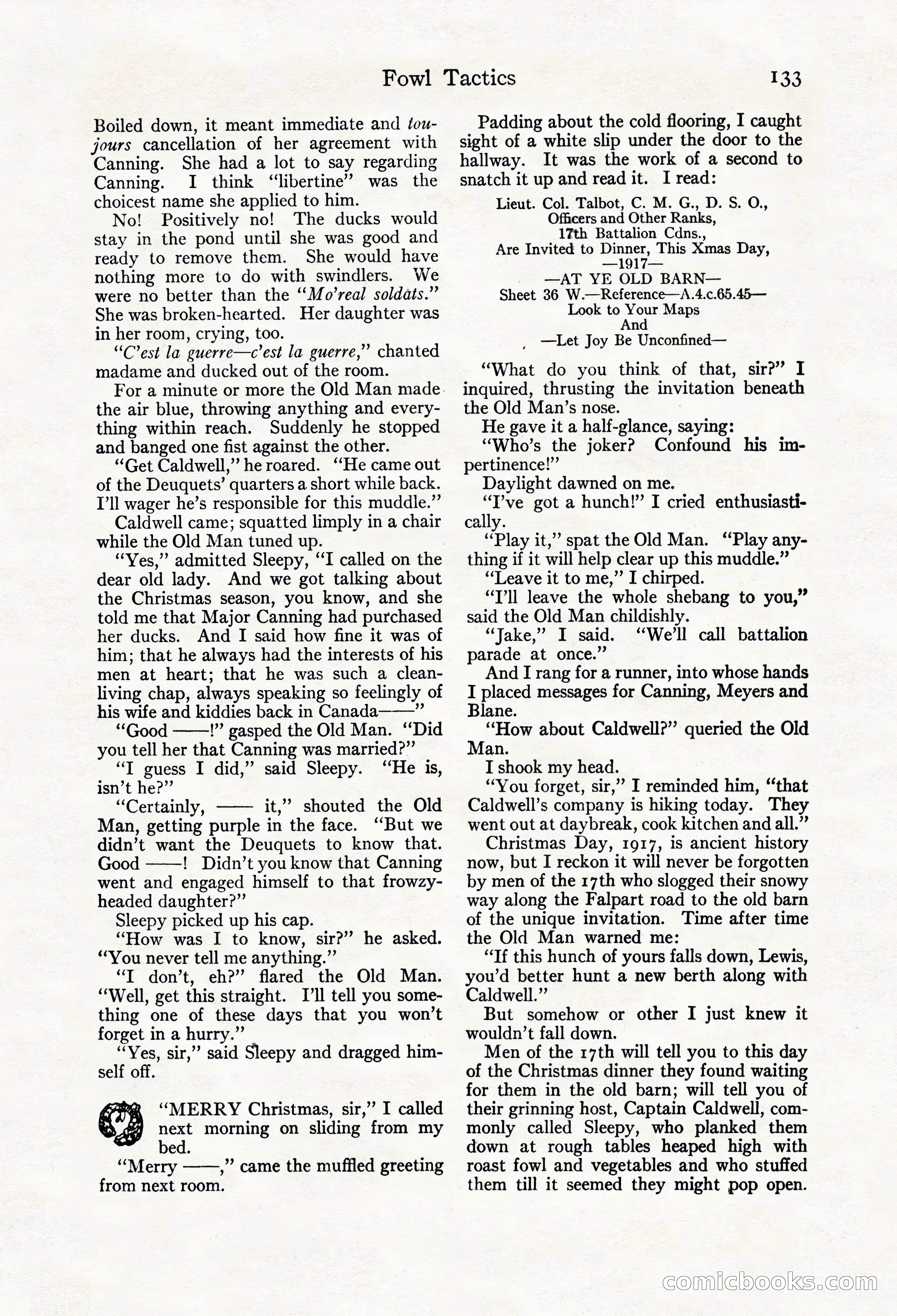
A restored page from Pulp Fiction, 1925. Page through the whole issue in the reader above.
📄 Transcribed text from this page (OCR, searchable)
Machine-transcribed from the original scan — historical spelling and the odd misread are preserved.
Fowl Tactics Boiled down, it meant immediate and fou- jours cancellation of her agreement with Canning. She had a lot to say regarding Canning. I think “libertine” was the choicest name she applied to him. No! Positively no! The ducks would stay in the pond until she was good and ready to remove them. She would have nothing more to do with swindlers. We were no better than the ‘‘Mo’real soldats.” She was broken-hearted. Her daughter was in her room, crying, too. “C'est la guerre—c’est la guerre,’ chanted madame and ducked out of the room. For a minute or more the Old Man made. the air blue, throwing anything and every- thing within reach. Suddenly he stopped and banged one fist against the other. “Get Caldwell,” he roared. “He came out of the Deuquets’ quarters a short while back. I’ll wager he’s responsible for this muddle.”’ Caldwell came; squatted limply in a chair while the Old Man tuned up. “Ves,” admitted Sleepy, “I called on the dear old lady. And we got talking about the Christmas season, you know, and she told me that Major Canning had purchased her ducks. And I said how fine it was of him; that he always had the interests of his men at heart; that he was such a clean- living chap, always speaking so feelingly of his wife and kiddies back in Canada ‘Good !”? gasped the Old Man. “Did you tell her that Canning was married?” “T guess I did,” said Sleepy. ‘He is, isn’t he?” “Certainly, it,’ shouted the Old Man, getting purple in the face. “But we didn’t want the Deuquets to know that. Good ——! Didn’t you know that Canning went and engaged himself to that frowzy- headed daughter?”’ Sleepy picked up his cap. “How was I to know, sir?” he asked. “You never tell me anything.” “T don’t, eh?” flared the Old Man. “Well, get this straight. I'll tell you some- thing one of these days that you won’t forget in a hurry.” “Ves, sir,” said Sleepy and dragged him- self off. next morning on sliding from my oe bed. “Merry ,’ came the muffled greeting from next room. “MERRY Christmas, sir,” I called 133 Padding about the cold flooring, I caught sight of a white slip under the door to the hallway. It was the work of a second to snatch it up and read it. I read: Lieut. Col. Talbot, C. M. G., D. S. O., Officers and Other Ranks, 17th Battalion Cdns., Are Invited to Dinner, This Xmas Day, —1917— . —AT YE OLD BARN— Sheet 36 W.—Reference—A.4.c.65.45— Look to Your Maps d An _ —Let Joy Be Unconfined— “What do you think of that, sir?’ I inquired, thrusting the invitation beneath the Old Man’s nose. : He gave it a half-glance, saying: ‘“‘Who’s the joker? Confound his im- pertinence!” Daylight dawned on me. “T’ve got a hunch!” I cried enthusiasti- cally. “Play it,” spat the Old Man. “Play any- thing if it will help clear up this muddle.” “Leave it to me,” I chirped. “T’ll leave the whole shebang to you,” said the Old Man childishly. “Jake,” I said. ‘We'll call battalion parade at once.” And IJ rang for a runner, into whose hands I placed messages for Canning, Meyers and Blane. “How about Caldwell?” queried the Old Man. I shook my head. “You forget, sir,”” I reminded him, “that Caldwell’s company is hiking today. They went out at daybreak, cook kitchen and all.” Christmas Day, 1917, is ancient history now, but I reckon it will never be forgotten by men of the 17th who slogged their snowy way along the Falpart road to the old barn of the unique invitation. Time after time the Old Man warned me: “Tf this hunch of yours falls down, Lewis, you’d better hunt a new berth along with Caldwell.” But somehow or other I just knew it wouldn’t fall down. Men of the 17th will tell you to this day of the Christmas dinner they found waiting for them in the old barn; will tell you of their grinning host, Captain Caldwell, com- monly called Sleepy, who planked them down at rough tables heaped high with roast fowl and vegetables and who stuffed them till it seemed they might pop open. ANICLOO©