
Pulp Fiction, 1925 · page 171 of 212
Adventure Magazine Cover, March 20, 1925 — page 171: what you’re looking at
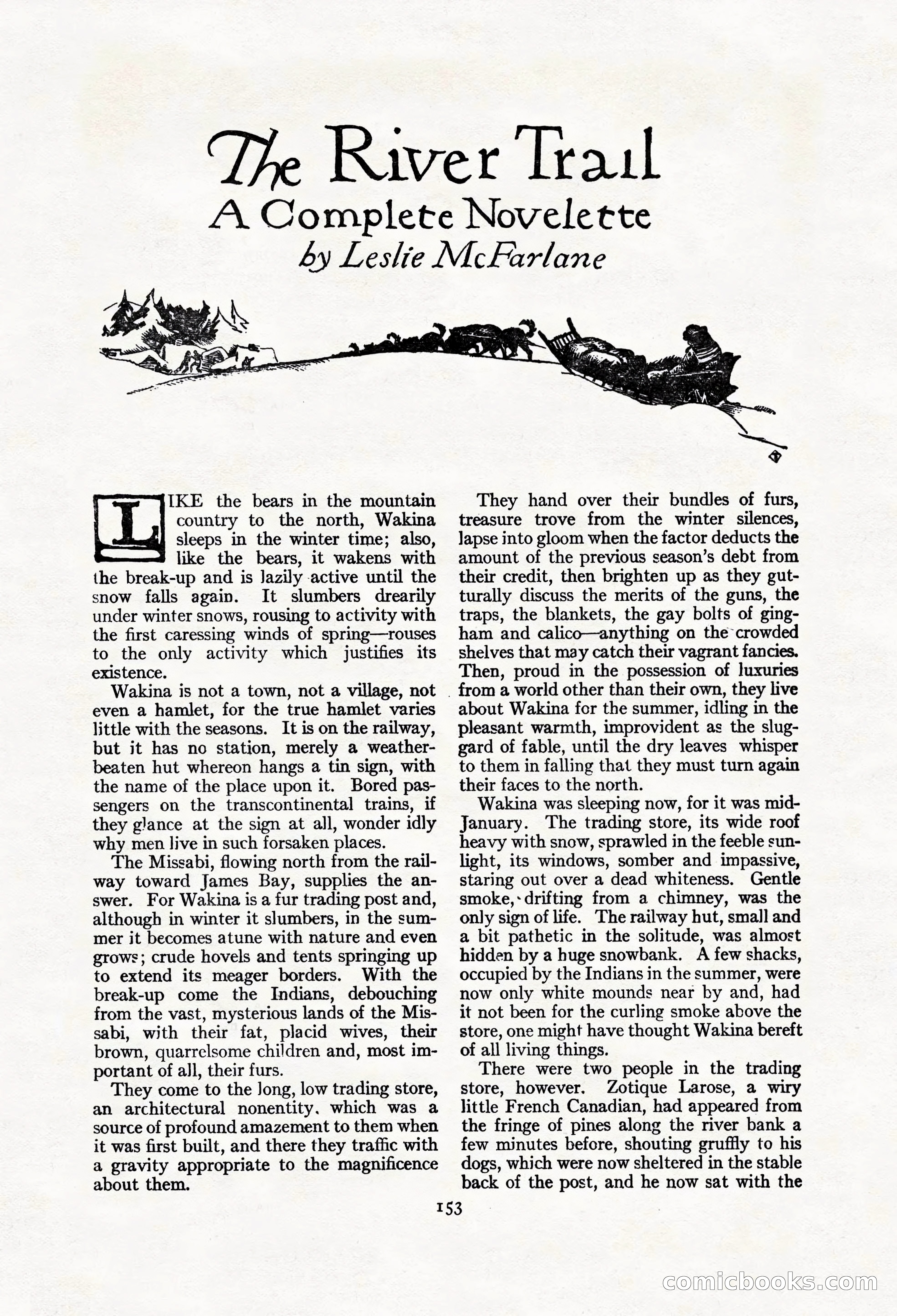
A restored page from Pulp Fiction, 1925. Page through the whole issue in the reader above.
📄 Transcribed text from this page (OCR, searchable)
Machine-transcribed from the original scan — historical spelling and the odd misread are preserved.
Tre Raver lrail A. Complete Novelette by Leslie McFarlane SUE Nae faa Sd IKE the bears in the mountain country to the north, Wakina sleeps in the winter time; also, like the bears, it wakens with the break-up and is Jazily active until the snow falls again. It slumbers drearily under winter snows, rousing to activity with the first caressing winds of spring—rouses to the only activity which justifies its existence. Wakina is not a town, not a village, not even a hamlet, for the true hamlet varies little with the seasons. It is on the railway, but it has no station, merely a weather- beaten hut whereon hangs a tin sign, with the name of the place upon it. Bored pas- sengers on the transcontinental trains, if they glance at the sign at all, wonder idly why men live in such forsaken places. The Missabi, flowing north from the rail- way toward James Bay, supplies the an- swer. For Wakina is a fur trading post and, although in winter it slumbers, in the sum- mer it becomes atune with nature and even grows; crude hovels and tents springing up to extend its meager borders. With the break-up come the Indians, debouching from the vast, mysterious lands of the Mis- sabi, with their fat, placid wives, their brown, quarrelsome children and, most im- portant of all, their furs. They come to the Jong, low trading store, an architectural nonentity. which was a source of profound amazement to them when it was first built, and there they traffic with a gravity appropriate to the magnificence about them. They hand over their bundles of furs, treasure trove from the winter silences, Japse into gloom when the factor deducts the amount of the previous season’s debt from their credit, then brighten up as they gut- turally discuss the merits of the guns, the traps, the blankets, the gay bolts of ging- ham and calico—anything on the crowded shelves that may catch their vagrant fancies. Then, proud in the possession of luxuries _ from a world other than their own, they live about Wakina for the summer, idling in the pleasant warmth, improvident as the slug- gard of fable, until the dry leaves whisper to them in falling that they must turn again their faces to the north. Wakina was sleeping now, for it was mid- January. The trading store, its wide roof heavy with snow, sprawled in the feeble sun- light, its windows, somber and impassive, staring out over a dead whiteness. Gentle smoke,*: drifting from a chimney, was the only sign of life. The railway hut, small and a bit pathetic in the solitude, was almost hidden by a huge snowbank. A few shacks, occupied by the Indians in the summer, were now only white mounds near by and, had it not been for the curling smoke above the store, one might have thought Wakina bereft of all living things. There were two people in the trading store, however. Zotique Larose, a wiry little French Canadian, had appeared from the fringe of pines along the river bank a few minutes before, shouting gruffly to his dogs, which were now sheltered in the stable back of the post, and he now sat with the 153 COMiICcloOo