
Pulp Fiction, 1925 · page 173 of 212
Adventure Magazine Cover, March 20, 1925 — page 173: what you’re looking at
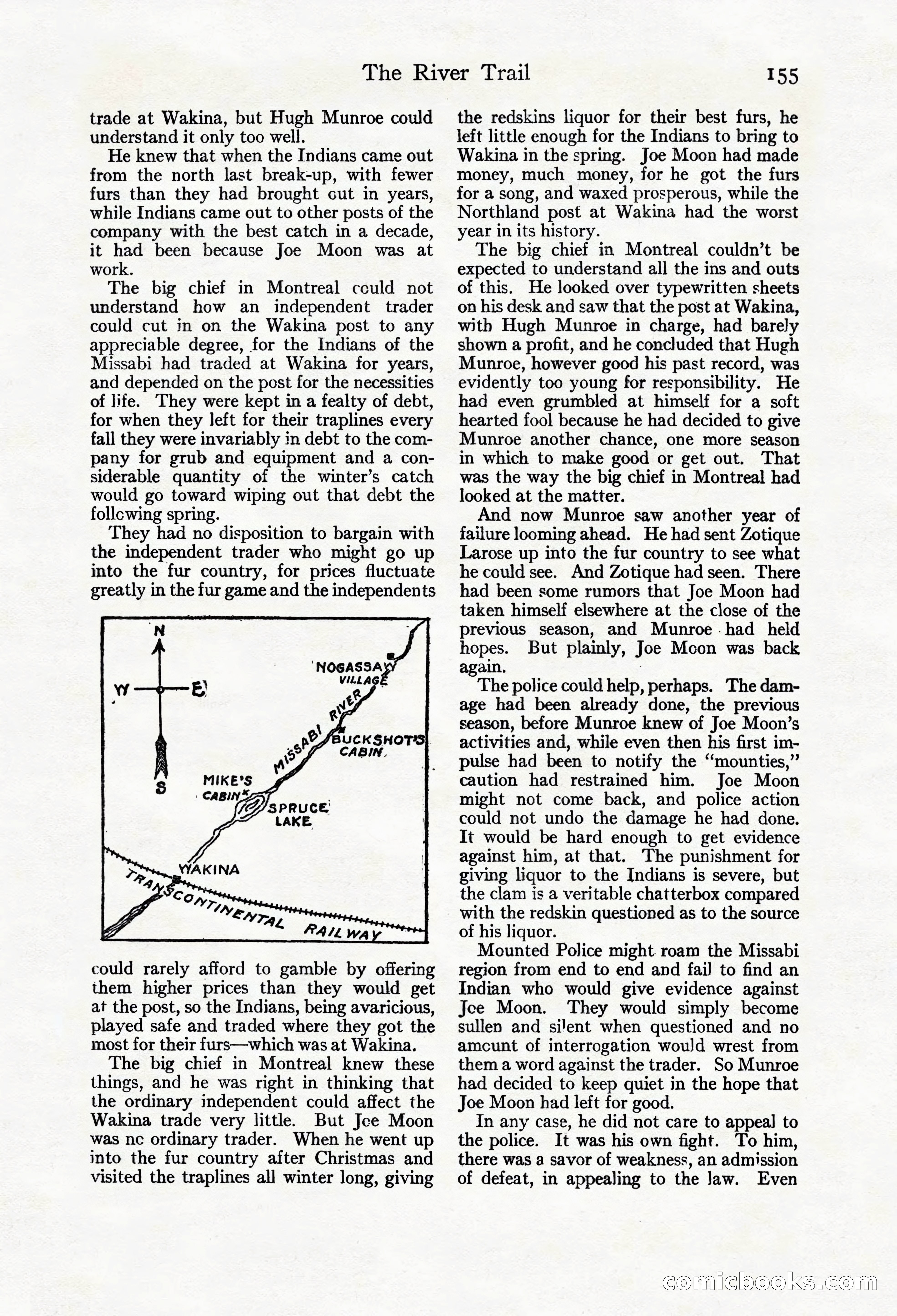
A restored page from Pulp Fiction, 1925. Page through the whole issue in the reader above.
📄 Transcribed text from this page (OCR, searchable)
Machine-transcribed from the original scan — historical spelling and the odd misread are preserved.
The River Trail trade at Wakina, but Hugh Munroe could understand it only too well. He knew that when the Indians came out from the north last break-up, with fewer furs than they had brought cut in years, while Indians came out to other posts of the company with the best catch in a decade, it had been because Joe Moon was at work. The big chief in Montreal cculd not understand how an independent trader could cut in on the Wakina post to any appreciable degree, for the Indians of the Missabi had traded at Wakina for years, and depended on the post for the necessities of life. They were kept in a fealty of debt, for when they left for their traplines every fall they were invariably in debt to the com- pany for grub and equipment and a con- siderable quantity of the winter’s catch would go toward wiping out that debt the follewing spring. They had no disposition to bargain with the independent trader who might go up into the fur country, for prices fluctuate greatly in the fur game and the independents could rarely afford to gamble by offering them higher prices than they would get at the post, so the Indians, being avaricious, played safe and traded where they got the most for their furs—which was at Wakina. The big chief in Montreal knew these things, and he was right in thinking that the ordinary independent could affect the Wakina trade very little. But Jee Moon was nc ordinary trader. When he went up into the fur country after Christmas and visited the traplines all winter long, giving T55 the redskins liquor for their best furs, he left little enough for the Indians to bring to Wakina in the spring. Joe Moon had made money, much money, for he got the furs for a song, and waxed prosperous, while the Northland post at Wakina had the worst year in its history. The big chief in Montreal couldn’t be expected to understand all the ins and outs of this. He looked over typewritten sheets on his desk and saw that the post at Wakina, with Hugh Munroe in charge, had barely shown a profit, and he concluded that Hugh Munroe, however good his past record, was evidently too young for responsibility. He had even grumbled at himself for a soft hearted fool because he had decided to give Munroe another chance, one more season in which to make good or get out. That was the way the big chief in Montreal had looked at the matter. And now Munroe saw another year of failure looming ahead. He had sent Zotique Larose up into the fur country to see what he could see. And Zotique had seen. There had been some rumors that Joe Moon had taken himself elsewhere at the close of the previous season, and Munroe .had held hopes. But plainly, Joe Mcon was back again. : The police could help, perhaps. The dam- age had been already done, the previous season, before Munroe knew of Joe Moon’s activities and, while even then his first im- pulse had been to notify the ‘“mounties,” caution had restrained him. Joe Moon might not come back, and police action could not undo the damage he had done. It would be hard enough to get evidence against him, at that. The punishment for giving liquor to the Indians is severe, but the clam is a veritable chatterbox compared with the redskin questioned as to the source of his liquor. Mounted Police might roam the Missabi region from end to end and fail to find an Indian who would give evidence against Jce Moon. They would simply become sullen and silent when questioned and no amcunt of interrogation would wrest from them a word against the trader. So Munroe had decided to keep quiet in the hope that Joe Moon had left for good. In any case, he did not care to appeal to the police. It was his own fight. To him, there was a savor of weakness, an admission of defeat, in appealing to the Jaw. Even CORnNIECLO© (©