
Pulp Fiction, 1925 · page 49 of 212
Adventure Magazine Cover, March 20, 1925 — page 49: what you’re looking at
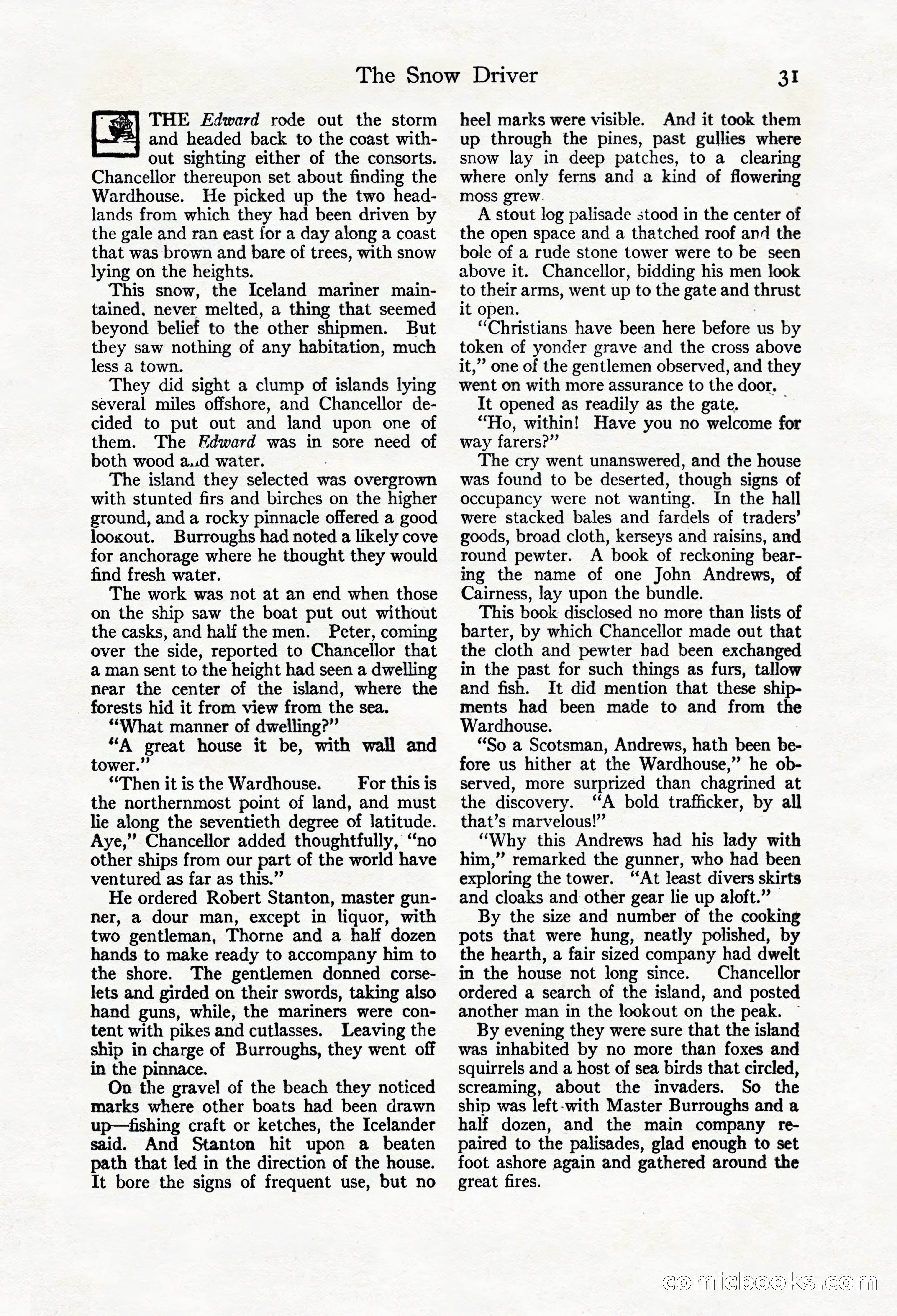
A restored page from Pulp Fiction, 1925. Page through the whole issue in the reader above.
📄 Transcribed text from this page (OCR, searchable)
Machine-transcribed from the original scan — historical spelling and the odd misread are preserved.
The Snow Driver oe THE Edward rode out the storm f=] and headed back to the coast with- out sighting either of the consorts. Chancellor thereupon set about finding the Wardhouse. He picked up the two head- lands from which they had been driven by the gale and ran east for a day along a coast that was brown and bare of trees, with snow lying on the heights. This snow, the Iceland mariner main- tained, never melted, a thing that seemed beyond belief to the other shipmen. But they saw nothing of any habitation, much less a town. They did sight a clump of islands lying several miles offshore, and Chancellor de- cided to put out and land upon one of them. The Edward was in sore need of both wood ad water. : The island they selected was overgrown with stunted firs and birches on the higher ground, and a rocky pinnacle offered a good looxout. Burroughs had noted a likely cove for anchorage where he thought they would find fresh water. The work was not at an end when those on the ship saw the boat put out without the casks, and half the men. Peter, coming over the side, reported to Chancellor that a man sent to the height had seen a dwelling near the center of the island, where the forests hid it from view from the sea. “What manner of dwelling?” “A great house it be, with wall and tower.” ‘Then it is the Wardhouse. For this is the northernmost point of land, and must lie along the seventieth degree of latitude. Aye,” Chancellor added thoughtfully, “no other ships from our part of the world have ventured as far as this.” He ordered Robert Stanton, master gun- ner, a dour man, except in liquor, with two gentleman, Thorne and a half dozen hands to make ready to accompany him to the shore. The gentlemen donned corse- lets and girded on their swords, taking also hand guns, while, the mariners were con- tent with pikes and cutlasses. Leaving the ship in charge of Burroughs, they went off in the pinnace. On the gravel of the beach they noticed marks where other boats had been drawn up—fishing craft or ketches, the Icelander said. And Stanton hit upon a beaten path that led in the direction of the house. It bore the signs of frequent use, but no gl heel marks were visible. And it took them up through the pines, past gullies where snow lay in deep patches, to a clearing where only ferns and a kind of flowering MOSS grew. A stout log palisade stood in the center of the open space and a thatched roof and the bole of a rude stone tower were to be seen above it. Chancellor, bidding his men look to their arms, went up to the gate and thrust it open. : “Christians have been here before us by token of yonder grave and the cross above it,”’ one of the gentlemen observed, and they went on with more assurance to the door. It opened as readily as the gate. “Ho, within! Have you no welcome for way farers?”’ The cry went unanswered, and the house was found to be deserted, though signs of occupancy were not wanting. In the hall were stacked bales and fardels of traders’ goods, broad cloth, kerseys and raisins, and round pewter. A book of reckoning bear- ing the name of one John Andrews, of Cairness, lay upon the bundle. This book disclosed no more than lists of barter, by which Chancellor made out that the cloth and pewter had been exchanged in the past for such things as furs, tallow and fish. It did mention that these ship- ments had been made to and from the Wardhouse. “So a Scotsman, Andrews, hath been be- fore us hither at the Wardhouse,” he ob- served, more surprized than chagrined at the discovery. “A bold trafficker, by all that’s marvelous!” “Why this Andrews had his lady with him,”’ remarked the gunner, who had been exploring the tower. “At least divers skirts and cloaks and other gear lie up aloft.” By the size and number of the cooking pots that were hung, neatly polished, by the hearth, a fair sized company had dwelt in the house not long since. Chancellor ordered a search of the island, and posted another man in the lookout on the peak. ~— By evening they were sure that the island was inhabited by no more than foxes and squirrels and a host of sea birds that circled, screaming, about the invaders. So the ship was left-with Master Burroughs and a half dozen, and the main company re- paired to the palisades, glad enough to set foot ashore again and gathered around the great fires. COMmMiiclooe (©