
Pulp Fiction, 1925 · page 126 of 212
Adventure Magazine Cover, June 20, 1925 — page 126: what you’re looking at
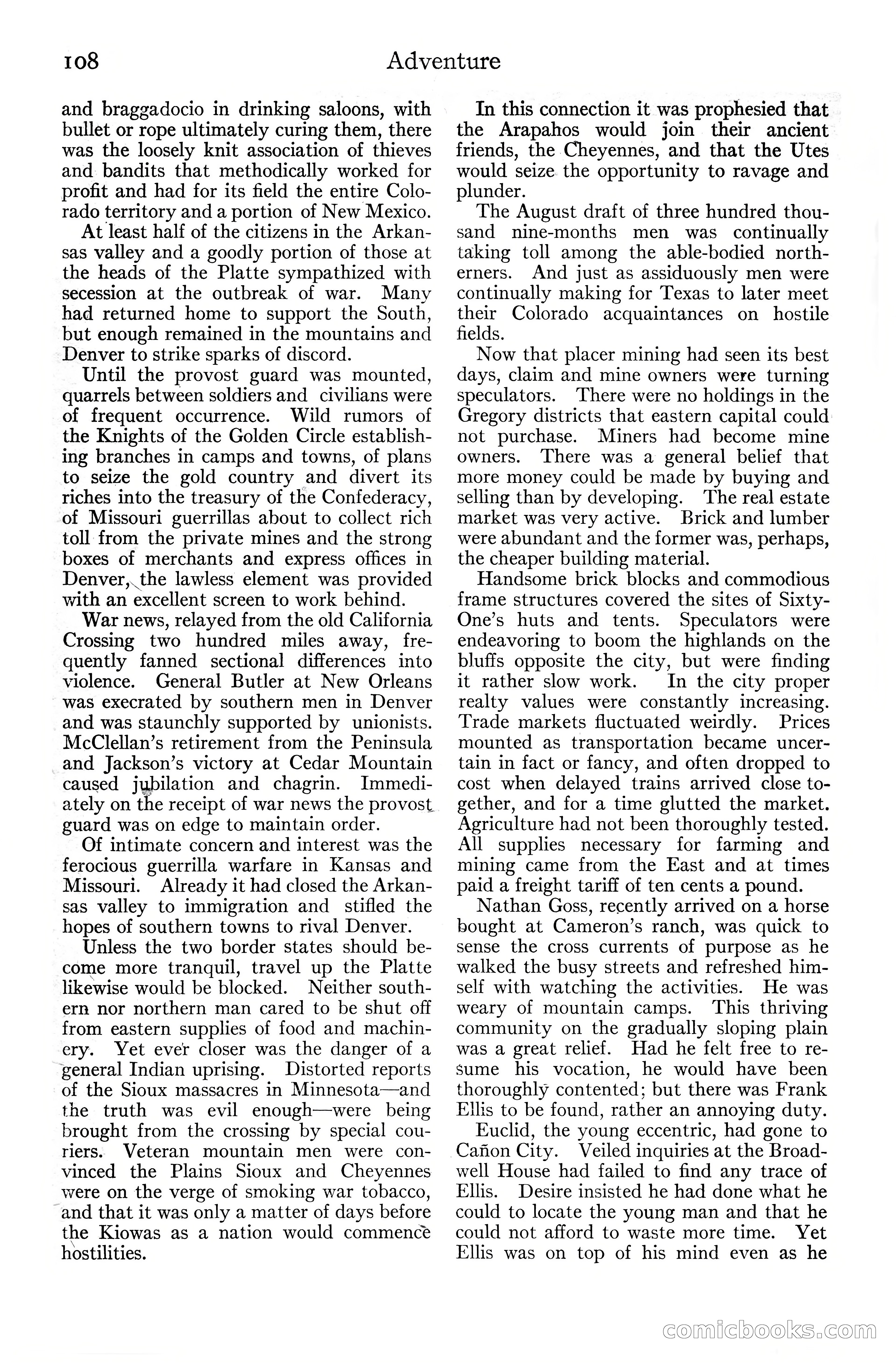
A restored page from Pulp Fiction, 1925. Page through the whole issue in the reader above.
📄 Transcribed text from this page (OCR, searchable)
Machine-transcribed from the original scan — historical spelling and the odd misread are preserved.
108 Adventure and braggadocio in drinking saloons, with bullet or rope ultimately curing them, there was the loosely knit association of thieves and bandits that methodically worked for profit and had for its field the entire Colo- rado territory and a portion of New Mexico. At least half of the citizens in the Arkan- sas valley and a goodly portion of those at the heads of the Platte sympathized with secession at the outbreak of war. Many had returned home to support the South, but enough remained in the mountains and Denver to strike sparks of discord. Until the provost guard was mounted, quarrels between soldiers and civilians were of frequent occurrence. Wild rumors of the Knights of the Golden Circle establish- ing branches in camps and towns, of plans to seize the gold country and divert its riches into the treasury of the Confederacy, of Missouri guerrillas about to collect rich toll from the private mines and the strong boxes of merchants and express offices in Denver, the lawless element was provided with an excellent screen to work behind. War news, relayed from the old California Crossing two hundred miles away, fre- quently fanned sectional differences into violence. General Butler at New Orleans was execrated by southern men in Denver and was staunchly supported by unionists. McClellan’s retirement from the Peninsula and Jackson’s victory at Cedar Mountain caused jubilation and chagrin. Immedi- ately on the receipt of war news the provost guard was on edge to maintain order. Of intimate concern and interest was the ferocious guerrilla warfare in Kansas and Missouri. Already it had closed the Arkan- sas valley to immigration and stifled the hopes of southern towns to rival Denver. Unless the two border states should be- come more tranquil, travel up the Platte likewise would be blocked. Neither south- ern nor northern man cared to be shut off from eastern supplies of food and machin- ery. Yet ever closer was the danger of a general Indian uprising. Distorted reports of the Sioux massacres in Minnesota—and the truth was evil enough—were being brought from the crossing by special cou- riers. Veteran mountain men were con- vinced the Plains Sioux and Cheyennes were on the verge of smoking war tobacco, and that it was only a matter of days before the Kiowas as a nation would commence hostilities. In this connection it was prophesied that the Arapahos would join their ancient friends, the Cheyennes, and that the Utes would seize the opportunity to ravage and plunder. The August draft of three hundred thou- sand nine-months men was continually taking toll among the able-bodied north- erners. And just as assiduously men were continually making for Texas to later meet their Colorado acquaintances on hostile fields. Now that placer mining had seen its best days, claim and mine owners were turning speculators. There were no holdings in the Gregory districts that eastern capital could not purchase. Miners had become mine owners. ‘There was a general belief that more money could be made by buying and selling than by developing. The real estate market was very active. Brick and lumber were abundant and the former was, perhaps, the cheaper building material. Handsome brick blocks and commodious frame structures covered the sites of Sixty- One’s huts and tents. Speculators were endeavoring to boom the highlands on the bluffs opposite the city, but were finding it rather slow work. In the city proper realty values were constantly increasing. Trade markets fluctuated weirdly. Prices mounted as transportation became uncer- tain in fact or fancy, and often dropped to cost when delayed trains arrived close to- gether, and for a time glutted the market. Agriculture had not been thoroughly tested. All supplies necessary for farming and mining came from the East and at times paid a freight tariff of ten cents a pound. Nathan Goss, recently arrived on a horse bought at Cameron’s ranch, was quick to sense the cross currents of purpose as he walked the busy streets and refreshed him- self with watching the activities. He was weary of mountain camps. This thriving community on the gradually sloping plain was a great relief. Had he felt free to re- sume his vocation, he would have been thoroughly contented; but there was Frank iis to be found, rather an annoying duty. Euclid, the young eccentric, had gone to Cafion City. Veiled inquiries at the Broad- well House had failed to find any trace of Ellis. Desire insisted he had done what he could to locate the young man and that he could not afford to waste more time. Yet Ellis was on top of his mind even as he COMIGDIOOKSEEO