
Pulp Fiction, 1913 · page 100 of 192
Ainslee's Magazine, February 1913 — page 100: what you’re looking at
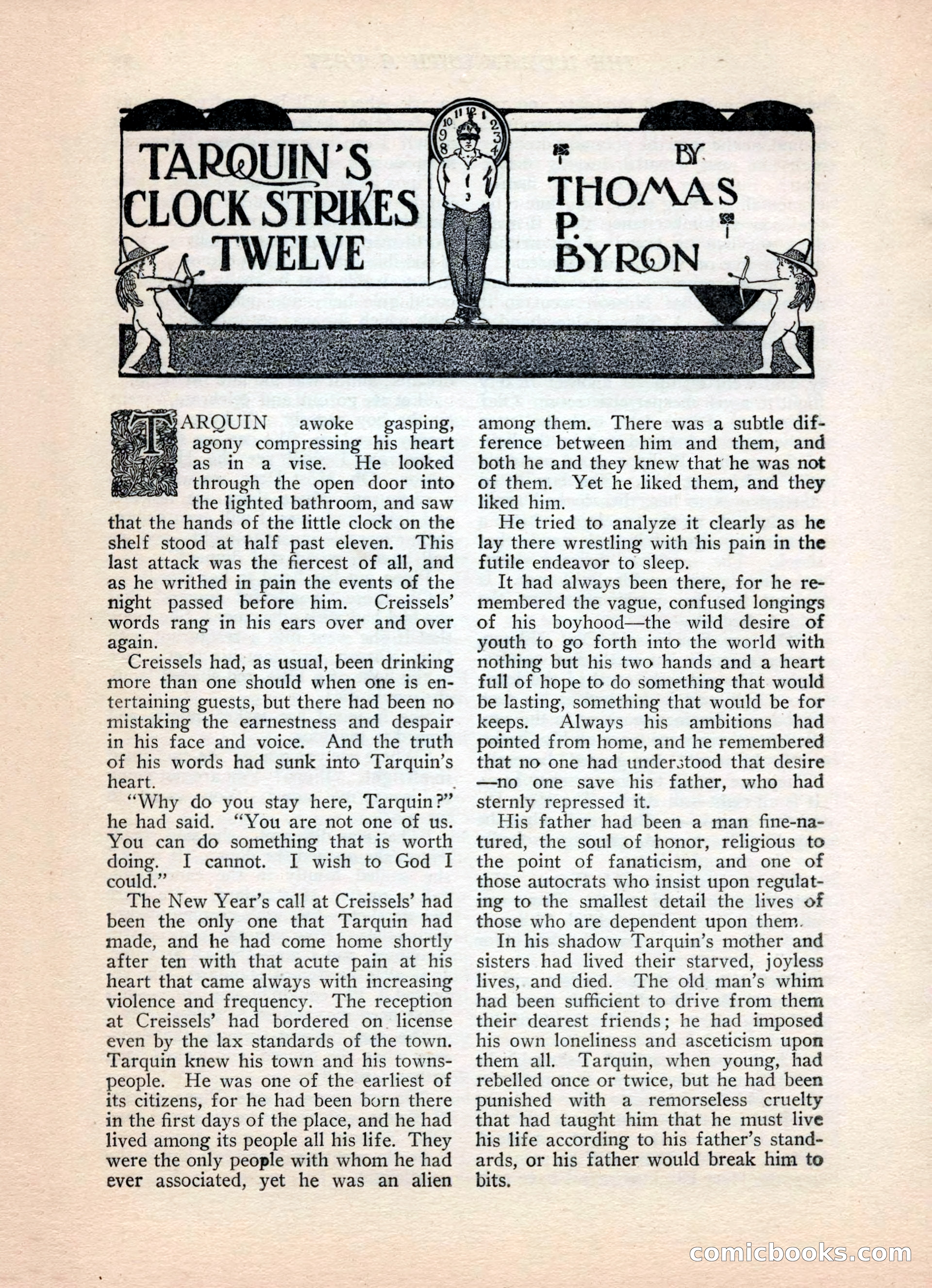
A restored page from Pulp Fiction, 1913. Page through the whole issue in the reader above.
📄 Transcribed text from this page (OCR, searchable)
Machine-transcribed from the original scan — historical spelling and the odd misread are preserved.
(Z@fiey AROQUIN awoke _ gasping, i, agony compressing his heart as in a vise. He looked through the open door into the lighted bathroom, and saw that the hands of the little clock on the shelf stood at half past eleven. This last attack was the fiercest of all, and as he writhed in pain the events of the night passed before him. Creissels’ words rang in his ears over and over again. Creissels had, as usual, been drinking more than one should when one is en- tertaining guests, but there had been no mistaking the earnestness and despair in his face and voice. And the truth of his words had sunk into Tarquin’s heart. “Why do you stay here, Tarquin ” he had said. “You are not one of us. You can do something that is worth doing. I cannot. I wish to God I could.” The New Year’s call at Creissels’ had been the only one that Tarquin had made, and he had come home shortly after ten with that acute pain at his heart that came always with increasing violence and frequency. The reception at Creissels’ had bordered on_ license even by the lax standards of the town. Tarquin knew his town and his towns- people. He was one of the earliest of its citizens, for he had been born there in the first days of the place, and he had lived among its people all his life. They were the only people with whom he had ever associated, yet he was an alien among them. There was a subtle dif- ference between him and them, and both he and they knew that he was not of them. Yet he liked them, and they liked him. He tried to analyze it clearly as he lay there wrestling with his pain in the futile endeavor to sleep. It had always been there, for he re- membered the vague, confused longings of his boyhood—the wild desire of youth to go forth into the world with nothing but his two hands and a heart full of hope to do something that would be lasting, something that would be for keeps. Always his ambitions had pointed from home, and he remembered that no one had understood that desire —no one save his father, who had sternly repressed it. His father had been a man fine-na- tured, the soul of honor, religious to the point of fanaticism, and one of those autocrats who insist upon regulat- ing to the smallest detail the lives of those who are dependent upon them. In his shadow Tarquin’s mother and sisters had lived their starved, joyless lives, and died. The old man’s whim had been sufficient to drive from them their dearest friends; he had imposed his own loneliness and asceticism upon them all. Tarquin, when young, had rebelled once or twice, but he had been punished with a remorseless cruelty that had taught him that he must live his life according to his father’s stand- ards, or his father would break him to bits. (C@) OOO) K< (C@)