
Pulp Fiction, 1920 · page 32 of 208
Argosy All-Story Weekly, Vol. 124, No. 3 — page 32: what you’re looking at
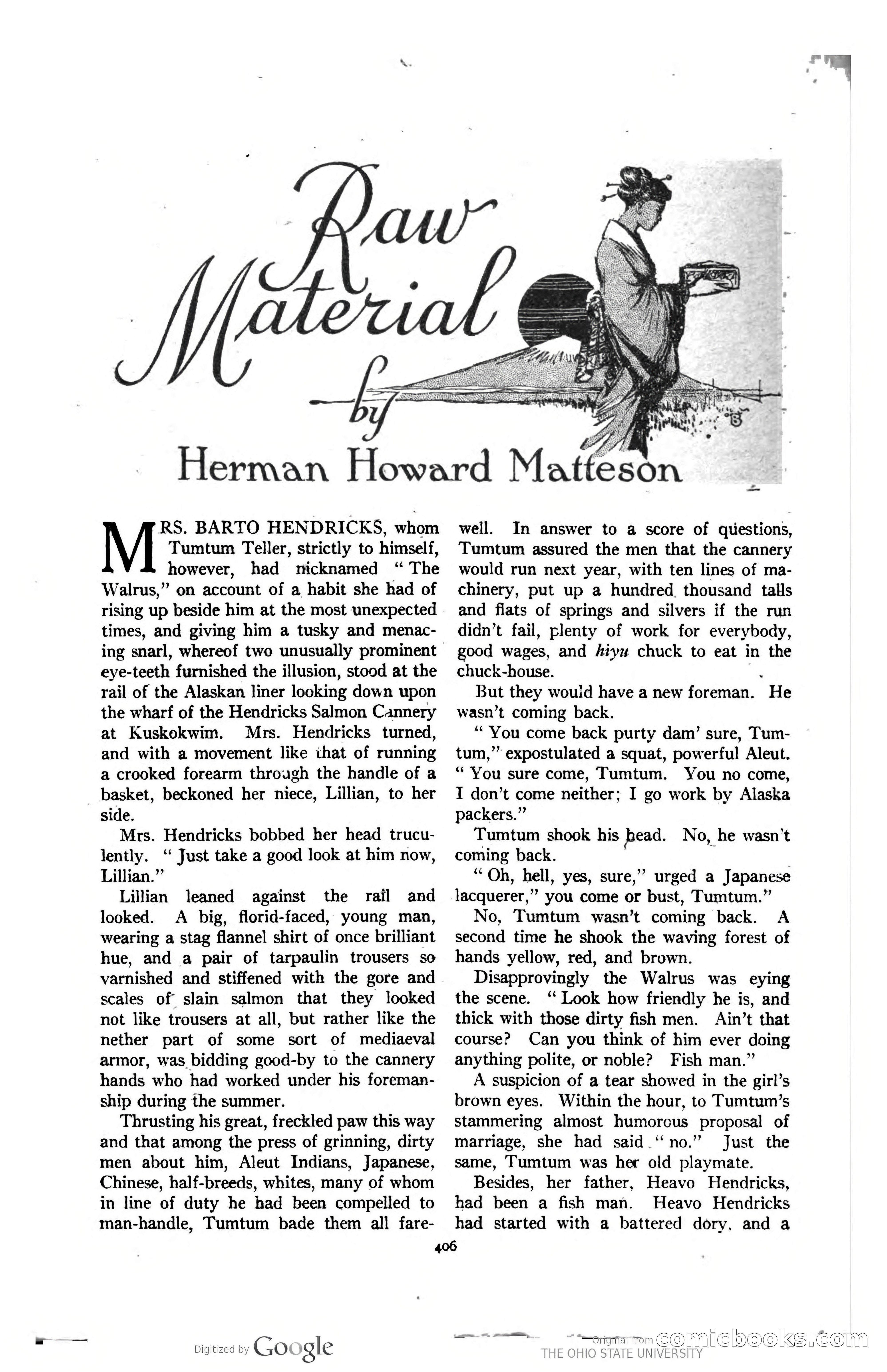
A restored page from Pulp Fiction, 1920. Page through the whole issue in the reader above.
📄 Transcribed text from this page (OCR, searchable)
Machine-transcribed from the original scan — historical spelling and the odd misread are preserved.
Tumtum Teller, strictly to himself, however, had nicknamed “ The Walrus,” on account of a habit she had of rising up beside him at the most unexpected times, and giving him a tusky and menac- Mi‘ BARTO HENDRICKS, whom ing snarl, whereof two unusually prominent eye-teeth furnished the illusion, stood at the rail of the Alaskan liner looking down upon the wharf of the Hendricks Salmon Cannery at Kuskokwim. Mrs. Hendricks turned, and with a movement like that of running a crooked forearm through the handle of a _ basket, beckoned her niece, Lillian, to her side. Mrs. Hendricks bobbed her head trucu- lently. “ Just take a good look at him now, Lillian.” Lillian leaned against the rail and looked. A big, florid-faced, young man, wearing a stag flannel shirt of once brilliant hue, and a pair of tarpaulin trousers so varnished and stiffened with the gore and scales of slain salmon that they looked not like trousers at all, but rather like the nether part of some sort of mediaeval armor, was bidding good-by to the cannery hands who had worked under his foreman- ship during the summer. Thrusting his great, freckled paw this way and that among the press of grinning, dirty men about him, Aleut Indians, Japanese, Chinese, half-breeds, whites, many of whom in line of duty he had been compelled to man-handle, Tumtum bade them all fare- Herman Howard Mattes On well. In answer to a score of questions, Tumtum assured the men that the cannery would run next year, with ten lines of ma- chinery, put up a hundred thousand tals and flats of springs and silvers if the run didn’t fail, plenty of work for everybody, good wages, and /iyu chuck to eat in the chuck-house. ‘ But they would have a new foreman. He wasn’t coming back. ‘You come back purty dam’ sure, Tum- tum,” expostulated a squat, powerful Aleut. ‘You sure come, Tumtum. You no come, I don’t come neither; I go work by Alaska packers.” Tumtum shook his head. No, he wasn’t coming back. “Oh, hell, yes, sure,” urged a Japanese lacquerer,’”’ you come or bust, Tumtum.” No, Tumtum wasn’t coming back. A second time he shook the waving forest of hands yellow, red, and brown. Disapprovingly the Walrus was eying the scene. ‘‘ Look how friendly he is, and thick with those dirty fish men. Ain’t that course? Can you think of him ever doing anything polite, or noble? Fish man.”’ A suspicion of a tear showed in the girl’s brown eyes. Within the hour, to Tumtum’s stammering almost humorous proposal of marriage, she had said “no.” Just the same, Tumtum was her old playmate. Besides, her father, Heavo Hendricks, had been a fish man. Heavo Hendricks had started with a battered dory, and a 406 Digitized by (Go gle NOO “ “erigitattrom (COMIC S © (Lf THE OHIO STATE UNIVERSITY