
Pulp Fiction, 1923 · page 85 of 180
Argosy All-Story Weekly — page 85: what you’re looking at
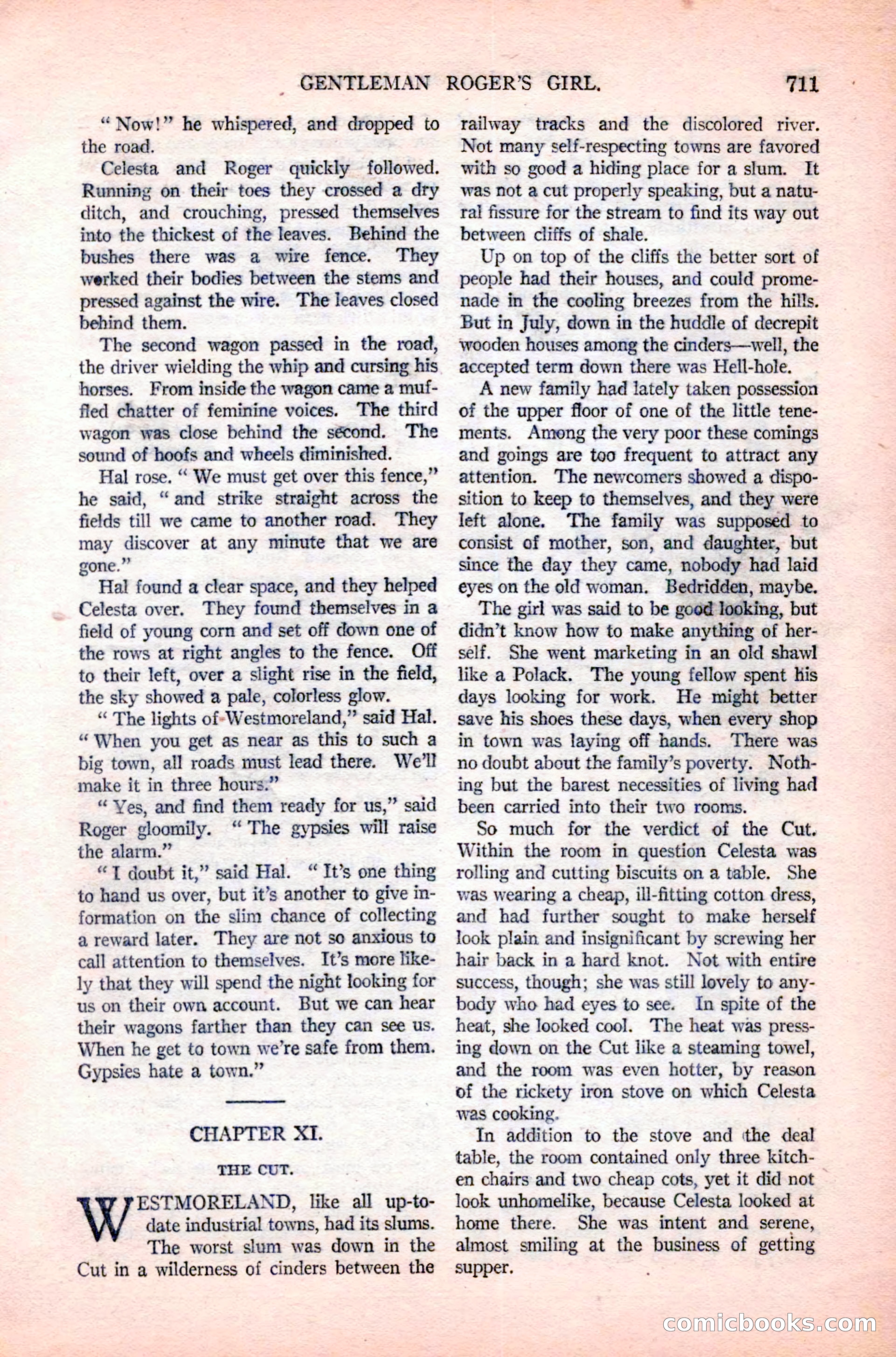
A restored page from Pulp Fiction, 1923. Page through the whole issue in the reader above.
📄 Transcribed text from this page (OCR, searchable)
Machine-transcribed from the original scan — historical spelling and the odd misread are preserved.
_ GENTLEMAN ROGER’S GIRL. “ Now!” he whispered, and dropped to the road. Celesta and Roger quickly followed. Running on their toes they crossed a dry ditch, and crouching, pressed themselves into the thickest of the leaves. Behind the bushes there was a wire fence. They werked their bodies between the stems and pressed against the wire. The leaves closed behind them. The second wagon passed in the road, the driver wielding the whip and cursing his horses. From inside the wagon came a muf- fled chatter of feminine voices. The third wagon was close behind the sécond. The sound of hoofs and wheels diminished. Hal rose. “ We must get over this fence,” he said, “and strike straight across the fields till we came to another road. They may discover at any minute that we are gone.” Hal found a clear space, and they helped Celesta over. They found themselves in a field of young corn and set off down one of the rows at right angles to the fence. Off to their left, over a slight rise in the field, the sky showed a pale, colorless glow. “ The lights of- Westmoreland,” said Hal. “When you get as near as this to such a big town, all roads must lead there. We'll make it in three hours.” “Ves, and find them ready for us,” said Roger gloomily. “ The gypsies will raise the alarm.” “T doubt it,” said Hal. “ It’s one thing to hand us over, but it’s another to give in- formation on the slim chance of collecting a reward later. They are not so anxious to call attention to themselves. It’s more like- ly that they will spend the night looking for us on their own account. But we can hear their wagons farther than they can see us. When he get to town we’re safe from them. Gypsies hate a town.” CHAPTER XI. THE CUT. ESTMORELAND, like all up-to- date industrial towns, had its slums. The worst slum was down in the Cut in a wilderness of cinders between the Til railway tracks and the discolored river. Not many self-respecting towns are favored with so good a hiding place for a slum. It was not a cut properly speaking, but a natu- ral fissure for the stream to find its way out between cliffs of shale. Up on top of the cliffs the better sort of people had their houses, and could prome- nade in the cooling breezes from the hills. But in July, down in the huddle of decrepit wooden houses among the cinders—well, the accepted term down there was Hell-hole. A new family had lately taken possession of the upper floor of one of the little tene- ments. Among the very poor these comings and goings are too frequent to attract any attention. The newcomers showed a dispo- sition to keep to themselves, and they were left alone. ‘The family was supposed to consist of mother, son, and daughter, but since the day they came, nobody had laid eyes on the old woman. Bedridden, maybe. The girl was said to be good looking, but didn’t know how to make anything of her- self. She went marketing in an old shawl like a Polack. The young fellow spent His days looking for work. He might better save his shoes these days, when every shop in town was laying off hands. There was no doubt about the family’s poverty. Noth- ing but the barest necessities of living had been carried into their two rooms. So much for the verdict of the Cut. Within the room in question Celesta was rolling and cutting biscuits on a table. She was wearing a cheap, ill-fitting cotton dress, and had further sought to make herself look plain and insignificant by screwing her hair back in a hard knot. Not with entire success, though; she was still lovely to any- body who had eyes to see. In spite of the heat, she looked cool. The heat was press- ing down on the Cut like a steaming towel, and the room was even hotter, by reason of the rickety iron stove on which Celesta was cooking. In addition to the stove and ‘the deal table, the room contained only three kitch- en chairs and two cheap cots, yet it did not look unhomelike, because Celesta looked at home there. She was intent and serene, almost smiling at the business of getting supper. Gomicbooks (C@)