
Pulp Fiction, 1925 · page 74 of 172
Argosy All-Story Weekly — page 74: what you’re looking at
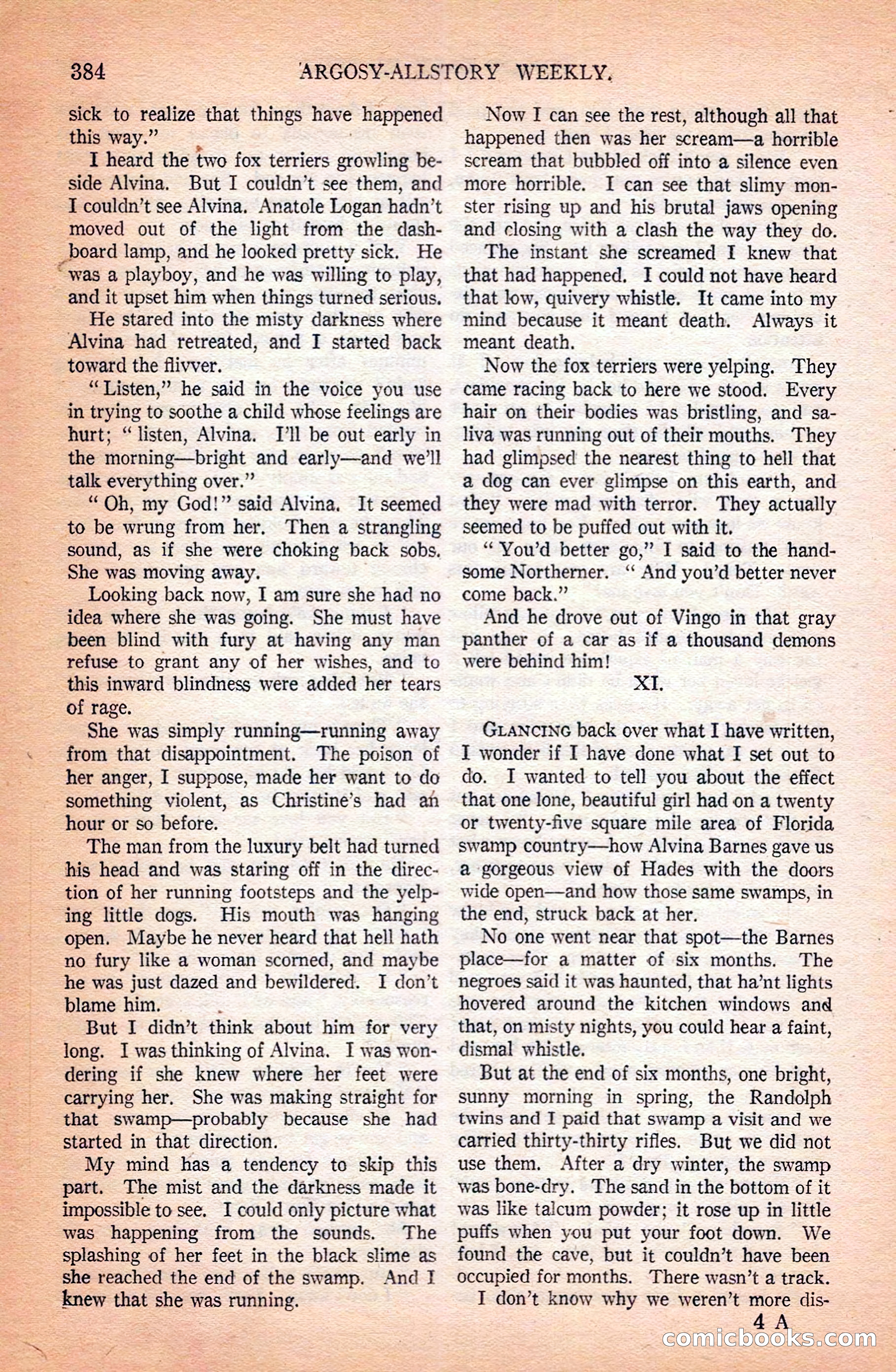
A restored page from Pulp Fiction, 1925. Page through the whole issue in the reader above.
📄 Transcribed text from this page (OCR, searchable)
Machine-transcribed from the original scan — historical spelling and the odd misread are preserved.
2 sick to realize that things have happened this way.” [heard the two fox terriers growling be- side Alvina. But I couldn’t see them, and I couldn’t see Alvina. Anatole Logan hadn’t moved out of the light from the dash- __board lamp, and he looked pretty sick. He was a playboy, and he was willing to play, -___ and it upset him when things turned serious. __ He stared into the misty darkness where _ Alvina had retreated, and I started back toward the flivver. _ *Tisten,” he said in the voice you use in trying to soothe a child whose feelings are hurt; “listen, Alvina. I’ll be out early in _ the morning—bright and early—and we'll talk everything over.” “Oh, my God!” said Alvina. It seemed - to be wrung from her. Then a strangling sound, as if she were choking back sobs. She was moving away. Looking back now, I am sure she had no idea where she was going. She must have been blind with fury at having any man refuse to grant any of her wishes, and to __this inward blindness were added her tears 2 Of Tage. She was simply running—running away _< from that disappointment. The poison of her anger, I suppose, made her want to do - something violent, as Christine’s had an hour or so before. The man from the luxury belt had turned ~ his head and was staring off in the direc- ____ tion of her running footsteps and the yelp- ‘Ing little dogs. His mouth was hanging - open. Maybe he never heard that hell hath no fury like a woman scorned, and maybe he was just dazed and bewildered. I don’t blame him. Sai But I didn’t think about him for very Jong. I was thinking of Alvina. I was won- dering if she knew where her feet were ____ carrying her. She was making straight for that swamp—probably because she had -__ Started in that direction. My mind has a tendency to skip this part. +The mist and the darkness made it impossible to see. I could only picture what was happening from the sounds. The __ splashing of her feet in the black slime as She reached the end of the swamp. And I ____knew that she was running. ARGOSY-ALLSTORY WEEKLY, Now I can see the rest, although all that happened then was her scream—a horrible scream that bubbled off into a silence even more horrible. I can see that slimy mon- ster rising up and his brutal jaws opening and closing with a clash the way they do. The instant she screamed I knew that that had happened. I could not have heard that low, quivery whistle. It came into my mind because it meant death. Always it meant death. Now the fox terriers were yelping. They came racing back to here we stood. Every hair on their bodies was bristling, and sa- liva was running out of their mouths. They had glimpsed the nearest thing to hell that a dog can ever glimpse on this earth, and they were mad with terror. They actually seemed to be puffed out with it. ““'You’d better go,” I said to the hand- some Northerner. ‘‘ And you’d better never come back.” And he drove out of Vingo in that gray panther of a car as if a thousand demons were behind him! XI. GLANCING back over what I have written, I wonder if I have done what I set out to do. I wanted to tell you about the effect that one lone, beautiful girl had on a twenty or twenty-five square mile area of Florida swamp country—how Alvina Barnes gave us a gorgeous view of Hades with the doors wide open—and how those same swamps, in the end, struck back at her. No one went near that spot—the Barnes place—for a matter of six months. The negroes said it was haunted, that ha’nt lights hovered around the kitchen windows and that, on misty nights, you could hear a faint, dismal whistle. But at the end of six months, one bright, sunny morning in spring, the Randolph twins and I paid that swamp a visit and we carried thirty-thirty rifles. But we did not use them. After a dry winter, the swamp was bone-dry. The sand in the bottom of it was like talcum powder; it rose up in little puffs when you put your foot down. We found the cave, but it couldn’t have been occupied for months. There wasn’t a track. I don’t know why we weren’t more dis- COk ere: Com Ebooks