
Pulp Fiction, 1928 · page 129 of 164
Argosy All-Story Weekly, February 18, 1928 — page 129: what you’re looking at
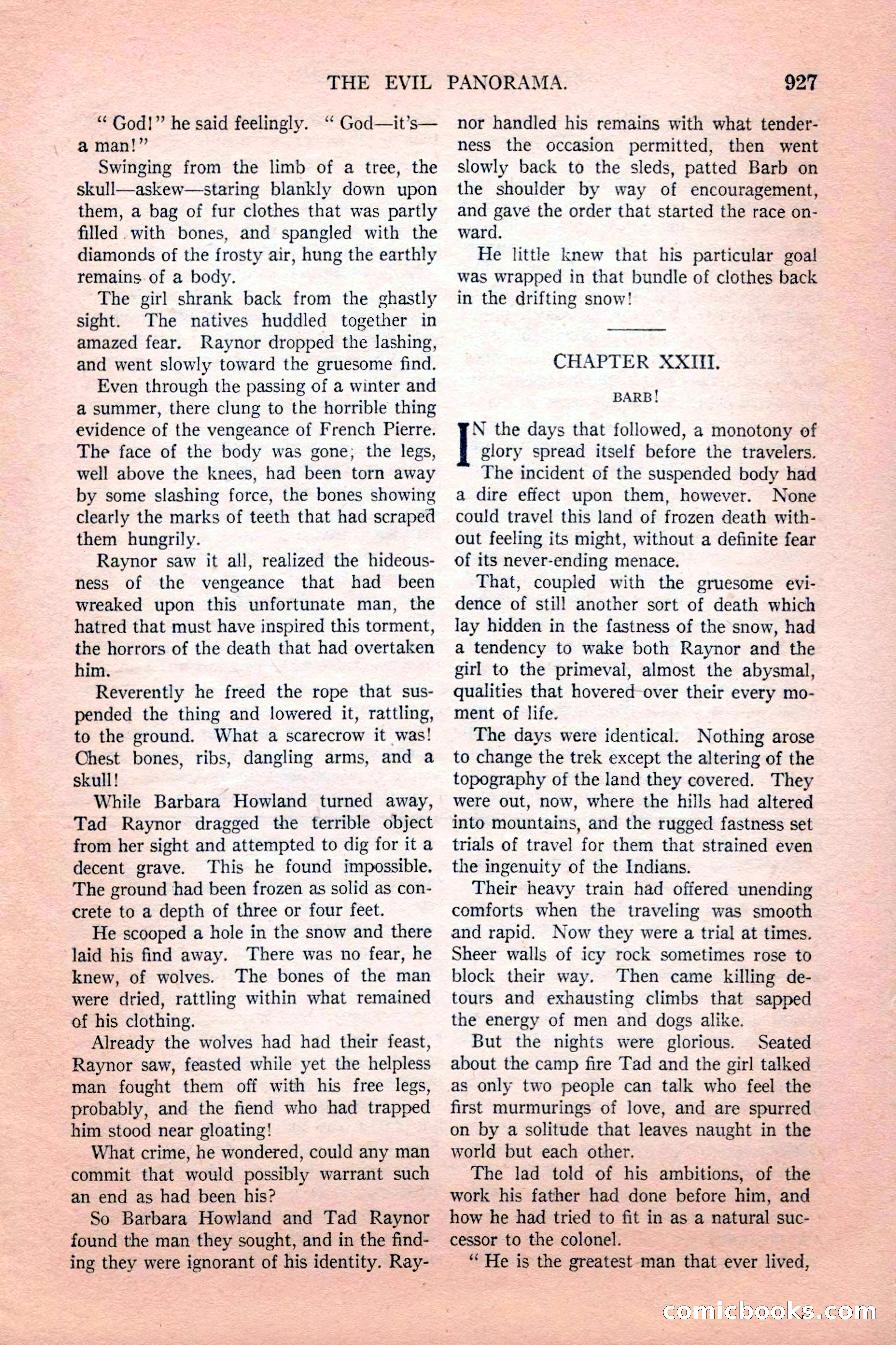
A restored page from Pulp Fiction, 1928. Page through the whole issue in the reader above.
📄 Transcribed text from this page (OCR, searchable)
Machine-transcribed from the original scan — historical spelling and the odd misread are preserved.
THE EVIL PANORAMA. “‘ God!” he said feelingly. “ God—it’s— a man!” Swinging from the limb of a tree, the skull—askew—staring blankly down upon them, a bag of fur clothes that was partly filled with bones, and spangled with the diamonds of the frosty air, hung the earthly remains of a body. The girl shrank back from the ghastly sight. The natives huddled together in amazed fear. Raynor dropped the lashing, and went slowly toward the gruesome find. Even through the passing of a winter and a summer, there clung to the horrible thing evidence of the vengeance of French Pierre. The face of the body was gone; the legs, well above the knees, had been torn away by some slashing force, the bones showing clearly the marks of teeth that had scraped them hungrily. Raynor saw it all, realized the hideous- ness of the vengeance that had been wreaked upon this unfortunate man, the hatred that must have inspired this torment, the horrors of the death that had overtaken him. Reverently he freed the rope that sus- pended the thing and lowered it, rattling, to the ground. What a scarecrow it was! Chest bones, ribs, dangling arms, and a skull! While Barbara Howland turned away, Tad Raynor dragged the terrible object from her sight and attempted to dig for it a decent grave. This he found impossible. The ground had been frozen as solid as con- crete to a depth of three or four feet. He scooped a hole in the snow and there laid his find away. There was no fear, he knew, of wolves. The bones of the man were dried, rattling within what remained of his clothing. Already the wolves had had their feast, Raynor saw, feasted while yet the helpless man fought them off with his free legs, probably, and the fiend who had trapped him stood near gloating! What crime, he wondered, could any man commit that would possibly warrant such an end as had been his? So Barbara Howland and Tad Raynor found the man they sought, and in the find- ing they were ignorant of his identity. Ray- 927 nor handled his remains with what tender- ness the occasion permitted, then went slowly back to the sleds, patted Barb on the shoulder by way of encouragement, and gave the order that started the race on- ward. He little knew that his particular goal was wrapped in that bundle of clothes back in the drifting snow! CHAPTER XXIII, BARB! N the days that followed, a monotony of glory spread itself before the travelers. The incident of the suspended body had a dire effect upon them, however. None could travel this land of frozen death with- out feeling its might, without a definite fear of its never-ending menace. That, coupled with the gruesome evi- dence of still another sort of death which lay hidden in the fastness of the snow, had a tendency to wake both Raynor and the girl to the primeval, almost the abysmal, qualities that hovered over their every mo- ment of life. The days were identical. Nothing arose to change the trek except the altering of the topography of the land they covered. They were out, now, where the hills had altered into mountains, and the rugged fastness set trials of travel for them that strained even the ingenuity of the Indians. Their heavy train had offered unending comforts when the traveling was smooth and rapid. Now they were a trial at times. Sheer walls of icy rock sometimes rose to block their way. Then came killing de- tours and exhausting climbs that sapped the energy of men and dogs alike. But the nights were glorious. Seated about the camp fire Tad and the girl talked as only two people can talk who feel the first murmurings of love, and are spurred on by a solitude that leaves naught in the world but each other. The lad told of his ambitions, of the work his father had done before him, and how he had tried to fit in as a natural suc- cessor to the colonel. “ He is the greatest man that ever lived, Gomichooks (E@)