
Pulp Fiction, 1928 · page 144 of 164
Argosy All-Story Weekly, February 18, 1928 — page 144: what you’re looking at
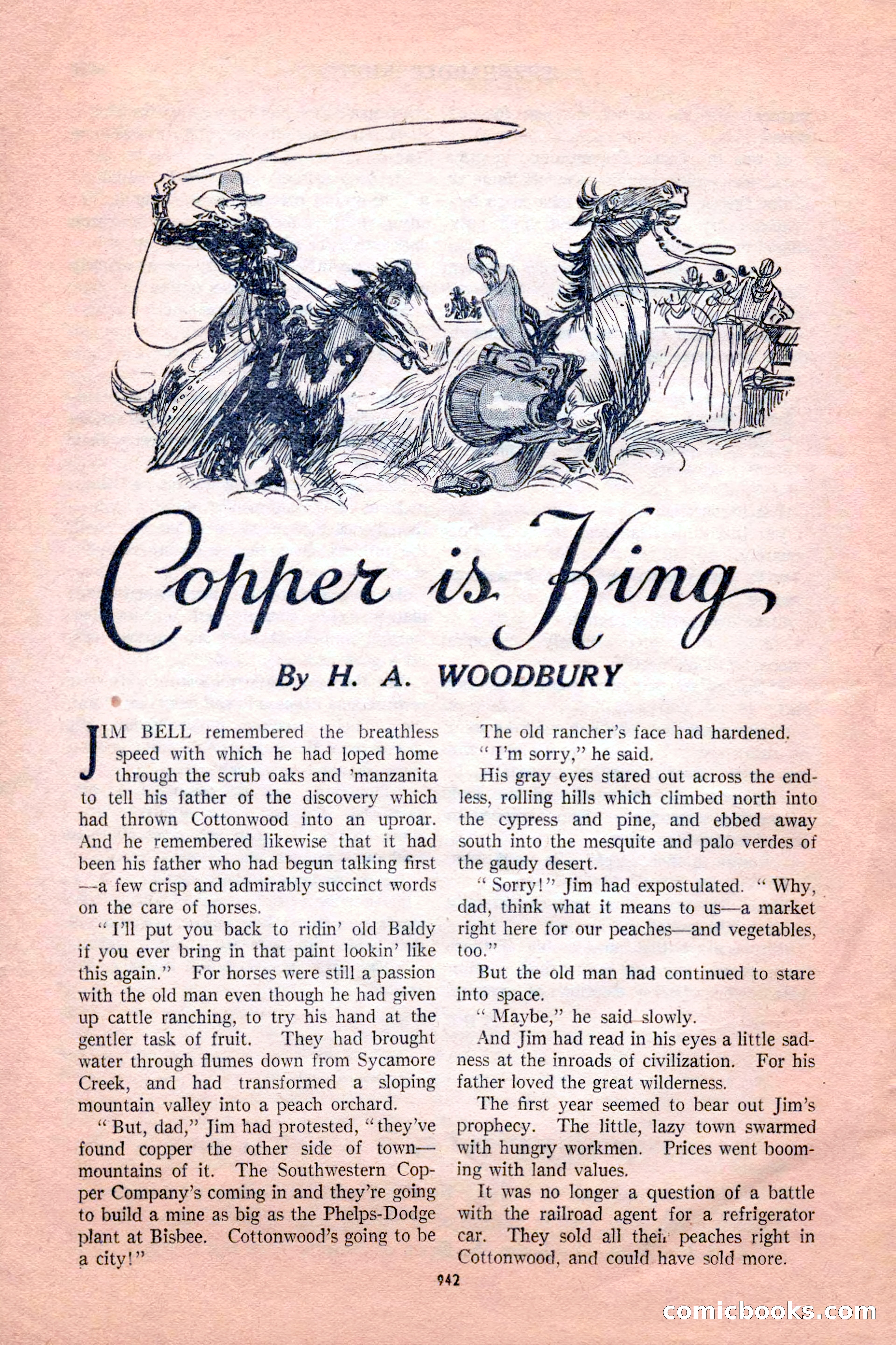
A restored page from Pulp Fiction, 1928. Page through the whole issue in the reader above.
📄 Transcribed text from this page (OCR, searchable)
Machine-transcribed from the original scan — historical spelling and the odd misread are preserved.
SpA He SS ‘ - -SEy By H. A. WOODBURY & IM BELL remembered the breathless J speed with which he had loped home through the scrub oaks and ’manzanita to tell his father of the discovery which had thrown Cottonwood into an uproar. And he remembered likewise that it had been his father who had begun talking first —-a few crisp and admirably succinct words on the care of horses. “T'll put you back to ridin’ old Baldy if you ever bring in that paint lookin’ like this again.” For horses were still a passion with the old man even though he had given up cattle ranching, to try his hand at the gentler task of fruit. They had brought water through flumes down from Sycamore Creek, and had transformed a sloping mountain valley into a peach orchard. “But, dad,” Jim had protested, “they’ve found copper the other side of town— mountains of it. The Southwestern Cop- per Company’s coming in and they’re going to build a mine as big as the Phelps-Dodge plant at Bisbee. Cottonwood’s going to be a city!” The old rancher’s face had hardened. ‘“T’m sorry,” he said. His gray eyes stared out across the end- less, rolling hills which climbed north into the cypress and pine, and ebbed away south into the mesquite and palo verdes of the gaudy desert. “ Sorry!”? Jim had expostulated. “ Why, dad, think what it means to us—a market right here for our peaches—and vegetables, too.” But the old man had continued to stare into space. ‘“ Maybe,” he said slowly. And Jim had read in his eyes a little sad- ness at the inroads of civilization. For his father loved the great wilderness. The first year seemed to bear out Jim’s prophecy. The little, lazy town swarmed with hungry workmen. Prices went boom- ing with land values. It was no longer a question of a battle with the railroad agent for a refrigerator 942 car. They sold all thei: peaches right in Cottonwood, and could have sold more. Eomichbooks (E(©)