
Pulp Fiction, 1928 · page 35 of 164
Argosy All-Story Weekly, February 18, 1928 — page 35: what you’re looking at
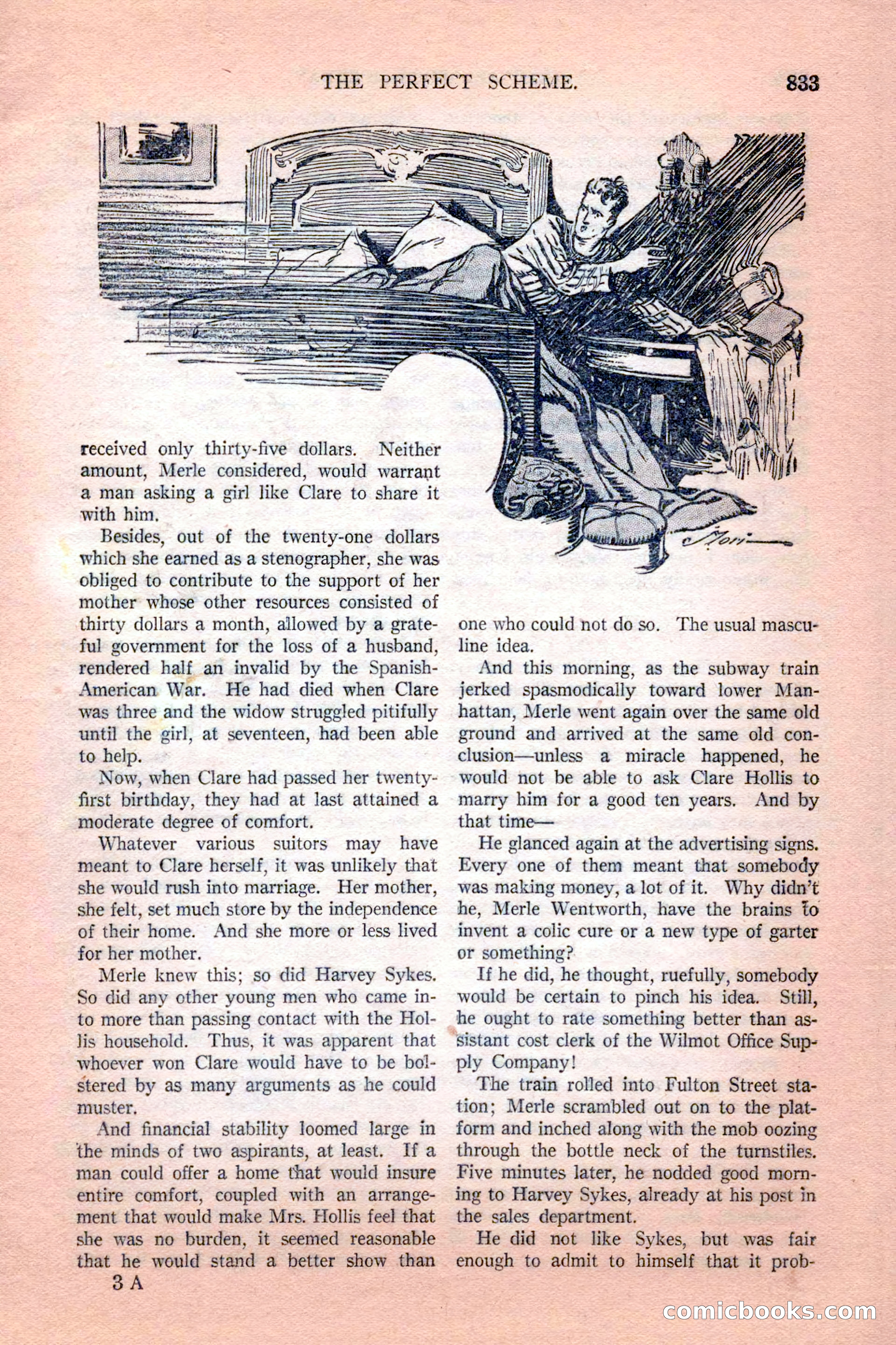
A restored page from Pulp Fiction, 1928. Page through the whole issue in the reader above.
📄 Transcribed text from this page (OCR, searchable)
Machine-transcribed from the original scan — historical spelling and the odd misread are preserved.
THE = * Rae et . received only thirty-five dollars. Neither amount, Merle considered, would warrant a man asking a girl Jike Clare to share it with him, Besides, out of the twenty-one dollars which she earned as a stenographer, she was obliged to contribute to the support of her mother whose other resources consisted of thirty dollars a month, allowed by a grate- ful government for the loss of a husband, rendered half an invalid by the Spanish- American War. He had died when Clare was three and the widow struggled pitifully until the girl, at seventeen, had been able to help. Now, when Clare had passed her twenty- first birthday, they had at last attained a moderate degree of comfort. Whatever various suitors may have meant to Clare herself, it was unlikely that she would rush into marriage. Her mother, she felt, set much store by the independence of their home. And she more or less lived for her mother. Merle knew this; so did Harvey Sykes. So did any other young men who came in- to more than passing contact with the Hol- lis household. Thus, it was apparent that whoever won Clare would have to be bol- Stered by as many arguments as he could muster, And financial stability loomed large in the minds of two aspirants, at least. Ifa man could offer a home that would insure entire comfort, coupled with an arrange- ment that would make Mrs. Hollis feel that she was no burden, it seemed reasonable that he would stand a better show than 3A PERFECT SCHEME. Hil one who could not do so. The usual mascu- line idea. And this morning, as the subway train jerked spasmodically toward lower Man- hattan, Merle went again over the same old ground and arrived at the same old con- clusion—unless a miracle happened, he would not be able to ask Clare Hollis to marry him for a good ten years. And by that time— He glanced again at the advertising signs. Every one of them meant that somebody was making money, a lot of it. Why didn’t he, Merle Wentworth, have the brains to invent a colic cure or a new type of garter or something? If he did, he thought, ruefully, somebody would be certain to pinch his idea. Still, he ought to rate something better than as- ‘Sistant cost clerk of the Wilmot Office Sup- ply Company! : The train rolled into Fulton Street sta tion; Merle scrambled out on to the plat- form and inched along with the mob oozing through the bottle neck of the turnstiles. Five minutes later, he nodded good morn- ing to Harvey Sykes, already at his post in the sales department. He did not like Sykes, but was fair enough to admit to himself that it prob- (e(60) DOOKS mie (E(0)