
Pulp Fiction, 1928 · page 43 of 152
Argosy All-Story Weekly, April 14, 1928 — page 43: what you’re looking at
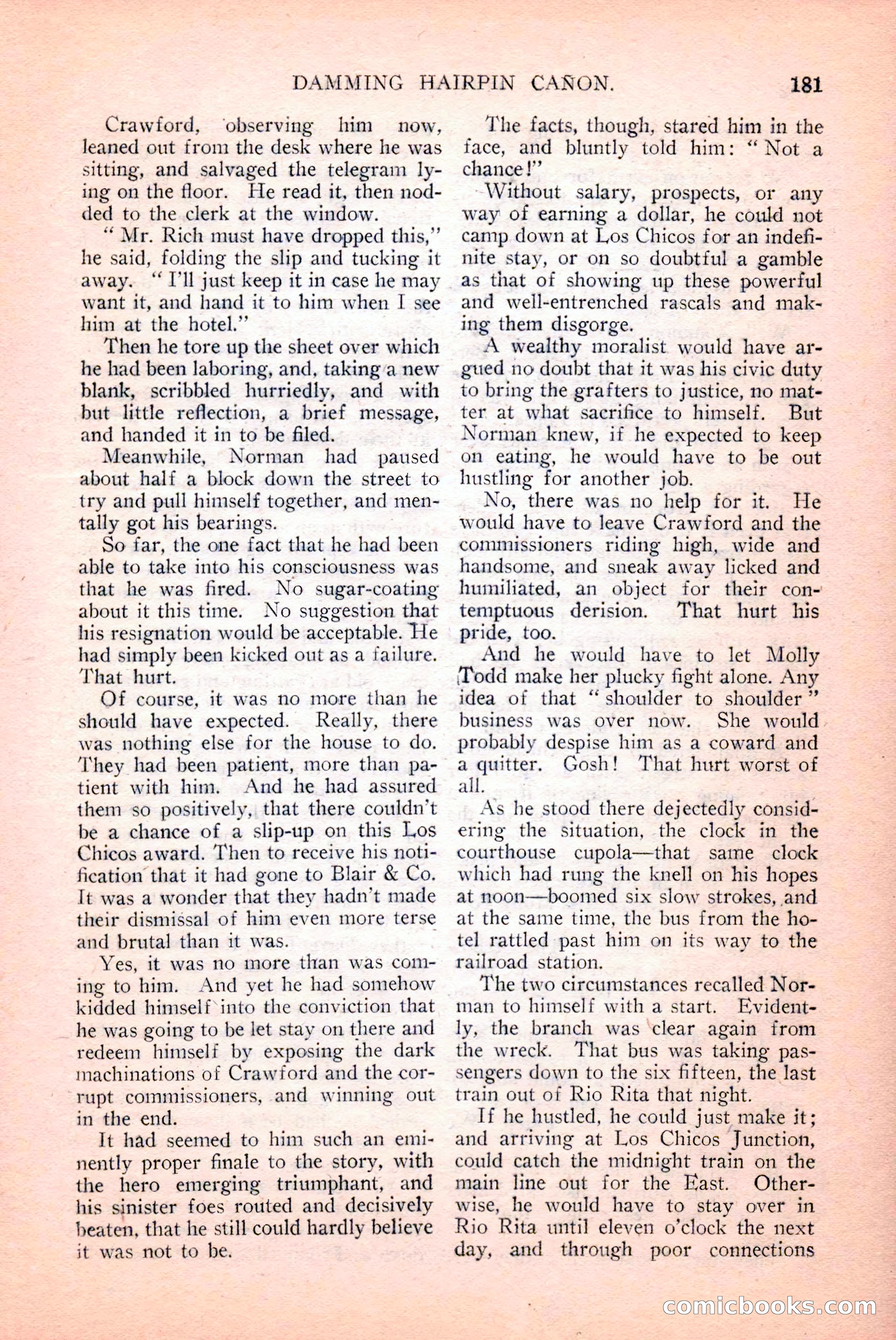
A restored page from Pulp Fiction, 1928. Page through the whole issue in the reader above.
📄 Transcribed text from this page (OCR, searchable)
Machine-transcribed from the original scan — historical spelling and the odd misread are preserved.
DAMMING HAIRPIN CANON. Crawford, ‘observing him now, leaned out from the desk where he was sitting, and salvaged the telegram ly- ing on the floor. He read it, then nod- ded to the clerk at the window. “Mr. Rich must have dropped this,” he said, folding the slip and tucking it away. “I'll just keep it in case he may want it, and hand it to him when I see him at the hotel.”’ Then he tore up the sheet over which he had been laboring, and, taking’a new blank, scribbled hurriedly, and with but little reflection, a brief message, and handed it in to be filed. Meanwhile, Norman had _ paused about half a block down the street to try and pull himself together, and men- tally got his bearings. So far, the one fact that he had been able to take into his consciousness was that he was fired. No sugar-coating about it this time. No suggestion that his resignation would be acceptable. He had simply been kicked out as a failure. That hurt. Of course, it was no more than he should have expected. Really, there was nothing else for the house to do. They had been patient, more than pa- tient with him. And he had assured them so positively, that there couldn't be a chance of a slip-up on this Los Chicos award. Then to receive his noti- fication that it had gone to Blair & Co. It was a wonder that they hadn’t made their dismissal of him even more terse and brutal than it was. Yes, it was no more than was com- ing to him. And yet he had somehow kidded himself into the conviction that he was going to be let stay on there and redeem himself by exposing the dark machinations of Crawford and the cor- rupt commissioners, and winning out in the end. It had seemed to him such an emi- nently proper finale to the story, with the hero emerging triumphant, and his sinister foes routed and decisively beaten, that he still could hardly believe it was not to be. 181 The facts, though, stared him in the face, and bluntly told him: “ Not a chance!” Without salary, prospects, or any way of earning a dollar, he could not camp down at Los Chicos for an indefi- nite stay, or on so doubtful a gamble as that of showing up these powerful and well-entrenched rascals and mak- ing them disgorge. A wealthy moralist would have ar- gued no doubt that it was his civic duty to bring the grafters to justice, no mat- ter at what sacrifice to himself. But Norman knew, if he expected to keep on eating, he would have to be out hustling for another job. No, there was no help for it. He would have to leave Crawford and the commissioners riding high, wide and handsome, and sneak away licked and humiliated, an object for their con- temptuous derision. That hurt his pride, too. And he would have to let Molly Todd make her plucky fight alone. Any idea of that “‘ shoulder to shoulder ” business was over now. probably despise him as a coward and a quitter. Gosh! That hurt worst of all. As he stood there dejectedly consid- ering the situation, the clock in the courthouse cupola—that same clock which had rung the knell on his hopes at noon—boomed six slow strokes, and at the same time, the bus from the ho- tel rattled past him on its way to the railroad station. The two circumstances recalled Nor- man to himself with a start. Evident- ly, the branch was ‘clear again from the wreck. That bus was taking pas- sengers down to the six fifteen, the last train out of Rio Rita that night. If he hustled, he could just make it; and arriving at Los Chicos Junction, could catch the midnight train on the main line out for the East. Other- wise, he would have to stay over in Rio Rita until eleven o’clock the next day, and through poor connections DOOKS COWMUC She would. (E)