
Pulp Fiction, 1928 · page 44 of 148
Argosy All-Story Weekly, April 28, 1928 — page 44: what you’re looking at
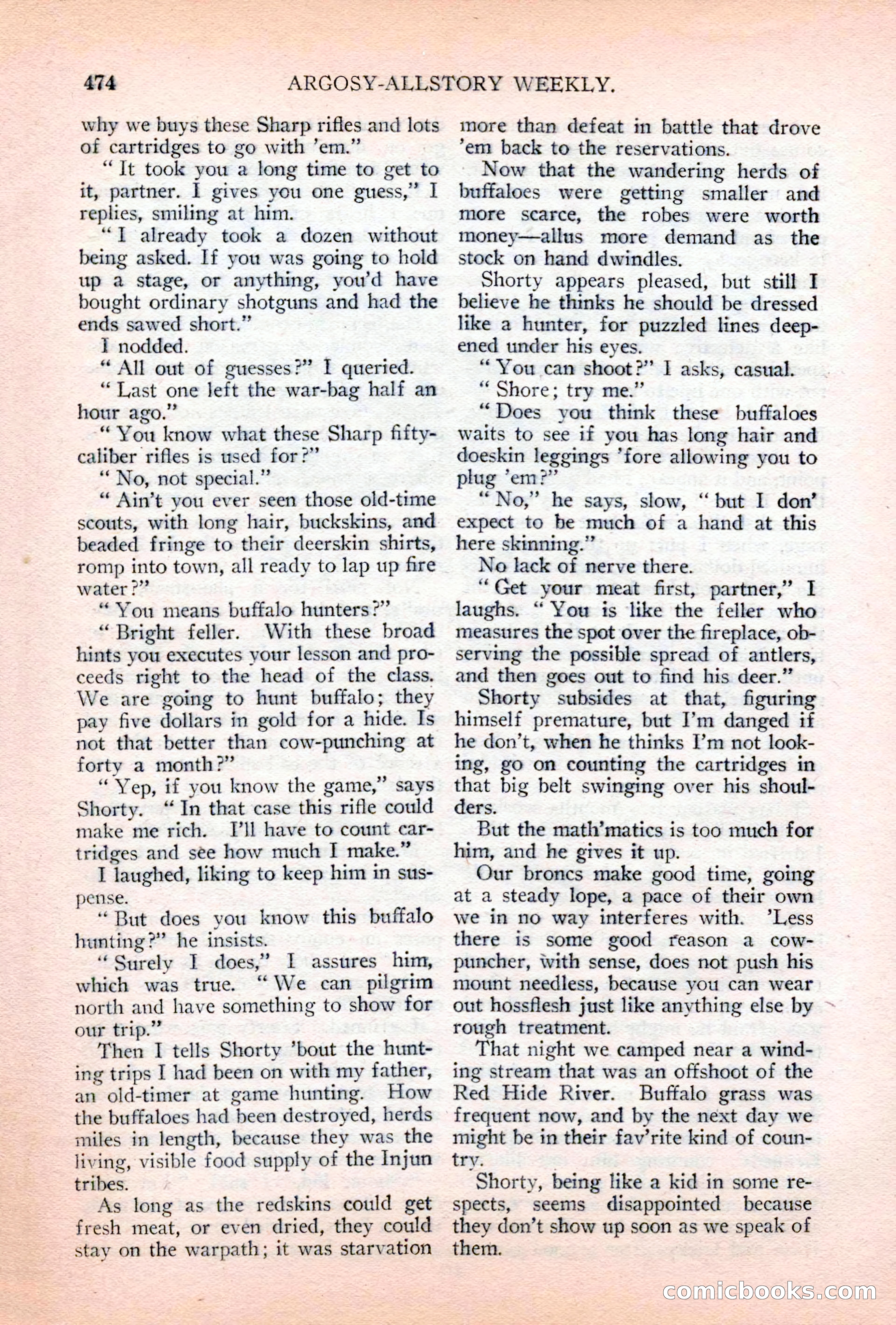
A restored page from Pulp Fiction, 1928. Page through the whole issue in the reader above.
📄 Transcribed text from this page (OCR, searchable)
Machine-transcribed from the original scan — historical spelling and the odd misread are preserved.
474 why we buys these Sharp rifles and lots of cartridges to go with ’em.” “It took you a long time to get to it, partner. 1 gives you one guess,” I replies, smiling at him. “IT already took a dozen without being asked. If you was going to hold up a stage, or anything, you'd have bought ordinary shotguns and had the ends sawed short.” 7 1 nodded. “ All out of guesses?” I queried. “Last one left the war-bag half an hour ago.” “You know what these Sharp fifty- caliber rifles is used for?” ‘No, not special.” “ Ain’t you ever seen those old-time scouts, with long hair, buckskins, and beaded fringe to their deerskin shirts, romp into town, all ready to lap up fire water?” “You means buffalo hunters?” “Bright feller. With these broad hints you executes your lesson and pro- ceeds right to the head of the class. We are going to hunt buffalo; they pay five dollars in gold for a hide. Is not that better than cow-punching at forty a month?” “Yep, if you know the game,” says Shorty. “In that case this rifle could make me rich. [ll have to count car- tridges and see how much I make.” I laughed, liking to keep him in sus- pense. “But does you know this buffalo hunting?” he insists. ‘Surely I does,” I assures him, which was true. “We can pilgrim north and have something to show for our trip.” Then I tells Shorty ‘bout the hunt- ing trips I had been on with my father, an old-timer at game hunting. How the buffaloes had been destroyed, herds miles in length, because they was the living, visible food supply of the Injun tribes. As long as the redskins could get fresh meat, or even dried, they could stay on the warpath; it was starvation ARGOSY-ALLSTORY WEEKLY. more than defeat in battle that drove "em back to the reservations. Now that the wandering herds of buffaloes were getting smaller and more scarce, the robes were worth money—allus more demand as the stock on hand dwindles. Shorty appears pleased, but still I believe he thinks he should be dressed like a hunter, for puzzled lines deep- ened under his eyes. “You can shoot?’ I asks, casual. “‘ Shore; try me.” “Does you think these buffaloes waits to see if you has long hair and doeskin leggings “fore allowing you to plug em?” “No,” he says, slow, ‘“ but I don’ expect to be much of a hand at this here skinning.” No lack of nerve there. “Get your meat first, partner,” I laughs. “ You is like the feller who measures the spot over the fireplace, ob- serving the possible spread of antlers, and then goes out to find his deer.” Shorty subsides at that, figuring himself premature, but I’m danged if he don’t, when he thinks I’m not look- ing, go on counting the cartridges in that big belt swinging over his shoul- ders. But the math’matics is too much for him, and he gives it up. Our broncs make good time, going at a steady lope, a pace of their own we in no way interferes with. ’Less there is some good reason a cow- puncher, with sense, does not push his mount needless, because you can wear out hossflesh just like anything else by ~ rough treatment. That night we camped near a wind- ing stream that was an offshoot of the Red Hide River. Buffalo grass was frequent now, and by the next day we might be in their fav’rite kind of coun- try. Shorty, being like a kid in some re- spects, seems disappointed because they don’t show up soon as we speak of them. CORMMICLOOOKS (C@)