
Pulp Fiction, 1928 · page 54 of 148
Argosy All-Story Weekly, April 28, 1928 — page 54: what you’re looking at
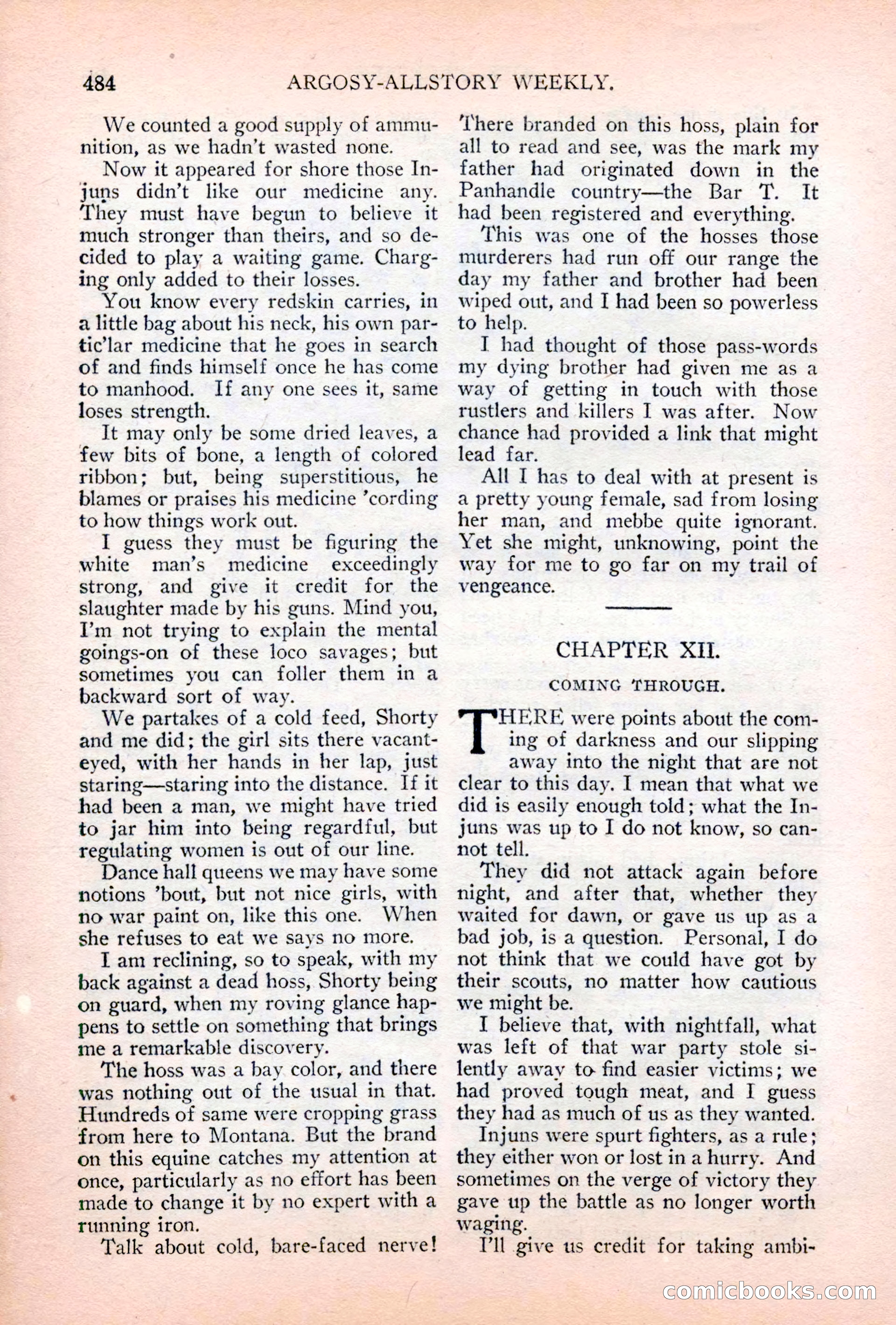
A restored page from Pulp Fiction, 1928. Page through the whole issue in the reader above.
📄 Transcribed text from this page (OCR, searchable)
Machine-transcribed from the original scan — historical spelling and the odd misread are preserved.
484 We counted a good supply of ammu- nition, as we hadn’t wasted none. Now it appeared for shore those In- juns didn’t like our medicine any. They must have begun to believe it much stronger than theirs, and so de- cided to play a waiting game. Charg- ing only added to their losses. You know every redskin carries, in a little bag about his neck, his own par- tic’ lar medicine that he goes in search of and finds himself once he has come to manhood. If any one sees it, same loses strength. It may only be some dried leaves, a few bits of bone, a length of colored ribbon; but, being superstitious, he blames or praises his medicine ’cording to how things work out. I guess they must be figuring the white man’s medicine’ exceedingly strong, and give it credit for the slaughter made by his guns. Mind you, I’m not trying to explain the mental goings-on of these loco savages; but sometimes you can foller them in a backward sort of way. We partakes of a cold feed, Shorty and me did; the girl sits there vacant- eyed, with her hands in her lap, just staring—staring into the distance. If it had been a man, we might have tried to jar him into being regardful, but regulating women is out of our line. Dance hall queens we may have some notions ’bout, but not nice girls, with no war paint on, like this one. When she refuses to eat we says no more. I am reclining, so to speak, with my back against a dead hoss, Shorty being on guard, when my roving glance hap- pens to settle on something that brings me a remarkable discovery. The hoss was a bay color, and there was nothing out of the usual in that. Hundreds of same were cropping grass from here to Montana. But the brand on this equine catches my attention at once, particularly as no effort has been made to change it by no expert with a running iron. Talk about cold, bare-faced nerve! ARGOSY-ALLSTORY WEEKLY. ‘There branded on this hoss, plain for all to read and see, was the mark my father had originated down in the Panhandle country—the Bar T. It had been registered and everything. This was one of the hosses those murderers had run off our range the day my father and brother had been wiped out, and I had been so powerless to help. I had thought of those pass-words my dying brother had given me as a way of getting in touch with those rustlers and killers I was after. Now chance had provided a link that might lead far. All I has to deal with at present is a pretty young female, sad from losing her man, and mebbe quite ignorant. Yet she might, unknowing, point the way for me to go far on my trail of vengeance. CHAPTER XII. COMING THROUGH. HERE were points about the com- ing of darkness and our slipping away into the night that are not clear to this day. I mean that what we did is easily enough told; what the In- juns was up to I do not know, so can- not tell. They did not attack again before night, and after that, whether they waited for dawn, or gave us up as a bad job, is a question. Personal, I do not think that we could have got by their scouts, no matter how cautious we might be. I believe that, with nightfall, what was left of that war party stole si- lently away to find easier victims; we had proved tough meat, and I guess they had as much of us as they wanted. Injuns were spurt fighters, as a rule; they either won or lost ina hurry. And sometimes on the verge of victory they gave up the battle as no longer worth waging. Pil give us credit for taking ambi- ECORMICLOOKS (C@