
Pulp Fiction, 1928 · page 137 of 150
Argosy All-Story Weekly, July 7, 1928 — page 137: what you’re looking at
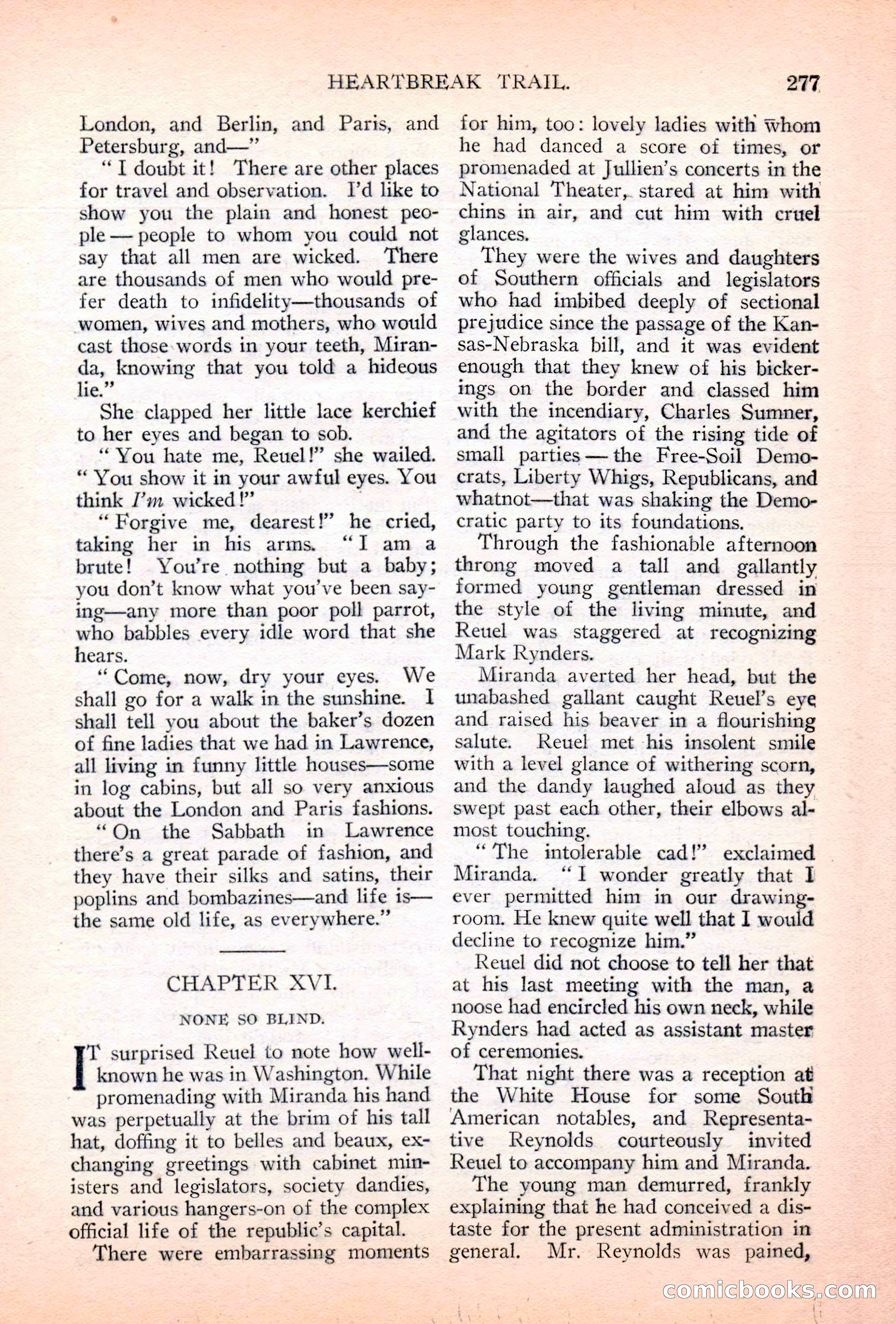
A restored page from Pulp Fiction, 1928. Page through the whole issue in the reader above.
📄 Transcribed text from this page (OCR, searchable)
Machine-transcribed from the original scan — historical spelling and the odd misread are preserved.
HEARTBREAK TRAIL, London, and Berlin, and Paris, and Petersburg, and—” ‘‘[ doubt it! There are other places for travel and observation. I'd like to show you the plain and honest peo- ple — people to whom you could not say that all men are wicked. There are thousands of men who would pre- fer death to infidelity—thousands of women, wives and mothers, who would cast those words in your teeth, Miran- da, knowing that you told a hideous lie.” She clapped her little lace kerchief to her eyes and began to sob. “You hate me, Reuel!” she wailed. “You show it in your awful eyes. You think [’m wicked!” 7 “Forgive me, dearest!” he cried, taking her in his arms. “I am a brute! You're nothing but a baby; you don’t know what you've been say- ing—any more than poor poll parrot, who babbles every idle word that she hears. “Come, now, dry your eyes. We shall go for a walk in the sunshine. I shall tell you about the baker’s dozen of fine ladies that we had in Lawrence, all living in funny little houses—some in log cabins, but all so very anxious about the London and Paris fashions. “On the Sabbath in Lawrence there’s a great parade of fashion, and they have their silks and satins, their poplins and bombazines—and life is— the same old life, as everywhere.” CHAPTER XVI. NONE SO BLIND. T surprised Reuel to note how well- known he was in Washington. While promenading with Miranda his hand was perpetually at the brim of his tall hat, doffing it to belles and beaux, ex- changing greetings with cabinet min- isters and legislators, society dandies, and various hangers-on of the complex official life of the republic’s capital. There were embarrassing moments 277 for him, too: lovely ladies with Whom he had danced a score of times, or promenaded at Jullien’s concerts in the National Theater, stared at him with chins in air, and cut him with cruel glances. They were the wives and daughters of Southern officials and legislators who had imbibed deeply of sectional prejudice since the passage of the Kan- sas-Nebraska bill, and it was evident enough that they knew of his bicker- ings on the border and classed him with the incendiary, Charles Sumner, and the agitators of the rising tide of small parties—the Free-Soil Demo- crats, Liberty Whigs, Republicans, and whatnot—that was shaking the Demo- cratic party to its foundations. Through the fashionable afternoon throng moved a tall and gallantly formed young gentleman dressed in the style of the living minute, and Reuel was staggered at recognizing Mark Rynders. Miranda averted her head, but the unabashed gallant caught Reuel’s eye and raised his beaver in a flourishing salute. Reuel met his insolent smile with a level glance of withering scorn, and the dandy laughed aloud as they swept past each other, their elbows al- most touching. “The intolerable cad!’ exclaimed Miranda. “I wonder greatly that I ever permitted him in our drawing- room. He knew quite well that I reall decline to recognize him.” Reuel did not choose to tell her that at his last meeting with the man, a noose had encircled his own neck, while Rynders had acted as assistant master of ceremonies. That night there was a reception at the White House for some South American notables, and Representa- tive Reynolds courteously invited Reuel to accompany him and Miranda. The young man demurred, frankly explaining that he had conceived a dis- taste for the present administration in general. Mr. Reynolds was pained, NOOO KS COLMMUC Ol