
Pulp Fiction, 1920 · page 147 of 232
Argosy All-Story Weekly, Vol. 123, No. 3 — page 147: what you’re looking at
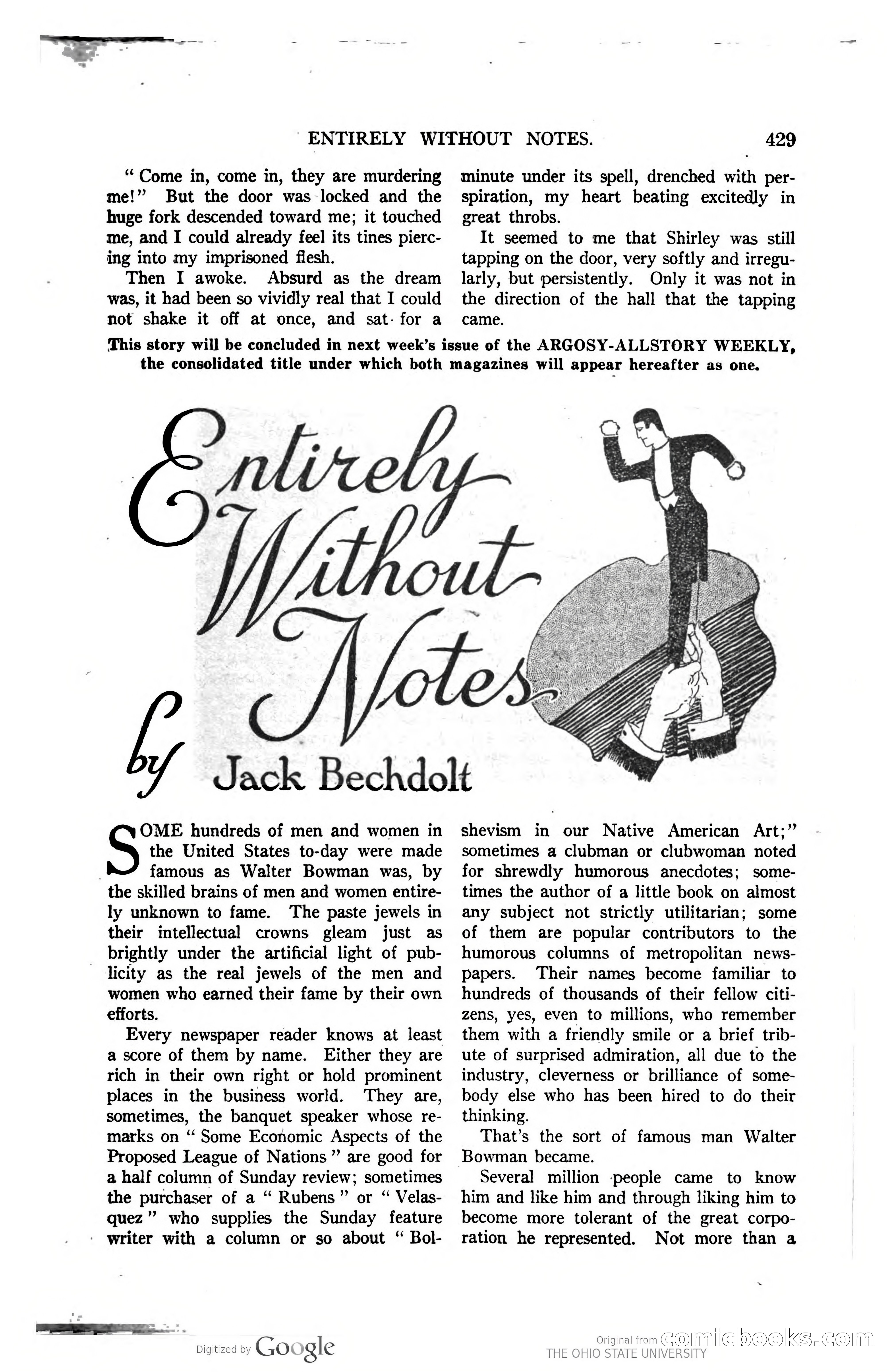
A restored page from Pulp Fiction, 1920. Page through the whole issue in the reader above.
📄 Transcribed text from this page (OCR, searchable)
Machine-transcribed from the original scan — historical spelling and the odd misread are preserved.
ENTIRELY WITHOUT NOTES. © “Come in, come in, they are murdering me!” But the door was-locked and the huge fork descended toward me; it touched me, and I could already feel its tines pierc- ing into my imprisoned flesh. Then I awoke. Absurd as the dream was, it had been so vividly real that I could not shake it off at once, and sat- for a 429 minute under its spell, drenched with per- spiration, my heart beating excitedly in great throbs. It seemed to me that Shirley was still tapping on the door, very softly and irregu- larly, but persistently. Only it was not in the direction of the hall that the tapping came. This story will be concluded in next week’s issue of the ARGOSY-ALLSTORY WEEKLY, the consolidated title under which both magazines will appear hereafter as one. ‘A J ack Bechdolt the United States to-day were made famous as Walter Bowman was, by the skilled brains of men and women entire- ly unknown to fame. The paste jewels in their intellectual crowns gleam just as brightly under the artificial light of pub- licity as the real jewels of the men and women who earned their fame by their own efforts. Every newspaper reader knows at least a score of them by name. Either they are rich in their own right or hold prominent places in the business world. They are, sometimes, the banquet speaker whose re- marks on “ Some Economic Aspects of the Proposed League of Nations ” are good for a half column of Sunday review; sometimes the purchaser of a “ Rubens” or “ Velas- quez’”’ who supplies the Sunday feature writer with a column or so about “ Bol- Sn hundreds of men and women in Digitized by (“Go gle shevism in our Native American Art;”’ sometimes a clubman or clubwoman noted for shrewdly humorous anecdotes; some- times the author of a little book on almost any subject not strictly utilitarian; some of them are popular contributors to the humorous columns of metropolitan news- papers. Their names become familiar to hundreds of thousands of their fellow citi- zens, yes, even to millions, who remember them with a friendly smile or a brief trib- ute of surprised admiration, all due to the industry, cleverness or brilliance of some- body else who has been hired to do their thinking. That’s the sort of famous man Walter Bowman became. Several million people came to know him and like him and through liking him to become more tolerant of the great corpo- ration he represented. Not more than a NOOO @) S (C(O) Original from (C(O)[/\ 1) E OHIO STATE UNIVERSITY Hs an