
Pulp Fiction, 1920 · page 25 of 232
Argosy All-Story Weekly, Vol. 123, No. 3 — page 25: what you’re looking at
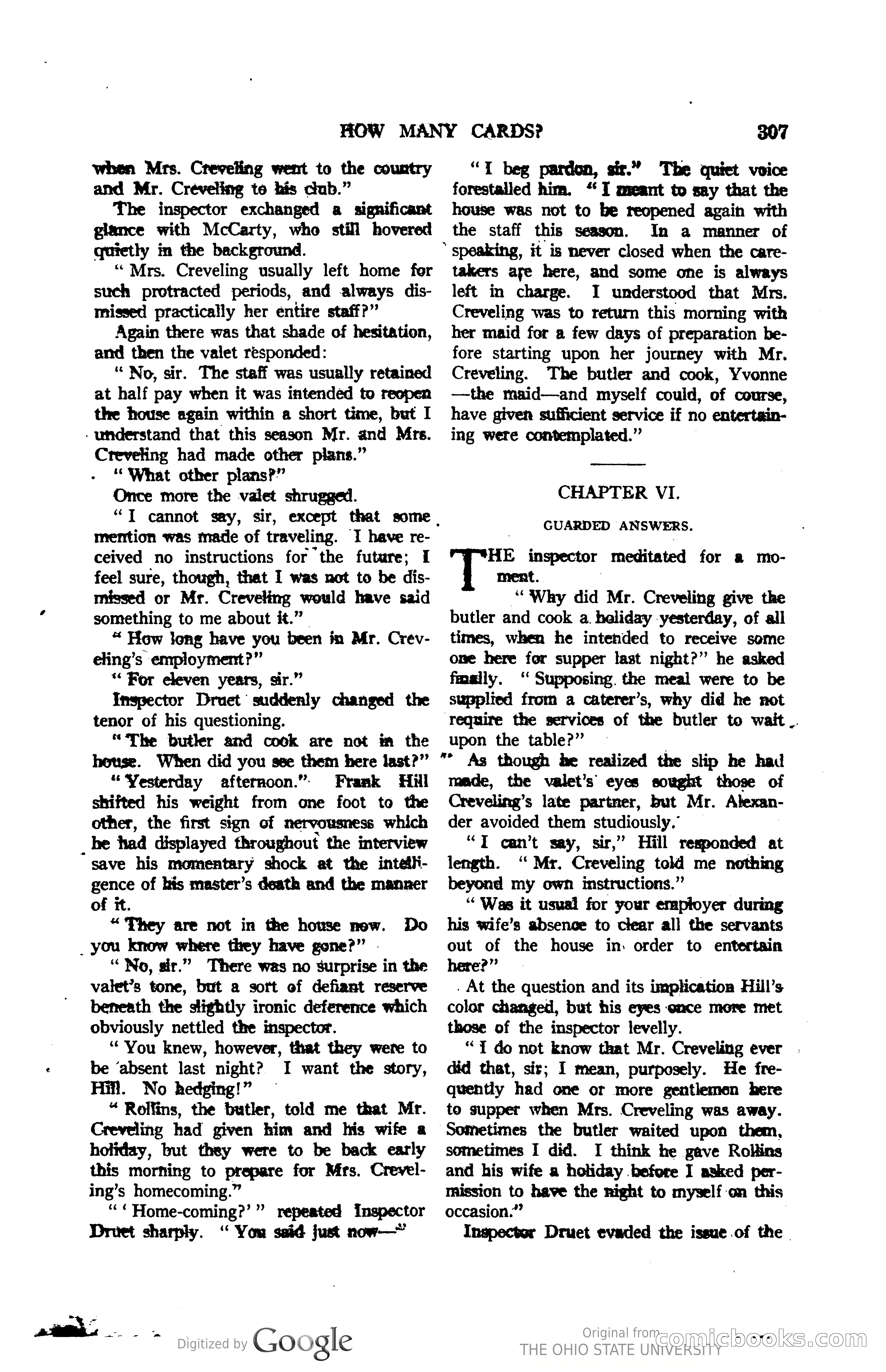
A restored page from Pulp Fiction, 1920. Page through the whole issue in the reader above.
📄 Transcribed text from this page (OCR, searchable)
Machine-transcribed from the original scan — historical spelling and the odd misread are preserved.
= : Fadl toe a si cma - me when Mrs. Creveling went to the country and Mr. Creveling to his club.” The inspector exchanged a significant giance with McCarty, who still hovered quietly in the background. “Mrs. Creveling usually left home fer such protracted periods, and always dis- missed practically her entire staff?” Again there was that shade of hesitation, and then the valet responded: “ No, sir. The staff was usually retained at half pay when it was intended to reopen the house again within a short time, but I understand that this season Mr. and Mrs. Creveling had made other plans.” “What other plans?” Once more the valet shrugged. “I cannot say, sir, except that some. mention was made of traveling. I have re- ceived no instructions for the future; I feel sure, though, that I was not to be dis- missed or Mr. Creveling would have said something to me about it.” “ How long have you been in Mr. Crev- eling’s employment?” “ For eleven years, sir.” Inspector Druet suddenly changed the tenor of his questioning. “The butler and cook are not im the house. When did you see them here last?” “Yesterday afternoon.” Frank Hil shifted his weight from one foot to the other, the first sign of nervousness which _ he had displayed throughout the interview save his momentary shock at the intetli- gence of his master’s death and the manner of it. “They are not in the house now. _ you know where they have gone?” . “No, sir.” There was no surprise in the valet’s tone, but a sort of defiant reserve beneath the slightly ironic deference which obviously nettled the inspector. “You knew, however, that they were to be ‘absent last night? I want the story, Fil. No hedging!” — “ Rollins, the butler, told me that Mr. Creveling had given him and his wife a holiday, but they were to be back early this morfing to prepare for Mrs. Crevel- ing’s homecoming.” ‘““* Home-coming?’”’ repeated Inspector Druet sharply. “ You said just now—” Do 307 “TI beg pardon, sir.” The quiet voice forestalled him. “‘I meant to say that the house was not to be reopened again with the staff this season. In a manner of ’ speaking, it is never closed when the care- takers ape here, and some one is always left in charge. I understood that Mrs. Creveling was to return this morning with her maid for a few days of preparation be- fore starting upon her journey with Mr. Creveling. The butler and cook, Yvonne —the maid—and myself could, of course, have given sufficient service if no entertain- ing were contemplated.” | CHAPTER VI. GUARDED ANSWERS. HE inspector meditated for a mo- ment. ‘““Why did Mr. Creveling give the butler and cook a. heliday. yesterday, of all times, when he intended to receive some one here for supper last night?” he asked finally. ‘ Supposing. the meal were to be supplted from a caterer’s, why did he not ‘Tequire the services of the butler to wait _. upon the table?” | "* As though he realized the slip he had maade, the valet’s eyes sought those of Creveling’s late partner, but Mr. Alexan- der avoided them studiously.” “T can’t say, sir,’ Hill responded at length. ‘Mr. Creveling teld me nothing beyond my own instructions.” “Was it usual for your emptoyer during his wife’s absence to clear all the servants out of the house in: order to entertain here?” . At the question and its implication Hill’s color changed, but his eyes once more met those of the inspector levelly. “ {1 do not know that Mr. Creveling ever . did that, sir; I mean, purposely. He fre- quently had one or more gentlemen here to supper when Mrs. Creveling was away. ‘Sometimes the butler waited upon them, sometimes I did. I think he gave Roliins and his wife a holiday before I asked per- mission to have the night to myself on this occasion.” Inspector Druet evaded the issue of the | ie OIE EL ING 10) aa JOO S C@ 7 a