
Pulp Fiction, 1920 · page 91 of 232
Argosy All-Story Weekly, Vol. 123, No. 3 — page 91: what you’re looking at
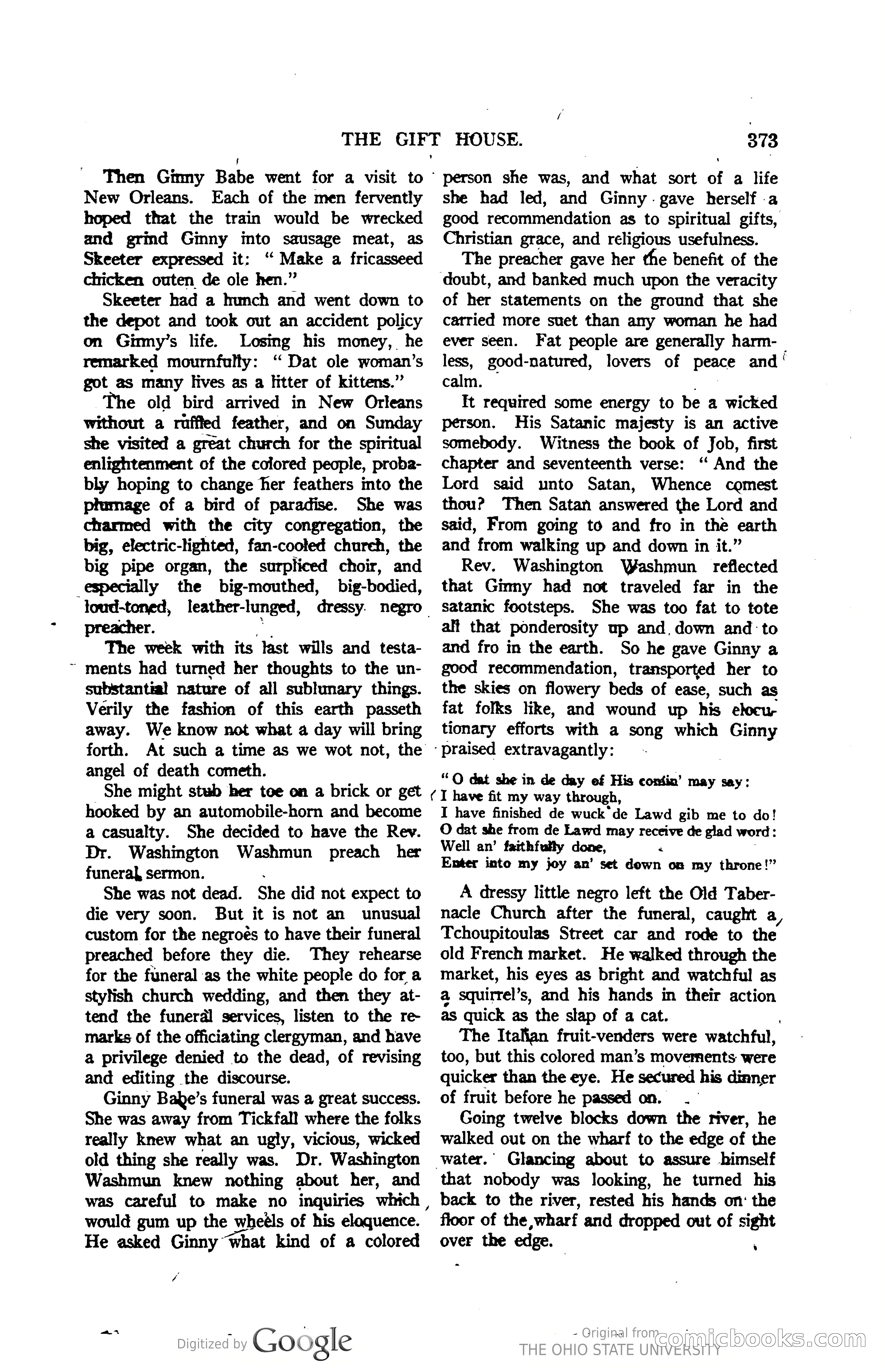
A restored page from Pulp Fiction, 1920. Page through the whole issue in the reader above.
📄 Transcribed text from this page (OCR, searchable)
Machine-transcribed from the original scan — historical spelling and the odd misread are preserved.
THE GIFT HOUSE. Then Gimy Babe went for a visit to New Orleans. Each of the men fervently hoped that the train would be wrecked and grind Gimny imto sausage meat, as Skeeter expressed it: ‘‘ Make a fricasseed chicken outen de ole hen.” Skeeter had a hunch and went down to the depot and took out an accident policy on Gimy’s life. Losing his money, he remarked mournfulty: “Dat ole woman’s got as many lives as a litter of kittens.” The old bird arrived in New Orleans without a ruffted feather, and on Sunday she visited a great church for the spiritual enlightenment of the colored people, proba- bly hoping to change her feathers into the phumage of a bird of paradise. She was charmed with the city congregation, the big, electric-lighted, fan-cooted chureh, the big pipe organ, the surpliced choir, and especially the big-mouthed, big-bodied, -Joud-toned, leather-lunged, dressy. negro preacher. The week with its last wills and testa- ~ ments had turned her thoughts to the un- substantial nature of all sublunary things. Verily the fashion of this earth passeth away. We know not what a day will bring forth. At such a time as we wot not, the angel of death cometh. 373 ‘ person she was, and what sort af a life she had led, and Ginny . gave herself -a good recommendation as to spiritual gifts, Christian grace, and religious usefulness. The preacher gave her the benefit of the doubt, and banked much upon the veracity of her statements on the ground that she carried more suet than any woman he had ever seen. Fat people are generally harm- less, good-natured, lovers of peace and ‘ calm. Tt required some energy to be a wicked person. His Satanic majesty is an active somebody. Witness the book of Job, first chapter and seventeenth verse: ‘‘ And the Lord said unto Satan, Whence comest thou? Then Satan answered the Lord and said, From going to and fro in the earth and from walking up and down in it.” Rev. Washington YYashmun reflected that Gimny had not traveled far in the satanic footsteps. She was too fat to tote alt that ponderosity up and, down and to and fro in the earth. So he gave Ginny a good recommendation, transported her to the skies on flowery beds of ease, such as fat folks like, and wound up his elocu- tionary efforts with a song which Ginny ‘praised extravagantly: “OQ dat she in de day ef His contin’ may say: She might stub her toe on a brick or get / 17 have fit my way through, hooked by an automobile-horn and become a casualty. She decided to have the Rev. Dr. Washington Washmun preach her funeral, sermon. She was not dead. She did not expect to die very soon. But it is not an unusual custom for the negroés to have their funeral preached before they die. They rehearse for the funeral as the white people do for a stylish church wedding, and then they at- tend the funerdl services, listen to the re- marks of the officiating clergyman, and have a privilege denied to the dead, of revising and editing the discourse. Ginny BaXe’s funeral was a great success. She was away from Tickfall where the folks really knew what an ugly, vicious, wicked old thing she really was. Dr. Washington Washmun knew nothing about her, and was careful to make no inquiries which | would gum up the > wheels of his eloquence. He asked Ginny what kind of a colored Zi zedvy Google I have finished de wuck de Lawd gib me to do! O dat she from de Lawd may receive de glad word: Well an’ faithfully done, « Enter into my joy an’ set down on my throne!” A dressy little negro left the Old Taber- nacle Church after the funeral, caught a, Tchoupitoulas Street car and rode to the old French market. He walked through the market, his eyes as bright and watchful as a squirrel’s, and his hands in their action as quick as the slap of a cat. The Italian fruit-venders were watchful, too, but this colored man’s movements were quicker than the eye. He secured his dinner of fruit before he passed on. _— Going twelve blocks down the river, he walked out on the wharf to the edge of the water. Glancing about to assure himself that nobody was looking, he turned his back to the river, rested his hands on‘ the floor of the wharf and dropped out of sight over the edge. v CO© mm