
Pulp Fiction, 1921 · page 37 of 146
Argosy All-Story Weekly, February 5, 1921 — page 37: what you’re looking at
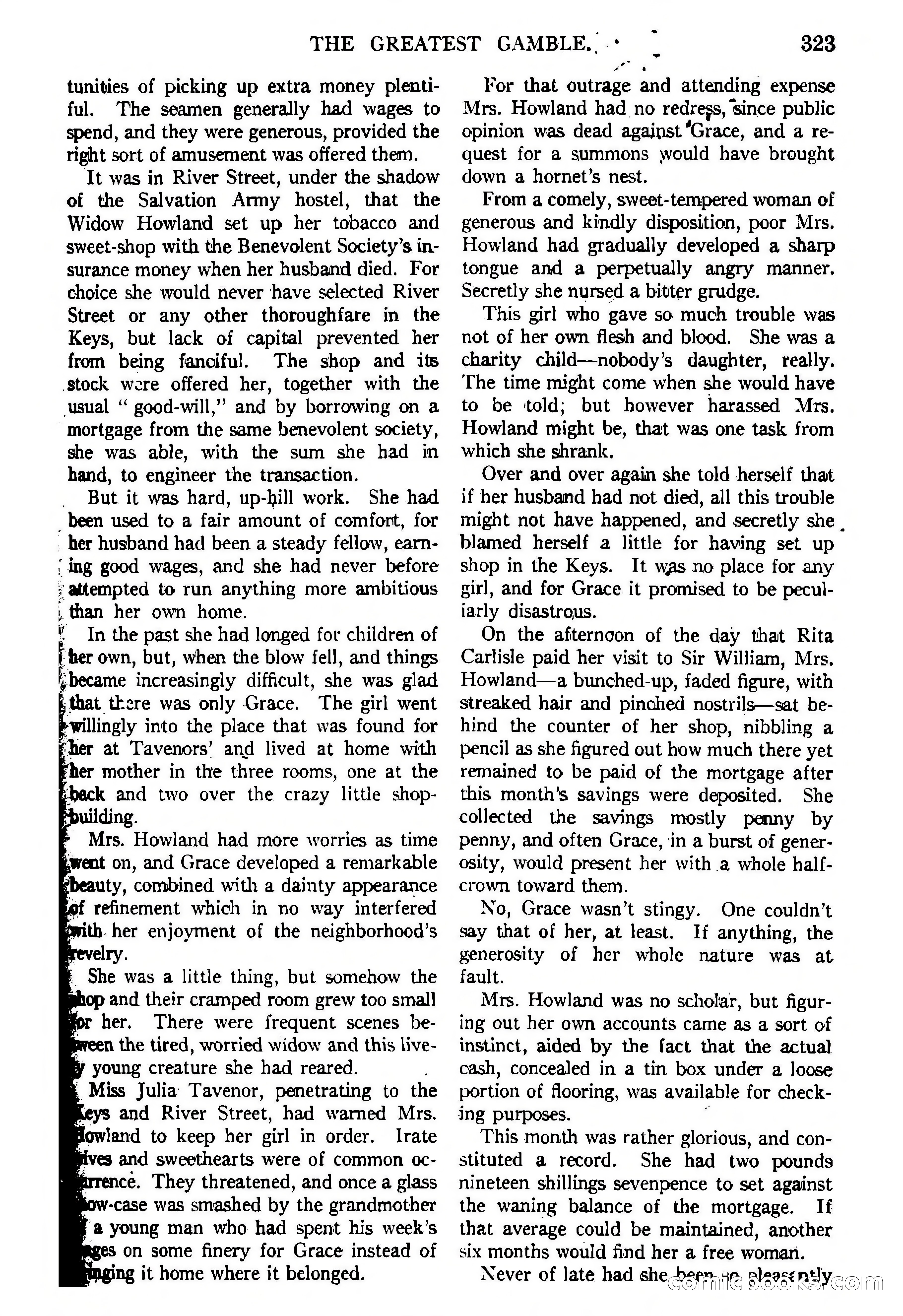
A restored page from Pulp Fiction, 1921. Page through the whole issue in the reader above.
📄 Transcribed text from this page (OCR, searchable)
Machine-transcribed from the original scan — historical spelling and the odd misread are preserved.
THE GREATEST GAMBLE. -: tunities of picking up extra money plenti- ful. The seamen generally had wages to spend, and they were generous, provided the right sort of amusement was offered them. It was in River Street, under the shadow of the Salvation Army hostel, that the Widow Howland set up her tobacco and sweet-shop with the Benevolent Society’s in- surance money when her husband died. For choice she would never have selected River Street or any other thoroughfare in the Keys, but lack of capital prevented her from being fanoiful. The shop and its stock were offered her, together with the usual ‘‘ good-will,” and by borrowing on a mortgage from the same benevolent society, she was able, with the sum she had in hand, to engineer the transaction. But it was hard, up-hill work. She had _been used to a fair amount of comfort, for _ her husband had been a steady fellow, earn- ‘ing good wages, and she had never before ; attempted to run anything more ambitious than her own home. a In the past she had longed for children of ‘her own, but, when the blow fell, and things became increasingly difficult, she was glad that there was only Grace. The girl went bvitiogiy into the place that was found for ¢her at Tavenors’ and lived at home with Fher mother in the three rooms, one at the back and two over the crazy little shop- pbuilding. - Mrs. Howland had more worries as time ¥went on, and Grace developed a remarkable ‘beauty, combined with a dainty appearance of refinement which in no way interfered prevelry. K She was a little thing, but somehow the mhop and their cramped room grew too small for her. There were frequent scenes be- breen the tired, worried widow and this live- fy young creature she had reared. . s Miss Julia Tavenor, penetrating to the meys and River Street, had wamed Mrs. powland to keep her girl in order. Irate Fives and sweethearts were of common oc- firrence. They threatened, and once a glass mow-case was smashed by the grandmother $2 young man who had spent his week’s ges on some finery for Grace instead of ringing it home where it belonged. 323 For that outrage and attending expense Mrs. Howland had no redregs, ' since public opinion was dead against “Grace, and a re- quest for a summons would have brought down a hornet’s nest. From a comely, sweet-tempered woman of generous and kindly disposition, poor Mrs. Howland had gradually developed a sharp tongue and a perpetually angry manner. Secretly she nursed a bitter grudge. This girl who gave so much trouble was not of her own flesh and blood. She was a charity child—nobody’s daughter, really. The time might come when she would have to be ‘told; but however harassed Mrs. Howland might be, that was one task from which she shrank. Over and over again she told herself that if her husband had not died, all this trouble might not have happened, and secretly she . blamed herself a little for having set up shop in the Keys. It was no place for any girl, and for Grace it promised to be pecul- larly disastrous. On the afternoon of the day that Rita Carlisle paid her visit to Sir William, Mrs. Howland—a bunched-up, faded figure, with streaked hair and pinched nostrils—sat be- hind the counter of her shop, nibbling a pencil as she figured out how much there yet remained to be paid of the mortgage after this month’s savings were deposited. She collected the savings mostly penny by penny, and often Grace, ‘in a burst of gener- osity, would present her with a whole half- crown toward them. No, Grace wasn’t stingy. One couldn’t say that of her, at least. If anything, the generosity of her whole nature was at fault. Mrs. Howland was no scholar, but figur- ing out her own accounts came as a sort of instinct, aided by the fact that the actual cash, concealed in a tin box under a loose portion of flooring, was available for check- ing purposes. This month was rather glorious, and con- stituted a record. She had two pounds nineteen shillings sevenpence to set against the waning balance of the mortgage. If that average could be maintained, another six months would find her a free woman. Never of late had she been. se.cleasently <5 inn E>)