
Pulp Fiction, 1922 · page 63 of 176
Argosy All-Story Weekly, Vol. 146 No. 4 — page 63: what you’re looking at
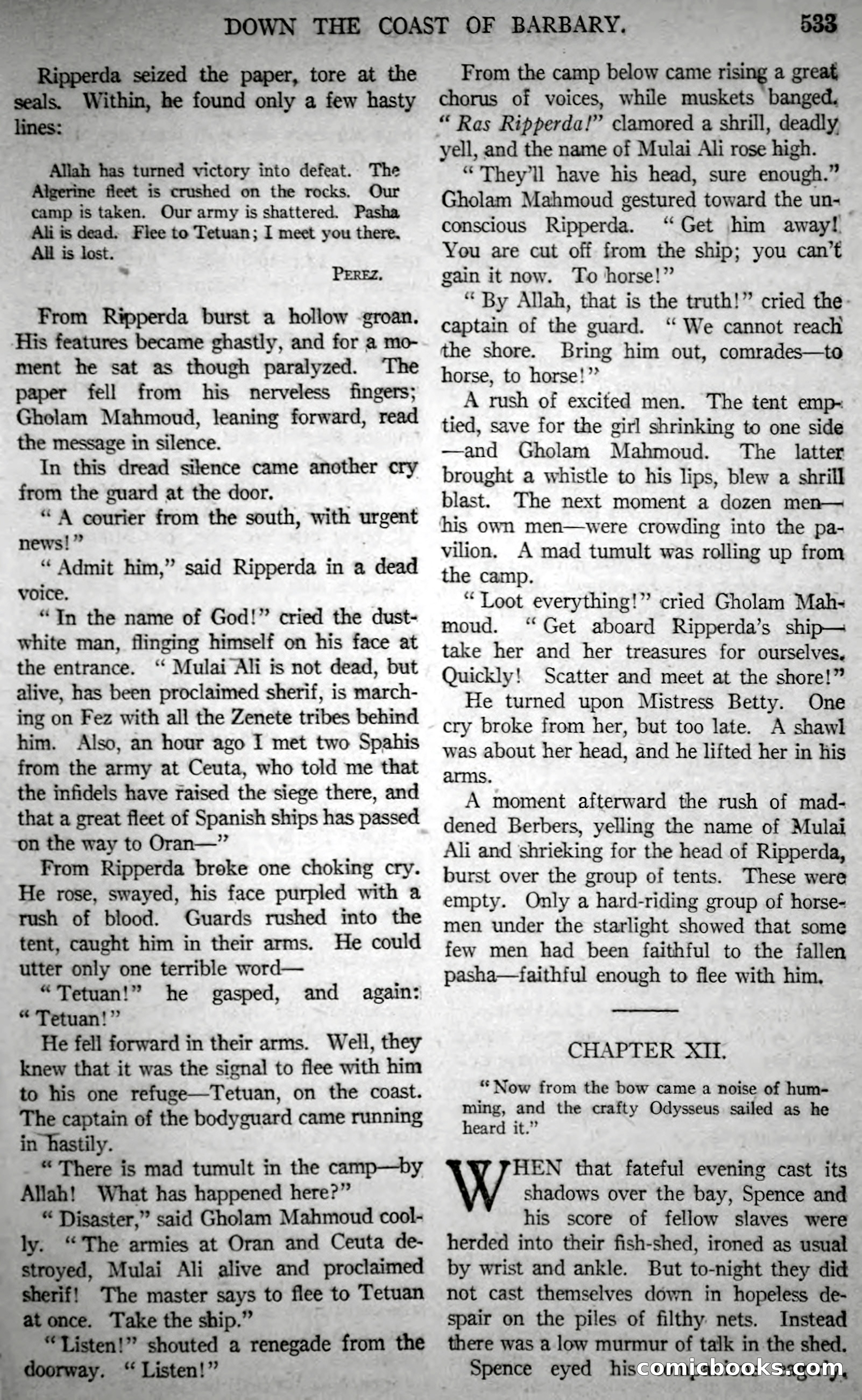
A restored page from Pulp Fiction, 1922. Page through the whole issue in the reader above.
📄 Transcribed text from this page (OCR, searchable)
Machine-transcribed from the original scan — historical spelling and the odd misread are preserved.
ark the paper, tore at the seals” Within, he found only a few hasty lines: — Allah 3 turned victory into defeat. The Algerine fleet is crushed on the rocks. Our camp is taken. Our army is shattered. Pasha Ali is dead. Flee to Tetuan; I meet you there. All is lost. , PEREZ, From Ripperda burst a hollow -groan. His features became ghastly, and for a mo- ment he sat as though paralyzed. The paper fell from his nerveless fingers; Ghoelam Mahmoud, leaning forward, read the message in silence. In this dread silence came another cry from the guard at the door. “ A courier from the south, with urgent news!” “ Admit him,” said Ripperda in a dead voice. “In the name of God!” cried the dust- white man, flinging himself on his face at the entrance. ‘“ Mulai Ali is not dead, but alive, has been proclaimed sherif, is march- ing on Fez with all the Zenete tribes behind him. Also, an hour ago I met two Spahis from the army at Ceuta, who told me that the infidels have raised the siege there, and that a great fleet of Spanish ships has passed on the way to Oran—” From Ripperda broke one choking cry. He rose, swayed, his face purpled with a rush of blood. Guards rushed into the tent, caught him in their arms. He could utter only one terrible word— “Tetuan!” he gasped, and again: “ Tetuan!” He fell forward in their arms. Well, they knew that it was the signal to flee with him to his one refuge—Tetuan, on the coast. The captain of the bodyguard came running in hastily. _ “ There is mad tumult in the camp—by Allah! What has happened here?” “ Disaster,” said Gholam Mahmoud cool- ly. “The armies at Oran and Ceuta de- _ stroyed, Mulai Ali alive and proclaimed sherif! The master says to flee to Tetuan it once. Take the ship.” “Tisten!” shouted a renegade from the A oa egal 533 From the camp below came rising a great chorus of voices, while muskets banged. “ Ras Ripperda!” clamored a shrill, deadly yell, and the name of Mulai Ali rose high. “They'll have his head, sure enough.” Gholam Mahmoud gestured toward the un-_ conscious Ripperda. “Get him away! You are cut off from the ship; you can’t gain it now. To horse!” “ By Allah, that is the truth!” cried the- captain of the guard. ‘“ We cannot reach the shore. Bring him out, comrades—to horse, to horse!” A rush of excited men. The tent emp- tied, save for the girl shrinking to one side —and Gholam Mahmoud. The latter brought a whistle to his lips, blew a shrill blast. The next moment a dozen men— his own men—were crowding into the pa- vilion. A mad tumult was rolling up from the camp. “ Loot everything!” cried Gholam Mah- moud. “Get aboard Ripperda’s ship— take her and her treasures for ourselves, Quickly! Scatter and meet at the shore!” He turned upon Mistress Betty. One cry broke from her, but too late. A shawl was about her head, and he lifted her in his arms. A moment afterward the rush of mad- dened Berbers, yelling the name of Mulai Ali and shrieking for the head of Ripperda, burst over the group of tents. These were empty. Only a hard-riding group of horse- men under the starlight showed that some few men had been faithful to the fallen pasha—faithful enough to flee with him, CHAPTER XII. “Now from the bow came a noise of hum- ming, and the crafty Odysseus sailed as he heard it.” HEN that fateful evening cast its W shadows over the bay, Spence and his score of fellow slaves were herded into their fish-shed, ironed as usual by wrist and ankle. But to-night they did not cast themselves down in hopeless de- spair on the piles of filthy nets. Instead there was a low murmur of talk in the shed. Spence eyed hiseiiii(el ever} <yqoroy)