
Pulp Fiction, 1922 · page 144 of 176
Argosy All-Story Weekly, December 2, 1922 — page 144: what you’re looking at
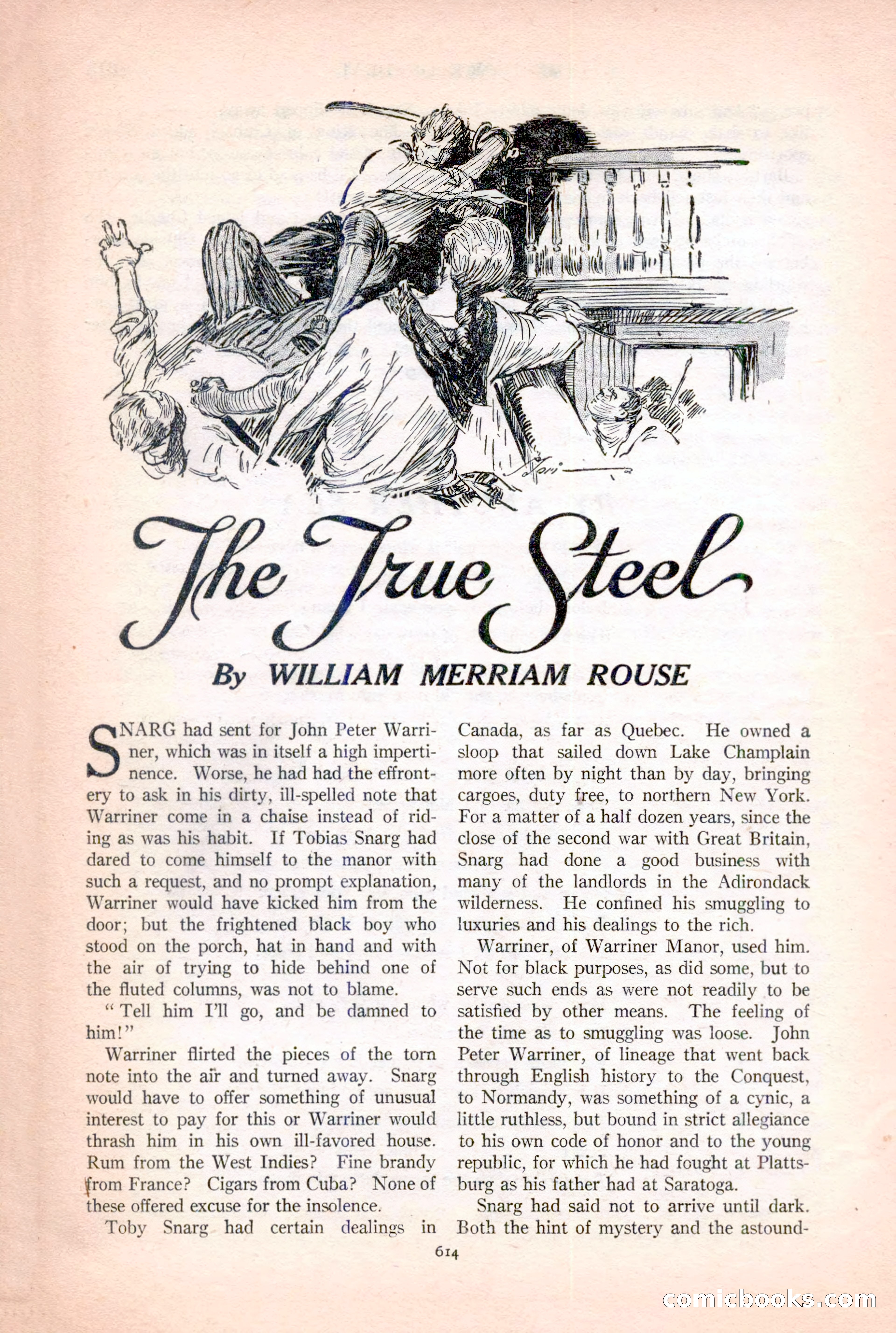
A restored page from Pulp Fiction, 1922. Page through the whole issue in the reader above.
📄 Transcribed text from this page (OCR, searchable)
Machine-transcribed from the original scan — historical spelling and the odd misread are preserved.
* Wik § ASS 4 A “ i - WMS 7) WR Derg See y ee, Hy 5 dof AYR} r; By WILLIAM MERRIAM ROUSE ner, which was in itself a high imperti- nence. Worse, he had had the effront- ery to ask in his dirty, ill-spelled note that Warriner come in a chaise instead of rid- ing as was his habit. If Tobias Snarg had dared to come himself to the manor with such a request, and no prompt explanation, Warriner would have kicked him from the door; but the frightened black boy who stood on the porch, hat in hand and with the air of trying to hide behind one of the fluted columns, was not to blame. “Tell him Ill go, and be damned to him!” Warriner flirted the pieces of the torn note into the air and turned away. Snarg would have to offer something of unusual interest to pay for this or Warriner would thrash him in his own ill-favored house. Rum from the West Indies? Fine brandy rom France? Cigars from Cuba? None of these offered excuse for the insolence. Toby Snarg had certain dealings in Se: had sent for John Peter Warri- Canada, as far as Quebec. He owned a sloop that sailed down Lake Champlain more often by night than by day, bringing cargoes, duty free, to northern New York. For a matter of a half dozen years, since the close of the second war with Great Britain, Snarg had done a good business with many of the landlords in the Adirondack wilderness. He confined his smuggling to luxuries and his dealings to the rich. Warriner, of Warriner Manor, used him. Not for black purposes, as did some, but to serve such ends as were not readily to be satisfied by other means. ‘The feeling of the time as to smuggling was loose. John Peter Warriner, of lineage that went back through English history to the Conquest, to Normandy, was something of a cynic, a little ruthless, but bound in strict allegiance to his own code of honor and to the young republic, for which he had fought at Platts- burg as his father had at Saratoga. Snarg had said not to arrive until dark. Both the hint of mystery and the astound- 614 ComicoookxS. Conn