
Pulp Fiction, 1923 · page 73 of 196
Argosy All-Story Weekly, October 6, 1923 — page 73: what you’re looking at
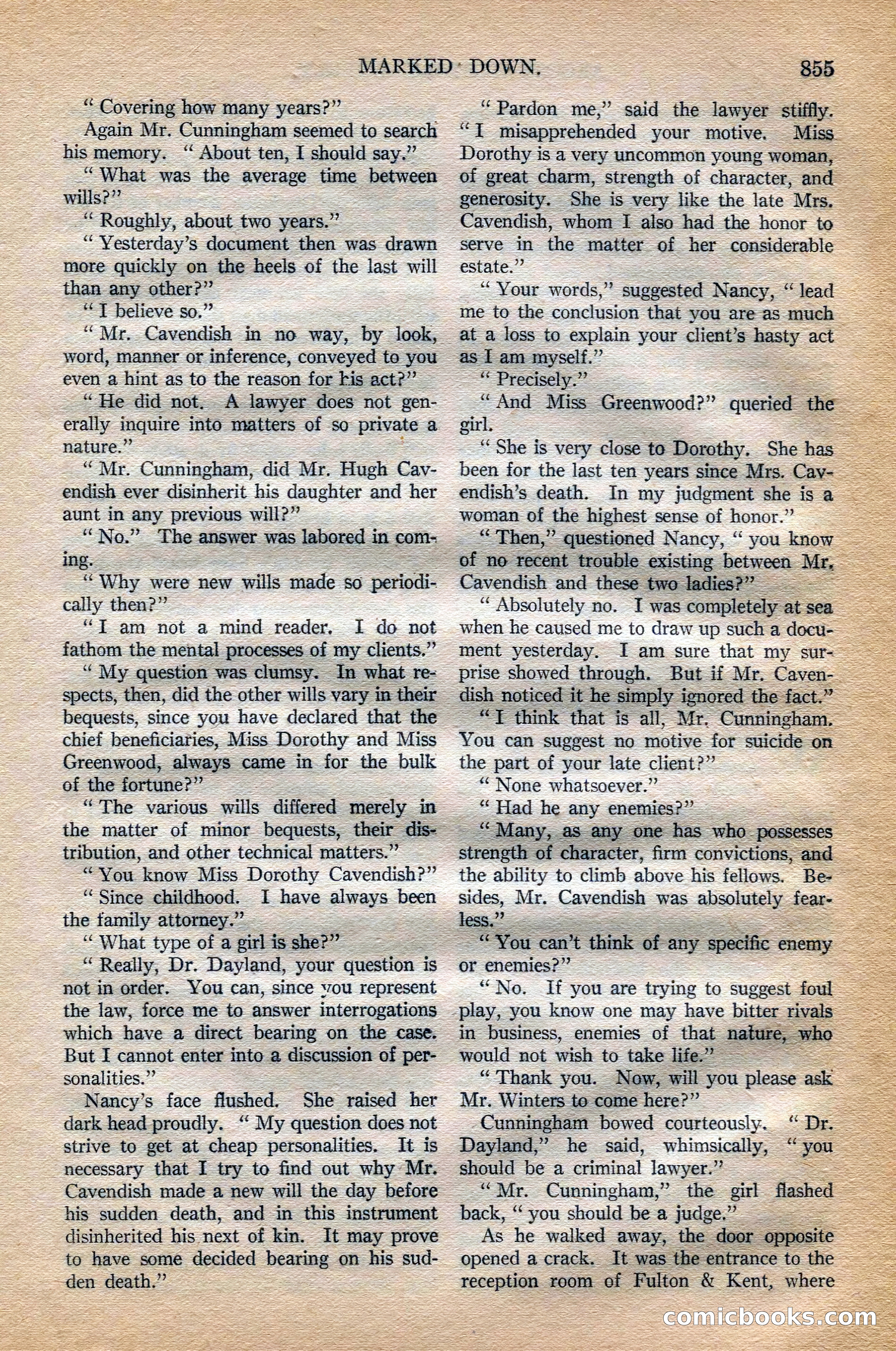
A restored page from Pulp Fiction, 1923. Page through the whole issue in the reader above.
📄 Transcribed text from this page (OCR, searchable)
Machine-transcribed from the original scan — historical spelling and the odd misread are preserved.
& Lotsed how many years?” : 7 Again Mr. Cunningham seemed to search his memory. “ About ten, I should say.” _ _“ What was ibe average time between wills?” “ Roughly, about two years. 2 3 « Yesterday’s document then was drawn more quickly on the heels of the last will than any other?” — “T believe so.” “Mr, Cavendish in no way, by look, word, manner or inference, conveyed te you even a hint as to the reason for kis act?” “He did not. A lawyer does not gen- erally nguae into matters of so private a nature.” “Mr. Cunningham, did Mr. Hugh Cav- endish ever disinherit his daughter and her aunt in any previous will?” Bes eek =e answer was labored i in com- ing. cally then?” “Tf am not a mind reader, I do not fathom the mental processes of my clients.” _“ My question was clumsy. In what re- spects, then, did the other wills vary in their bequests, since you have declared that the chief heneficiaties. Miss Dorothy and Miss Greenwood, always came in for the bulk of the fortune?” = “The various wills differed merely in the matter of minor bequests, their se _ tribution, and other technical matters.” “You know Miss Dorothy Cavendish?” ‘Since childhood. I have always been the family attorney.” - = Really, Dr. Dayland, your question is not in order. You can, since vou represent the law, force me to answer interrogations which have a direct bearing on the case. But I cannot enter into. a discussion of per- ~ sonalities.”’ ~ Nancy’s face flushed. She raised her dark head proudly. ‘“ My question does not _ strive to get at cheap personalities. It is necessary that I try to find out why Mr. Cavendish made a new will the day before his sudden death, and in this instrument disinherited his next of kin. It may prove to have some decided _ Deane on his sud- den death.” of great charm, ‘Strength of character, anc Zs Why were new wills ae SO ee dish : noticed it he sim ly ignored. the fact.” “What type of a girl j is she?” Sa B Pasdon me,” mee the a stifly, = = misapprehended your motive. Miss Dorothy is a very uncommon young woman, generosity. — “She is very like the late Mrs. — Cavendish, whom I also had the honor to — serve in the matter of her: considerable — estate.” “ Your words,” sad Nancy, “lead me to the conclusion that you are as oS at a loss to explain your client’ s ey act as iam aaysell. 2 cs And Miss Greenwood?” ued : te = girl. = “She is very clase to Dorothy. She has - been for the last ten years since Mrs. Cay-— endish’s death. In my judgment she is a woman of the highest sense of honor.” _ = ~ Then,” 2 seatione! N ancy, = You knew Cavendish and these. == : ad | | ‘Absolutely no. I was omen = sea when he caused me to draw up such a docu- ment yesterday. I am sure that my sur-— prise showed through. But if Mr. Caven-_ “<F think that is all, Mr. ‘Cunningham. = You can suggest no motive for suicide ¢ On the part of your late client?” **’None whatsoever.” “ Had he any See 3 strength of a Sat convictions, and = the ability to climb sbase his fellows. Be-— sides, Mr. Cavendish was Se ae : =< You at think = any specific enemy or eiemea? “No. If you are trying to suggest. foul play, you know one may have bitter rivals _ in business, enemies of that Ege who — would not wish to take life? ———— “Thank you. New, will you please a ask Mr. Winters te come here?” Come bowed eeweteously. ss Mr. Cunningham,” the ‘girl asked back, ‘“‘ you should be a judge,” SS As he walked away, the _ s = :