
Pulp Fiction, 1925 · page 63 of 168
Argosy All-Story Weekly, June 27, 1925 — page 63: what you’re looking at
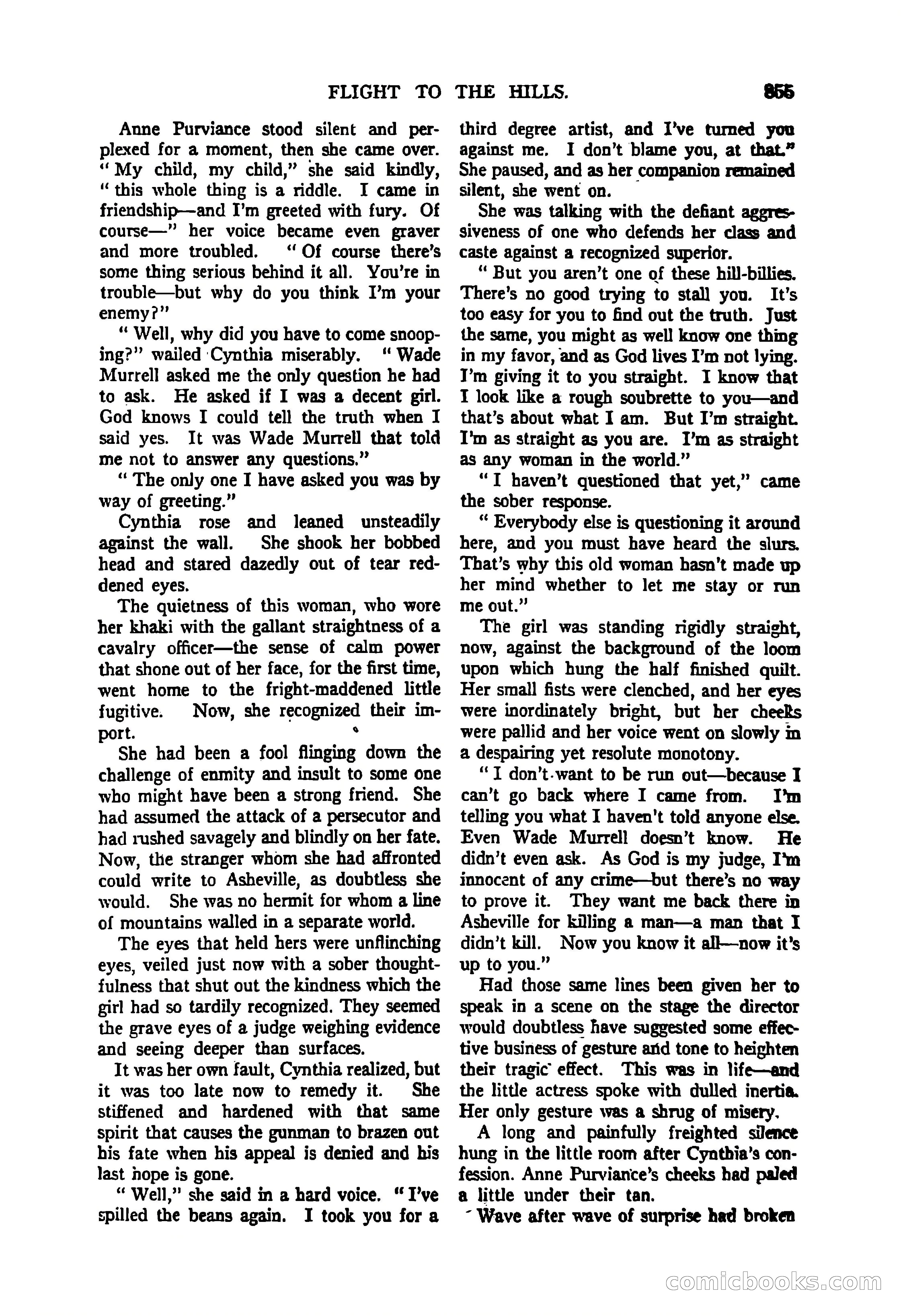
A restored page from Pulp Fiction, 1925. Page through the whole issue in the reader above.
📄 Transcribed text from this page (OCR, searchable)
Machine-transcribed from the original scan — historical spelling and the odd misread are preserved.
FLIGHT TO Anne Purviance stood silent and per- plexed for a moment, then she came over. “My child, my child,” she said kindly, ‘this whole thing is a riddle. I came in friendship—and I’m greeted with fury. Of course—” her voice became even graver and more troubled. ‘Of course there’s some thing serious behind it all. You’re in trouble—but why do you think I’m your enemy r”’ “ Well, why did you have to come snoop- ing?” wailed ‘Cynthia miserably. ‘ Wade Murrell asked me the only question he had to ask. He asked if I was a decent girl. God knows I could tell the truth when I said yes. It was Wade Murrell that told me not to answer any questions.” “‘ The only one I have asked you was by way of greeting.” Cynthia rose and leaned unsteadily against the wall. She shook her bobbed head and stared dazedly out of tear red- dened eyes. The quietness of this woman, who wore her khaki with the gallant straightness of a cavalry officer—the sense of calm power that shone out of her face, for the first time, went home to the fright-maddened little fugitive. Now, she recognized their im- port. ° She had been a fool flinging down the challenge of enmity and insult to some one who might have been a strong friend. She had assumed the attack of a persecutor and had rushed savagely and blindly on her fate. Now, the stranger whom she had affronted could write to Asheville, as doubtless she would. She was no hermit for whom a line of mountains walled in a separate world. The eyes that held hers were unflinching eyes, veiled just now with a sober thought- fulness that shut out the kindness which the girl had so tardily recognized. They seemed the prave eyes of a judge weighing evidence and seeing deeper than surfaces. It was her own fault, Cynthia realized, but it was too late now to remedy it. She stiffened and hardened with that same spirit that causes the gunman to brazen out his fate when his appeal is denied and his last nope is gone. “ Well,” she said in a hard voice. “I’ve spilled the beans again. I took you for a third degree artist, and I’ve tured you against me. I don’t blame you, at that.” She paused, and as her companion remained silent, she went on. She was talking with the defiant aggres- siveness of one who defends her class and caste against a recognized superior. “But you aren’t one of these hill-billies. There’s no good trying to stall you. It’s too easy for you to find out the truth. Just the same, you might as well know one thing in my favor, and as God lives I’m not lying. I’m giving it to you straight. I know that I look like a rough soubrette to you—and that’s about what Iam. But I’m straight. I'm as straight as you are. I’m as straight as any woman in the world.” “I haven’t questioned that yet,” came the sober response. “ Everybody else is questioning it around here, and you must have heard the slurs. That’s why this old woman hasn’t made up her mind whether to let me stay or run me out.” The girl was standing rigidly straight, now, against the background of the loom upon which hung the half finished quilt. Her small fists were clenched, and her eyes were inordinately bright, but her cheeks were pallid and her voice went on slowly in a despairing yet resolute monotony. “ I don’t-want to be run out—because I can’t go back where I came from. I’m telling you what I haven't told anyone else. Even Wade Murrell doesn’t know. He didn’t even ask. As God is my judge, I’m Innocent of any crime—but there’s no way to prove it. They want me back there in Asheville for killing a man—a man that I didn’t kill. Now you know it all—now it’s up to you.” Had those same lines been given her to speak in a scene on the stage the director would doubtless have suggested some effec- tive business of gesture arid tone to heighten their tragic effect. This was in life—and the little actress spoke with dulled inertia. Her only gesture was a shrug of misery. A long and painfully freighted silence hung in the little room after Cynthia’s con- fession. Anne Purviance’s cheeks had paled a little under their tan. - Wave after wave of surprise had broken THE HILLS. COnniEaoo () SS Co