
Pulp Fiction, 1914 · page 170 of 266
The Argosy, Vol. 76, No. 3 — page 170: what you’re looking at
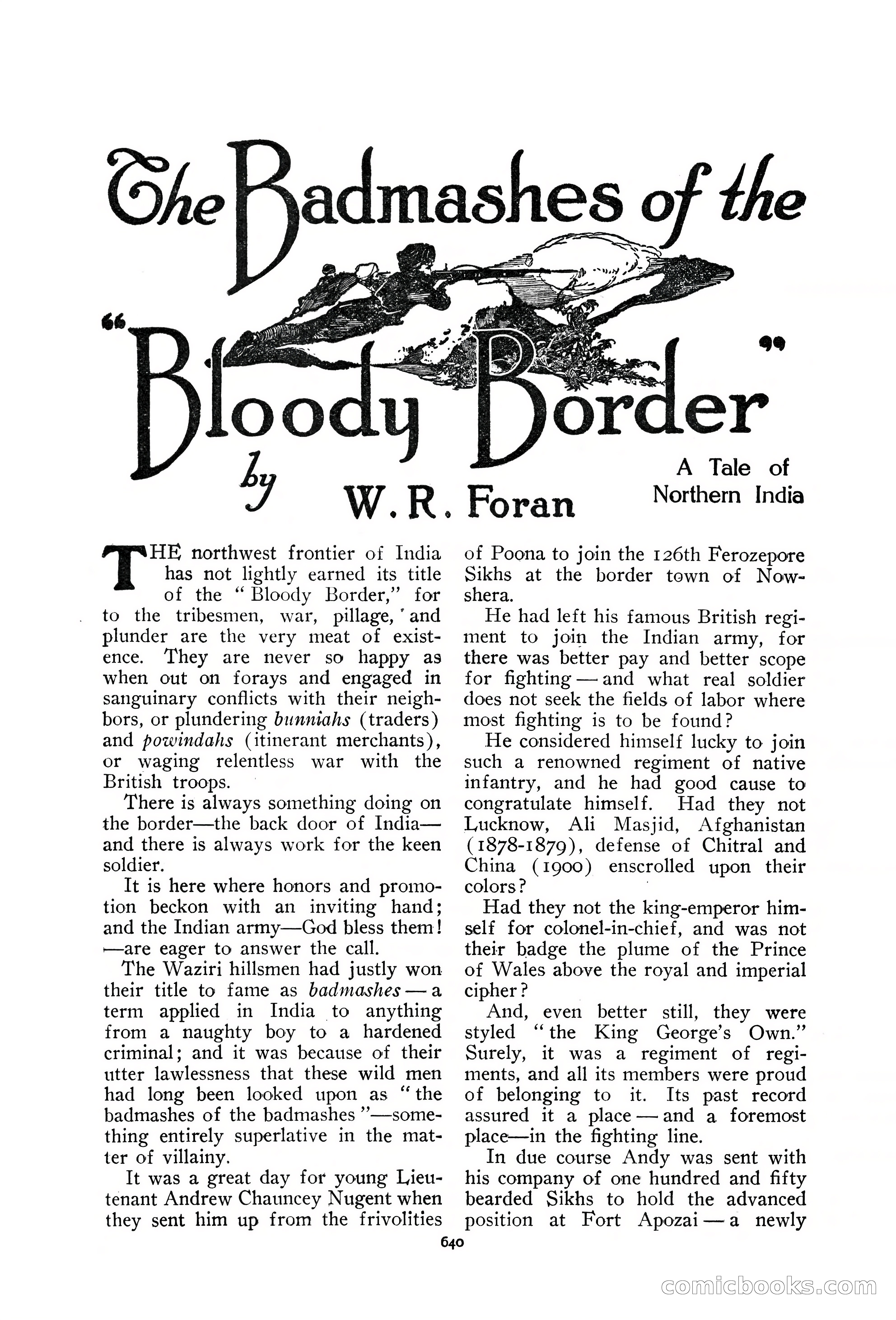
A restored page from Pulp Fiction, 1914. Page through the whole issue in the reader above.
📄 Transcribed text from this page (OCR, searchable)
Machine-transcribed from the original scan — historical spelling and the odd misread are preserved.
Ohe admashes 128 of the W.R. HE, northwest frontier of India : has not lightly earned its title of the “ Bloody Border,” for to the tribesmen, war, pillage, ’ and plunder are the very meat of exist- ence. They are never so happy as when out on forays and engaged in sanguinary conflicts with their neigh- bors, or plundering bunniahs (traders) and powindahs (itinerant merchants), or waging relentless war with the British troops. There is always something doing on the border—the back door of India— and there is always work for the keen soldier. It is here where honors and promo- tion beckon with an inviting hand; and the Indian army—God bless them! —are eager to answer the call. The Waziri hillsmen had justly won their title to fame as badmashes —a term applied in India to anything from a naughty boy to a hardened criminal; and it was because of their utter lawlessness that these wild men had long been looked upon as “ the badmashes of the badmashes ”—some- thing entirely superlative in the mat- ter of villainy. It was a great day for young Lieu- tenant Andrew Chauncey Nugent when they sent him up from the frivolities 640 e Northern India Foran of Poona to join the 126th Ferozepore Sikhs at the border town of Now- shera. He had left his famous British regi- ment to joi the Indian army, for there was better pay and better scope for fighting —and what real soldier does not seek the fields of labor where most fighting is to be found? He considered himself lucky to join such a renowned regiment of native infantry, and he had good cause to congratulate himself. Had they not Lucknow, Ali Masjid, Afghanistan (1878-1879), defense of Chitral and China (1900) enscrolled upon their colors? Had they not the king-emperor him- self for colonel-in-chief, and was not their badge the plume of the Prince of Wales above the royal and imperial cipher ? And, even better still, they were styled “the King George’s Own.” Surely, it was a regiment of regi- ments, and all its members were proud of belonging to it. Its past record assured it a place—and a foremost place—in the fighting line. In due course Andy was sent with his company of one hundred and fifty bearded Sikhs to hold the advanced position at Fort Apozai—a newly COIN Ghooks CO@