
Pulp Fiction, 1917 · page 142 of 192
Argosy, Vol. 85, No. 3 — page 142: what you’re looking at
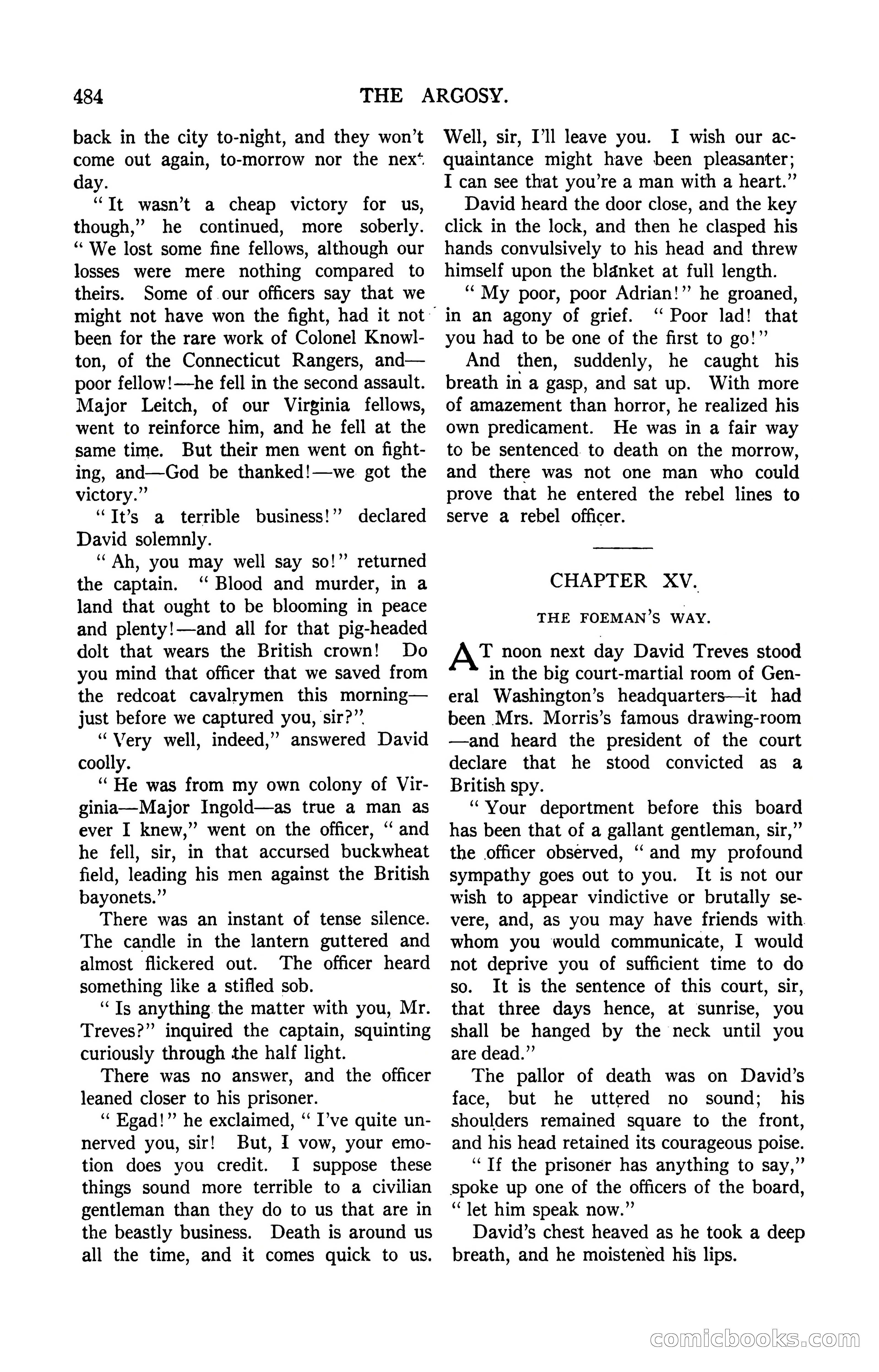
A restored page from Pulp Fiction, 1917. Page through the whole issue in the reader above.
📄 Transcribed text from this page (OCR, searchable)
Machine-transcribed from the original scan — historical spelling and the odd misread are preserved.
484 back in the city to-night, and they won’t come out again, to-morrow nor the nex‘. day. “Tt wasn’t a cheap victory for us, though,” he continued, more soberly. “We lost some fine fellows, although our losses were mere nothing compared to theirs. Some of.our officers say that we might not have won the fight, had it not been for the rare work of Colonel Knowl- ton, of the Connecticut Rangers, and— poor fellow!—he fell in the second assault. Major Leitch, of our Virginia fellows, went to reinforce him, and he fell at the same time. But their men went on fight- ing, and—God be thanked!—we got the victory.” ‘“Tt’s a terrible business!” declared David solemnly. ‘“Ah, you may well say so!” returned the captain. ‘‘ Blood and murder, in a land that ought to be blooming in peace and plenty!—and all for that pig-headed dolt that wears the British crown! Do you mind that officer that we saved from the redcoat cavalrymen this morning— just before we captured you, sir?” “Very well, indeed,” answered David coolly. ‘He was from my own colony of Vir- ginia—Major Ingold—as true a man as ever I knew,” went on the officer, ‘‘ and he fell, sir, in that accursed buckwheat field, leading his men against the British bayonets.” There was an instant of tense silence. The candle in the lantern guttered and almost flickered out. The officer heard something like a stifled sob. “Ts anything the matter with you, Mr. Treves?” inquired the captain, squinting curiously through the half light. There was no answer, and the officer leaned closer to his prisoner. ‘“‘ Egad!” he exclaimed, “‘ I’ve quite un- nerved you, sir! But, 1 vow, your emo- tion does you credit. I suppose these things sound more terrible to a civilian gentleman than they do to us that are in the beastly business. Death is around us all the time, and it comes quick to us. THE ARGOSY. Well, sir, I'll leave you. I wish our ac- quaintance might have been pleasanter; I can see that you’re a man with a heart.” David heard the door close, and the key click in the lock, and then he clasped his hands convulsively to his head and threw himself upon the blanket at full length. ‘““My poor, poor Adrian!”’ he groaned, in an agony of grief. ‘‘ Poor lad! that you had to be one of the first to go!”’ And then, suddenly, he caught his breath in a gasp, and sat up. With more of amazement than horror, he realized his own predicament. He was in a fair way to be sentenced. to death on the morrow, and there was not one man who could prove that he entered the rebel lines to Serve a rebel officer. CHAPTER XV. THE FOEMAN’S WAY. At noon next day David Treves stood in the big court-martial room of Gen- eral Washington’s headquarters—it had been Mrs. Morris’s famous drawing-room —and heard the president of the court declare that he stood convicted as a British spy. ‘“Your deportment before this board has been that of a gallant gentleman, sir,” the officer observed, “and my profound sympathy goes out to you. It is not our wish to appear vindictive or brutally se- vere, and, as you may have friends with. whom you would communicate, I would not deprive you of sufficient time to do so. It is the sentence of this court, sir, that three days hence, at sunrise, you shall be hanged by the neck until you are dead.” The pallor of death was on David’s face, but he uttered no sound; his shoulders remained square to the front, and his head retained its courageous poise. ‘Tf the prisoner has anything to say,” spoke up one of the officers of the board, “let him speak now.” David’s chest heaved as he took a deep breath, and he moistened his lips. DOOK nn C©