
Pulp Fiction, 1920 · page 115 of 180
Argosy, Vol. 118, No. 4 — page 115: what you’re looking at
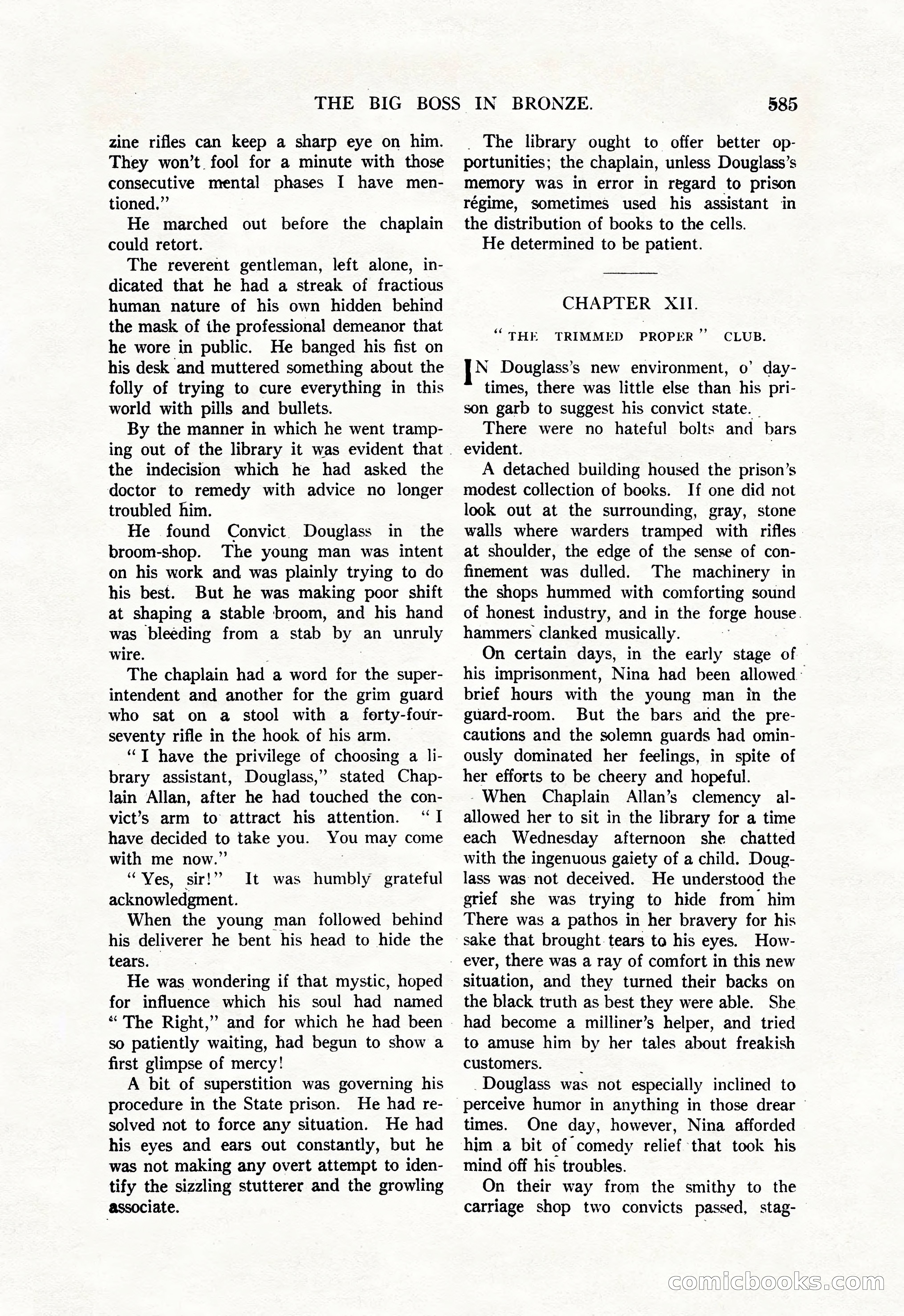
A restored page from Pulp Fiction, 1920. Page through the whole issue in the reader above.
📄 Transcribed text from this page (OCR, searchable)
Machine-transcribed from the original scan — historical spelling and the odd misread are preserved.
THE BIG BOSS zine rifles can keep a sharp eye on him. They won’t fool for a minute with those consecutive mental phases I have men- tioned,”’ He marched out before the chaplain could retort. The reverent gentleman, left alone, in- dicated that he had a streak of fractious human nature of his own hidden behind the mask of the professional demeanor that he wore in public. He banged his fist on his desk and muttered something about the folly of trying to cure everything in this world with pills and bullets. By the manner in which he went tramp- ing out of the library it was evident that . the indecision which he had asked the doctor to remedy with advice no longer troubled him. He found Convict. Douglass in the broom-shop. The young man was intent on his work and was plainly trying to do his best. But he was making poor shift at shaping a stable broom, and his hand was bleeding from a stab oe an unruly wire. The chaplain had a word for the super- intendent and another for the grim guard who sat on a stool with a _ ferty-four- seventy rifle in the hook of his arm. ‘‘T have the privilege of choosing a li- brary assistant, Douglass,” stated Chap- lain Allan, after he had touched the con- vict’s arm to attract his attention. “I have decided to take you. You may come with me now.” ¥es,- sir!” acknowledgment. When the young man followed behind his deliverer he bent his head to hide the tears. He was wondering if that mystic, hoped for influence which his soul had named It was humbly grateful “The Right,” and for which he had been - so patiently waiting, had begun to show a first glimpse of mercy! A bit of superstition was governing his procedure in the State prison. He had re- solved not to force any situation. He had his eyes and ears out constantly, but he was not making any overt attempt to iden- tify the sizzling stutterer and the growling associate. IN BRONZE. 38D _ The library ought to offer better op- portunities; the chaplain, unless Douglass’s memory was in error in regard to prison régime, sometimes used his assistant in the distribution of books to the cells. He determined to be patient. CHAPTER XII. 6c THE TRIMMED PROPER” CLUB. [N Douglass’s new environment, o’ day- times, there was little else than his pri- son garb to suggest his convict state. There were no hateful bolts and bars evident. A detached building housed the prison’s modest collection of books. If one did not look out at the surrounding, gray, stone walls where warders tramped with rifles at shoulder, the edge of the sense of con- finement was dulled. The machinery in the shops hummed with comforting sound of honest industry, and in the forge house. hammers clanked musically. On certain days, in the early stage of — his imprisonment, Nina had been allowed: brief hours with the young man in the guard-room. But the bars and the pre- cautions and the solemn guards had omin- ously dominated her feelings, in spite of her efforts to be cheery and hopeful. - When Chaplain Allan’s clemency al- allowed her to sit in the library for a time each Wednesday afternoon she chatted with the ingenuous gaiety of a child. Doug- lass was not deceived. He understood the grief she was trying to hide from him There was a pathos in her bravery for his sake that brought tears to his eyes. How- - ever, there was a ray of comfort in this new situation, and they turned their backs on the black truth as best they were able. She had become a milliner’s helper, and tried to amuse him by her tales about freakish customers. _ Douglass was not especially inclined to times. One day, however, Nina afforded him a bit of comedy relief that took his mind off his troubles. On their way from the smithy to the carriage shop two convicts passed, stag- nn (S| QO) NOOK perceive humor in anything in those drear —