
Pulp Fiction, 1920 · page 165 of 180
Argosy, Vol. 118, No. 4 — page 165: what you’re looking at
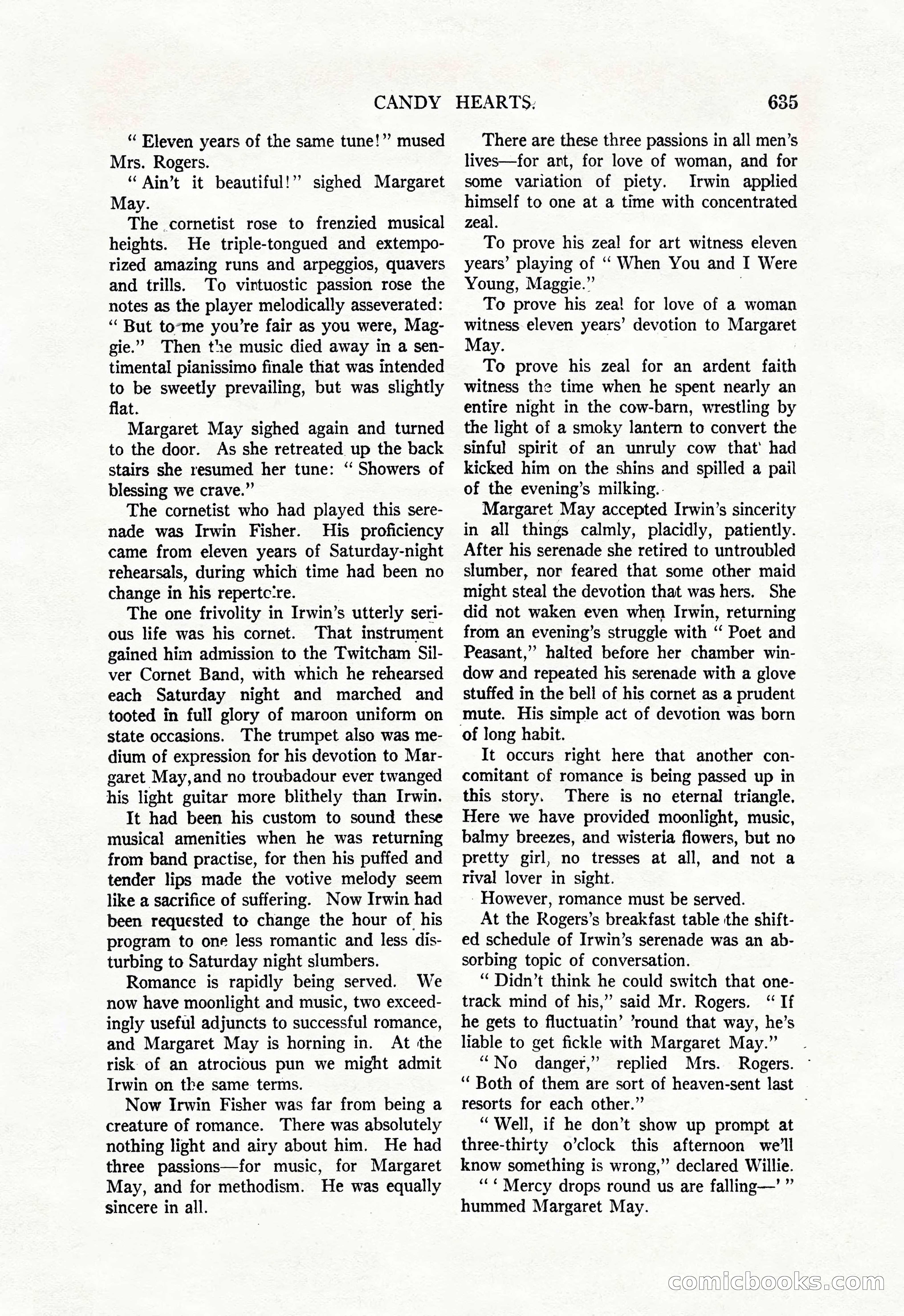
A restored page from Pulp Fiction, 1920. Page through the whole issue in the reader above.
📄 Transcribed text from this page (OCR, searchable)
Machine-transcribed from the original scan — historical spelling and the odd misread are preserved.
CANDY ‘“‘ Eleven years of the same tune!” mused Mrs. Rogers. “ Ain’t it beautiful!” sighed Margaret May. The .cornetist rose to frenzied musical heights. He triple-tongued and extempo- rized amazing runs and arpeggios, quavers and trills. To virtuostic passion rose the notes as the player melodically asseverated: ‘But to-me you're fair as you were, Mag- gie.”’ Then te music died away in a sen- timental pianissimo finale that was intended to be sweetly prevailing, but was slightly flat. Margaret May sighed again and turned to the door. As she retreated up the back stairs she resumed her tune: ‘“ Showers of blessing we crave.” The cornetist who had played this sere- nade was Irwin Fisher. His proficiency came from eleven years of Saturday-night rehearsals, during which time had been no change in his repertc:re. The one frivolity in Irwin’s utterly seri- ous life was his cornet. That instrument gained hii admission to the Twitcham Sil- ver Cornet Band, with which he rehearsed each Saturday night and marched and tooted in full glory of maroon uniform on state occasions. The trumpet also was me- dium of expression for his devotion to Mar- garet May,and no troubadour ever twanged his light guitar more blithely than Irwin. It had been his custom to sound these musical amenities when he was returning from band practise, for then his puffed and tender lips made the votive melody seem like a sacrifice of suffering. Now Irwin had been requested to change the hour of his program to one less romantic and less dis- turbing to Saturday night slumbers. Romance is rapidly being served. We now have moonlight and music, two exceed- ingly useful adjuncts to successful romance, and Margaret May is horning in. At the risk of an atrocious pun we might admit Irwin on the same terms. Now Irwin Fisher was far from being a creature of romance. There was absolutely nothing light and airy about him. He had three passions—for music, for Margaret May, and for methodism. He was equally sincere in all. HEARTS: 635 There are these three passions in all men’s lives—for art, for love of woman, and for some variation of piety. Irwin applied himself to one at a time with concentrated zeal. To prove his zeal for art witness eleven years’ playing of ‘“ When You and I Were Young, Maggie.’ To prove his zea! for love of a woman witness eleven years’ devotion to Margaret May. : To prove his zeal for an ardent faith witness the time when he spent nearly an entire night in the cow-barn, wrestling by the light of a smoky lantern to convert the sinful spirit of an unruly cow that’ had kicked him on the shins and spilled a pail of the evening’s milking... Margaret May accepted Irwin’s sincerity in all things calmly, placidly, patiently. After his serenade she retired to untroubled slumber, nor feared that some other maid might steal the devotion that was hers. She did not waken even when Irwin, returning from an evening’s struggle with “ Poet and Peasant,”’ halted before her chamber win- dow and repeated his serenade with a glove stuffed in the bell of his cornet as a prudent mute. His simple act of devotion was born of long habit. It occurs right here that another con- comitant of romance is being passed up in this story. There is no eternal triangle. Here we have provided moonlight, music, balmy breezes, and wisteria flowers, but no pretty girl, no tresses at all, and not a rival lover in sight. - However, romance must be served. At the Rogers’s breakfast table the shift- ed schedule of Irwin’s serenade was an ab- sorbing topic of conversation. “ Didn’t think he could switch that one- track mind of his,” said Mr. Rogers. “ If he gets to fluctuatin’ ’round that way, he’s liable to get fickle with Margaret May.” “No danger,” replied Mrs. Rogers. ~ ‘ Both of them are sort of heaven-sent last resorts for each other.” “Well, if he don’t show up prompt at three-thirty o’clock this afternoon we'll know something is wrong,” declared Willie. ‘““ Mercy drops round us are falling—’ ” hummed Margaret May. nn (Cl QO) NOOK