
Pulp Fiction, 1920 · page 99 of 158
Argosy, Vol. 123, No. 2 — page 99: what you’re looking at
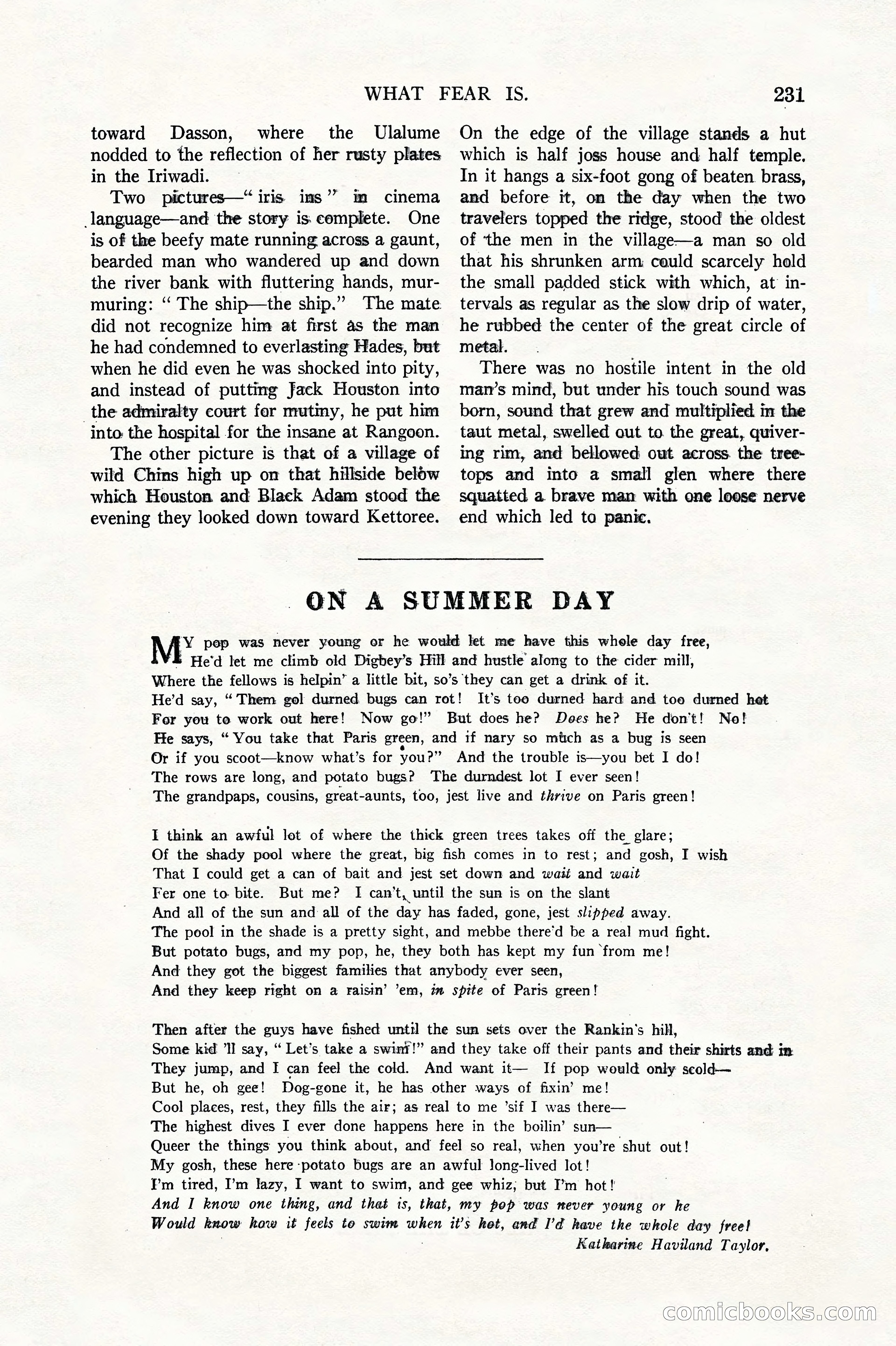
A restored page from Pulp Fiction, 1920. Page through the whole issue in the reader above.
📄 Transcribed text from this page (OCR, searchable)
Machine-transcribed from the original scan — historical spelling and the odd misread are preserved.
WHAT FEAR IS. toward Dasson, where the Ulalume nodded to the reflection of her rusty plates in the Iriwadi. Two pictures—“ iris ins”” m cinema language—and the story is: cemplete. One is of the beefy mate running across a gaunt, bearded man who wandered up and down the river bank with fluttering hands, mur- muring: ‘‘ The ship—the ship.” The mate did not recognize him at first 4s the man he had condemned to everlasting Hades, but when he did even he was shocked into pity, and instead of puttmg Jack Houston into the admiralty court for mutmy, he put him into the hospital for the insane at Rangoon. The other picture is that of a village of wild Chins high up on that hillside below which Houston and Black Adam stood the evening they looked down toward Kettoree. ¥ 231 On the edge of the village stands a hut which is half joss house and half temple. In it hangs a six-foot gong of beaten brass, and before it, on the day when the two travelers topped the ridge, stood the oldest of the men in the village—a man so old that his shrunken arm could scarcely hold the small padded stick with which, at in- tervals as regular as the slow drip of water, he rubbed the center of the great circle of metal. There was no hostile intent in the old man’s mind, but under his touch sound was born, sound that grew and multiplied in the taut metal, swelled out to the great, quiver- ing rim, and bellowed out across. the tree tops and into a small glen where there squatted a. brave man with one loose nerve end which led ta panic. ON A SUMMER DAY APY pop was never young or he would let me have this whele day free, & He'd let me climb old Dighey’s Hill and hustle along to the cider mill, Where the fellows is helpin” a little bit, so’s they can get a drink of it. He’d say, “ Them gol durned. bugs can rot! But does he? For you to work out here! Now go!” It’s too durned hard and toe durned het Does he? He don't! No! He says, “ You take that Paris green, and if nary so mitch as a bug is seen Or if you scoot—know what’s for you?” And the trouble is—you bet I do! The rows are long, and potato bugs? The durndest lot I ever seen! The grandpaps, cousins, great-aunts, too, jest live and thrive on Paris green! I think an awful lot of where the thick green trees takes off the glare; Of the shady pool where the great, big fish comes in to rest; and gosh, I wish That I could get a can of bait and jest set down and wait and wait Fer one toa bite. But me? I can't, until the sun is on the slant And all of the sun and all of the day has faded, gone, jest slipped away. The pool in the shade is a pretty sight, and mebbe there'd be a real mud fight. But potato bugs, and my pop, he, they both has kept my fun from me! And they got the biggest families that anybody ever seen, And they keep right on a raisin’ ’em, im spite of Paris green! Then after the guys have fished until the sum sets over the Rankin's hill, Some kid ’ll say, “ Let’s take a swinr!” and they take off their pants and their shirts and in They jump, and I can feel the cold. And want it— Dog-gone it, he has other ways of fixin’ me! But he, oh gee! If pop would only scold— Cool places, rest, they fills the air; as real to me ’sif I was there— The highest dives I ever done happens here in the boilin’ sun— Queer the things you think about, and feel so real, when you're shut out! My gosh, these here potato bugs are an awful long-lived lot! Pm tired, I’m lazy, I want to swim, and gee whiz; but I’m hot! And I know one thing, and that 1s, that, my pop was mever young or he Would know how it feels to swim when it’s het, and I’d have the whole day freet Katharine Haviland Taylor, MICLOOOK (C@