
Pulp Fiction, 1922 · page 161 of 172
Argosy All-Story Weekly, January 21, 1922 — page 161: what you’re looking at
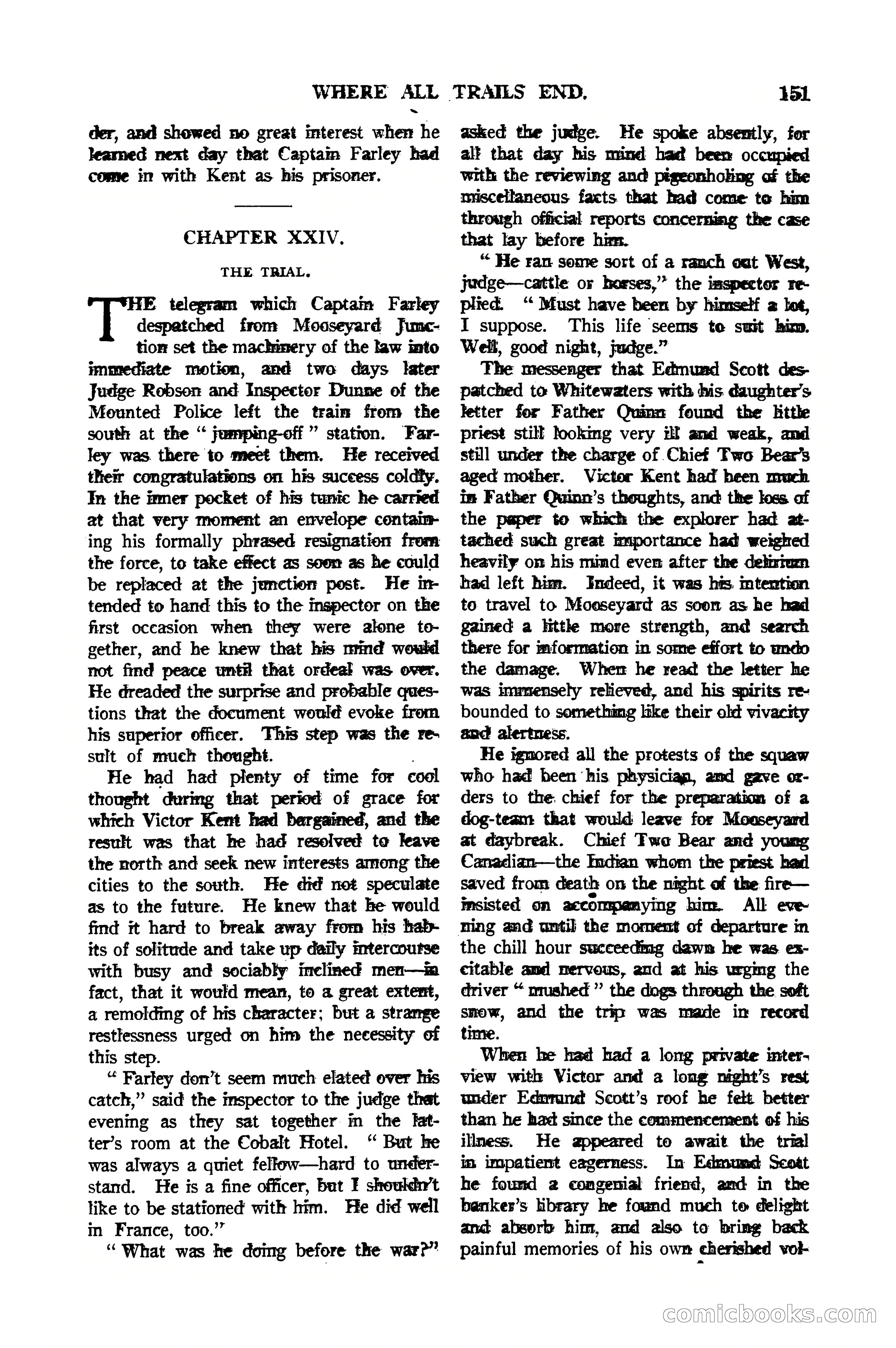
A restored page from Pulp Fiction, 1922. Page through the whole issue in the reader above.
📄 Transcribed text from this page (OCR, searchable)
Machine-transcribed from the original scan — historical spelling and the odd misread are preserved.
WHERE ALL der, and showed no great interest when he learned next day that Captam Farley had come in with Kent as his prisoner. CHAPTER XXIV. THE TRIAL. telegram which Captam Farley despatched from Mooseyard fumc- tior set the maclnumery of the law into immediate motion, and two days later Judge Robson and Inspector Dunne of the Mounted Police left the traim from the south at the “ jumping-off” statron. Far- ley was. there to meet them. He received their congratulations on his suceess coldfy. In the immer pocket of his tunic he carried at that very moment an envelope contain- ing his formally phrased resignation from the force, to take effect as soon as he could be replaced at the junction post. He m- tended to hand this to the inspector on the first occasion when they were alone to- gether, and he knew that his mind would not find peace untH that ordeal was over. He dreaded the surprise and probable ques- tions that the document would evoke from his superior officer. This step was the re- sult of much thought. He had had plenty of time for cool thought during that period of grace for which Victor Kent had bargained, and the result was that he had resolved ta leave the north and seek new interests among the cities to the south. He dtd not speculate as to the future. He knew that he would find it hard to break away from his hat its of solitude and take up daily mtercoutse with busy and sociably inclined men—m fact, that it would mean, to a great extent, a remolding of his character; but a strange restlessness urged on him the necessity of this step. “ Farfey don’t seem much elated over his catch,” said the mspector to the judge that evening as they sat together in the fat- ter’s room at the Cobalt Hotel. ‘ But he was always a quiet felfow—hard to under- stand. He is a fine officer, but I shoulkdr’'t like to be stationed with him. He did well i Frarice, too.’” “What was he doing before the war?” TRAILS END. hol asked the judge. He spoke absently, for ali that day his mind had been occupied with the reviewing and pigeonholing of the miscellaneous facts that had come to him through official reports concerning the case that lay before him. “ He ran some sort of a ranch oat West, judge—cattle or horses,” the imspector re- plied. “ Must have been by himself a lot, I suppose. This life seems to suit him. Well, good night, judge.” The messenger that Edmund Scott des- patched to Whitewaters with his daughter's Fetter for Father Quinn found the Kttle priest still lookimg very il and weak, and still under the charge of .Chief Two Bear’s aged mother. Victor Kent had heen much Im Father Quinn’s thoughts, and the loss af the paper to which the explorer had at- tached such great importance had weighed heavily on his mind ever after the delirramn had left him. Indeed, it was his. mtention to travel to Mooseyard as soon as he had gained a Htthe more strength, and search there for mformation in some effort to undo the damage. Wher he read the letter he was immensely relieved, and his spirits re- bounded to something like their old vivacity and alertness. He ignored all the protests of the squaw who had heen his. physician, amd gave or- ders to the. chief for the preparation of a dog-teant that would leave for Moaseyard at daybreak. Chief Two Bear and young Canadian—the Indian whom the prtest had saved from death on the night of the fire— sisted on accompanying him. All eve ning and until the moment of departure in the chill hour succeedmg dawn he was es- citable amd nervous, and at his urgmg the driver “ nrushed ” the dogs through the soft smow, and the trip was made in record time. When he had had a long private inter- view with Victor and a long night’s rest under Ednmrunet Scott’s roof he felt better than he hae since the commencement of his iliness. He appeared to await the trial in impatient eagerness. In Edmund Scott he found 2 congenial friend, amd in the bankes’s library he found much to delight and absorb him, and also to bring back painful memories of his owm cherished vol- comiclboooks C©