
Pulp Fiction, 1922 · page 156 of 172
Argosy All-Story Weekly, July 1, 1922 — page 156: what you’re looking at
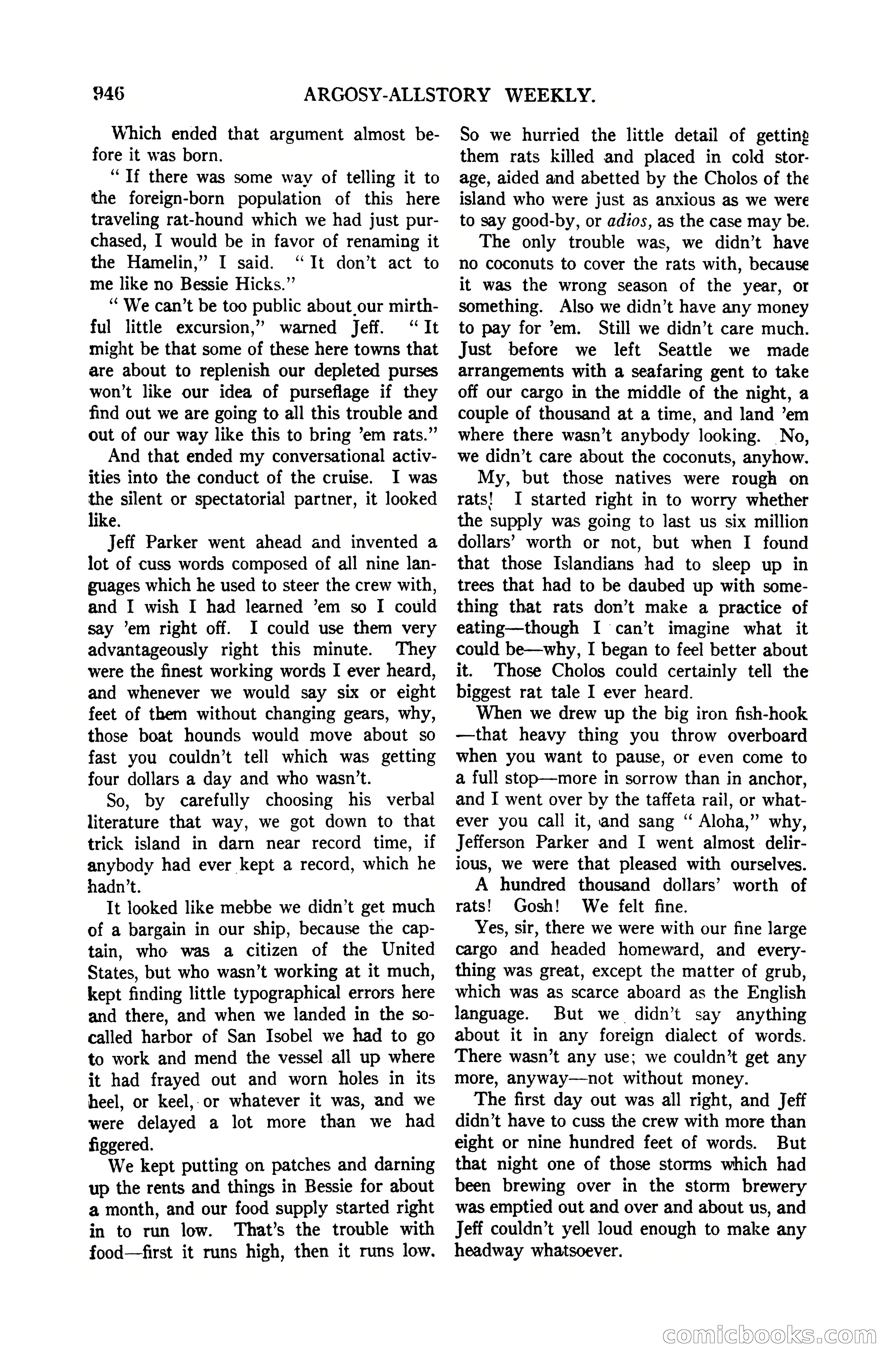
A restored page from Pulp Fiction, 1922. Page through the whole issue in the reader above.
📄 Transcribed text from this page (OCR, searchable)
Machine-transcribed from the original scan — historical spelling and the odd misread are preserved.
946 Which ended that argument almost be- fore it was born. ‘““Tf there was some way of telling it to the foreign-born population of this here traveling rat-hound which we had just pur- chased, I would be in favor of renaming it the Hamelin,” I said. “It don’t act to me like no Bessie Hicks.”’ ‘We can’t be too public about our mirth- ful little excursion,” warned Jeff. ‘It might be that some of these here towns that are about to replenish our depleted purses won’t like our idea of purseflage if they find out we are going to all this trouble and out of our way like this to bring ’em rats.” And that ended my conversational activ- ities into the conduct of the cruise. I was the silent or spectatorial partner, it looked like. Jeff Parker went ahead and invented a lot of cuss words composed of all nine lan- guages which he used to steer the crew with, and I wish I had learned ’em so I could say ’em right off. I could use them very advantageously right this minute. They were the finest working words I ever heard, and whenever we would say six or eight feet of them without changing gears, why, those boat hounds would move about so fast you couldn’t tell which was getting four dollars a day and who wasn’t. So, by carefully choosing his verbal literature that way, we got down to that trick island in darn near record time, if anybody had ever kept a record, which he hadn’t. It looked like mebbe we didn’t get much of a bargain in our ship, because the cap- tain, who was a citizen of the United States, but who wasn’t working at it much, kept finding little typographical errors here and there, and when we landed in the so- called harbor of San Isobel we had to go to work and mend the vessel all up where it had frayed out and worn holes in its heel, or keel, or whatever it was, and we were delayed a lot more than we had figgered. We kept putting on patches and darning up the rents and things in Bessie for about a month, and our food supply started right in to run low. That’s the trouble with food—first it runs high, then it runs low. ARGOSY-ALLSTORY WEEKLY. So we hurried the little detail of getting them rats killed and placed in cold stor- age, aided and abetted by the Cholos of the island who were just as anxious as we were to say good-by, or adios, as the case may be. The only trouble was, we didn’t have no coconuts to cover the rats with, because it was the wrong season of the year, or something. Also we didn’t have any money to pay for ’em. Still we didn’t care much. Just before we left Seattle we made arrangements with a seafaring gent to take off our cargo in the middle of the night, a couple of thousand at a time, and land ’em where there wasn’t anybody looking. No, we didn’t care about the coconuts, anyhow. My, but those natives were rough on rats! I started right in to worry whether the supply was going to last us six million dollars’ worth or not, but when I found that those Islandians had to sleep up in trees that had to be daubed up with some- thing that rats don’t make a practice of eating—though I can’t imagine what it could be—why, I began to feel better about it. Those Cholos could certainly tell the biggest rat tale I ever heard. When we drew up the big iron fish-hook —that heavy thing you throw overboard when you want to pause, or even come to a full stop—more in sorrow than in anchor, and I went over by the taffeta rail, or what- ever you call it, and sang “ Aloha,” why, Jefferson Parker and I went almost. delir- lous, we were that pleased with ourselves. A hundred thousand dollars’ worth of rats! Gosh! We felt fine. Yes, sir, there we were with our fine large cargo and headed homeward, and every- thing was great, except the matter of grub, which was as scarce aboard as the English language. But we didn’t say anything about it in any foreign dialect of words. There wasn’t any use; we couldn’t get any more, anyway—not without money. The first day out was all right, and Jeff didn’t have to cuss the crew with more than eight or nine hundred feet of words. But that night one of those storms which had been brewing over in the storm brewery was emptied out and over and about us, and Jeff couldn’t yell loud enough to make any headway whatsoever. comicloool C©