
Pulp Fiction, 1922 · page 97 of 185
Argosy All-Story Weekly, October 7, 1922 — page 97: what you’re looking at
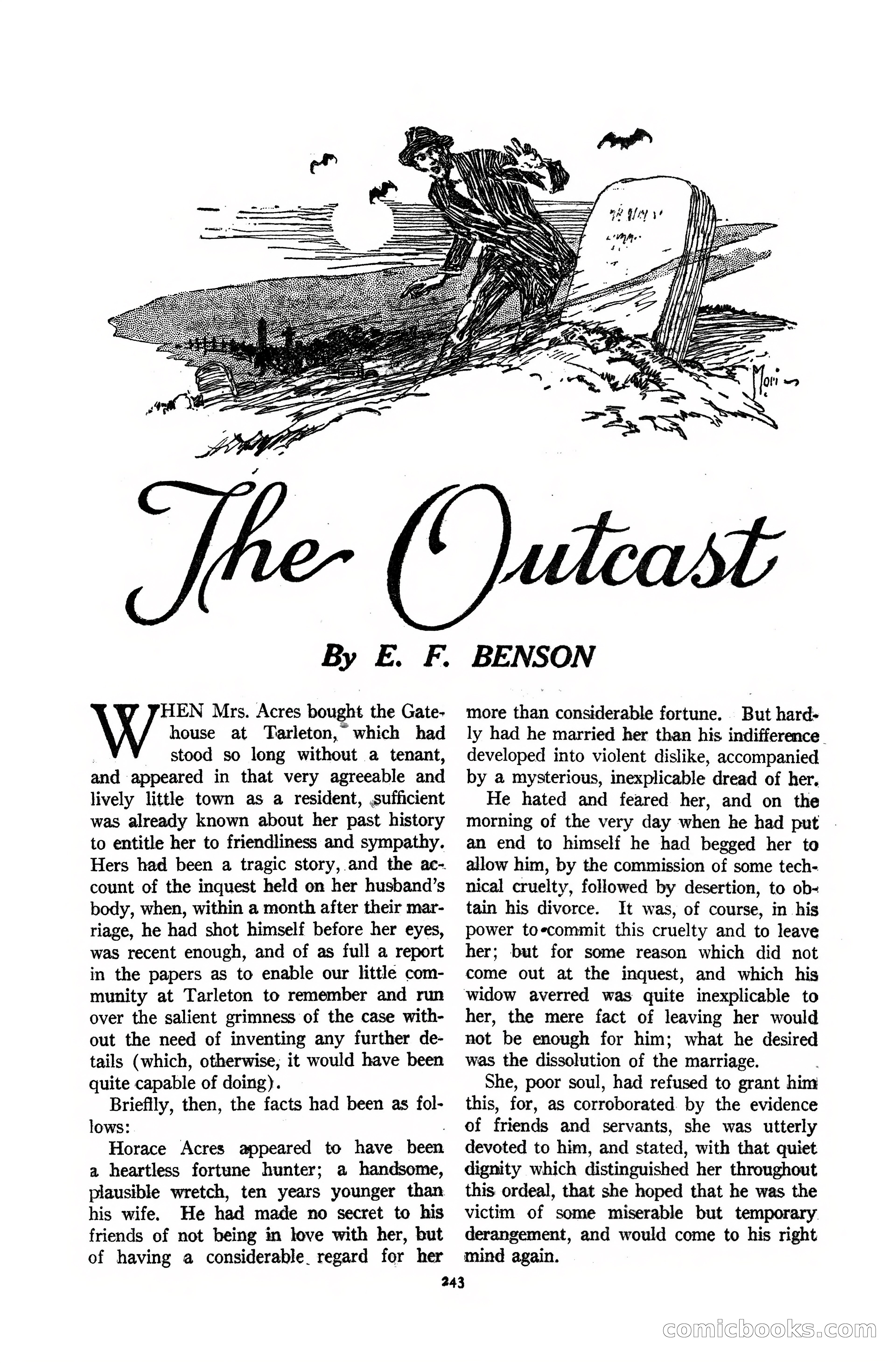
A restored page from Pulp Fiction, 1922. Page through the whole issue in the reader above.
📄 Transcribed text from this page (OCR, searchable)
Machine-transcribed from the original scan — historical spelling and the odd misread are preserved.
By E. F. HEN Mrs. Acres bought the Gate- house at Tarleton, which had stood so long without a tenant, and appeared in that very agreeable and lively little town as a resident, ,sufficient was already known about her past history to entitle her to friendliness and sympathy. Hers had been a tragic story, and the ac- count of the inquest held on her husband’s body, when, within a month after their mar- riage, he had shot himself before her eyes, was recent enough, and of as full a report in the papers as to enable our little com- munity at Tarleton to remember and run over the salient grimness of the case with- out the need of inventing any further de- tails (which, otherwise, it would have been quite capable of doing). Briefily, then, the facts had been as fol- lows: Horace Acres appeared to have heen a heartless fortune hunter; a handsome, plausible wretch, ten years younger than his wife. He had made no secret to his friends of not being in love with her, but of having a considerable. regard for her BENSON more — <iedieanee fortune. But hard- ly had he married her than his indifference. developed into violent dislike, accompanied by a mysterious, inexplicable dread of her, He hated and feared her, and on the morning of the very day when he had put an end to himself he had begged her to allow him, by the commission of some tech- nical cruelty, followed by desertion, to ob- tain his divorce. It was, of course, in his power toecommit this cruelty and to leave her; but for some reason which did not come out at the inquest, and which his widow averred was quite inexplicable to her, the mere fact of leaving her would not be enough for him; what he desired was the dissolution of the marriage. She, poor soul, had refused to grant him this, for, as corroborated. by the evidence of friends and servants, she was utterly devoted to him, and stated, with that quiet dignity which distinguished her throughout this ordeal, that she hoped that he was the victim of some miserable but temporary. derangement, and would come to his right mind again. 243 1LOOOLK C©