
Pulp Fiction, 1950 · page 71 of 132
Avon Fantasy Reader No. 14 — page 71: what you’re looking at
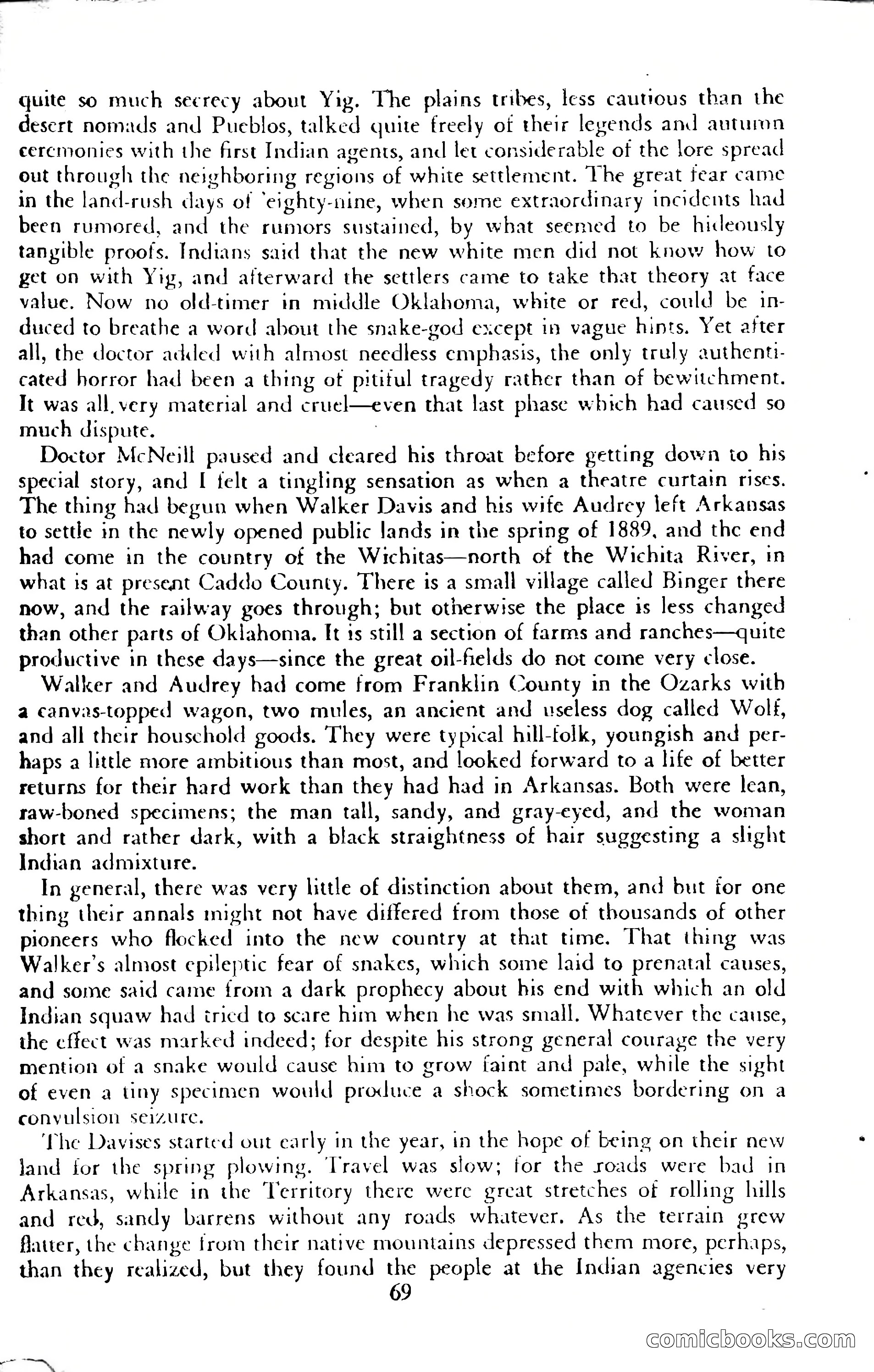
A restored page from Pulp Fiction, 1950. Page through the whole issue in the reader above.
📄 Transcribed text from this page (OCR, searchable)
Machine-transcribed from the original scan — historical spelling and the odd misread are preserved.
quite so much secrecy about Yig. The plains tribes, less cautious than the desert nomads and Pueblos, talked quite freely of their legends and auturon ceremonies with the first Indian agents, and let considerable of the lore spread out through the neighboring regions of white settlement. The great fear came in the land-rush days of ‘eighty-nine, when some extraordinary incidents had been rumored, and the rumors sustained, by what seemed to be hideously tangible proofs. Indians said that the new white men did not know how to get on with Yiy, and afterward the settlers came to take that theory at face value. Now no old-timer in middle Oklahoma, white or red, could be in- duced to breathe a word about the snake-god except in vague hints. Yet after all, the doctor added with almost needless emphasis, the only truly authenti- cated horror had been a thing of pitiful tragedy rather than of bewitchment. It was all. very material and cruel—even that last phase which had caused so much dispute. Doctor McNeill paused and cleared his throat before getting down to his special story, and [ felt a tingling sensation as when a theatre curtain rises. The thing had begun when Walker Davis and his wife Audrey left Arkansas to settle in the newly opened public lands in the spring of 1889, and the end had come in the country of the Wichitas—north of the Wichita River, in what is at present Caddo County. There is a small village called Binger there now, and the railway goes through; but otherwise the place is less changed than other parts of Oklahoma. It ts still a section of farms and ranches—quite productive in these days—since the great oil-fields do not come very close. Walker and Audrey had come from Franklin County in the Ozarks with a canyas-topped wagon, two mules, an ancient and useless dog called Wolf, and all their houschold goods. They were typical hill-folk, youngish and per- haps a little more ambitious than most, and looked forward to a life of better returns for their hard work than they had had in Arkansas. Both were lean, raw-boned specimens; the man tall, sandy, and gray-eyed, and the woman short and rather dark, with a black straightness of hair suggesting a slight Indian admixture. In general, there was very little of distinction about them, and but ior one thing their annals might not have differed from those of thousands of other pioneers who flocked into the new country at that time. That thing was Walker’s almost epileptic fear of snakes, which some laid to prenatal causes, and some said came from a dark prophecy about his end with which an old Indian squaw had tricd to scare him when he was small. Whatever the cause, the effect was marked indeed; for despite his strong general courage the very mention of a snake would cause him to grow faint and pale, while the sight of even a tiny specimen would produce a shock sometimes bordering on a convulsion seizure. ‘Phe Davises started out early in the year, in the hope of being on their new land for the spring plowing. Travel was slow; for the roads were bad in Arkansas, while in the Territory there were great stretches of rolling hills and red, sandy barrens without any roads whatever. As the terrain grew flatter, the change from their native mountains depressed them more, perhaps, than they realized, but they found the people at the Indian agencies very comiclbooks. conn