
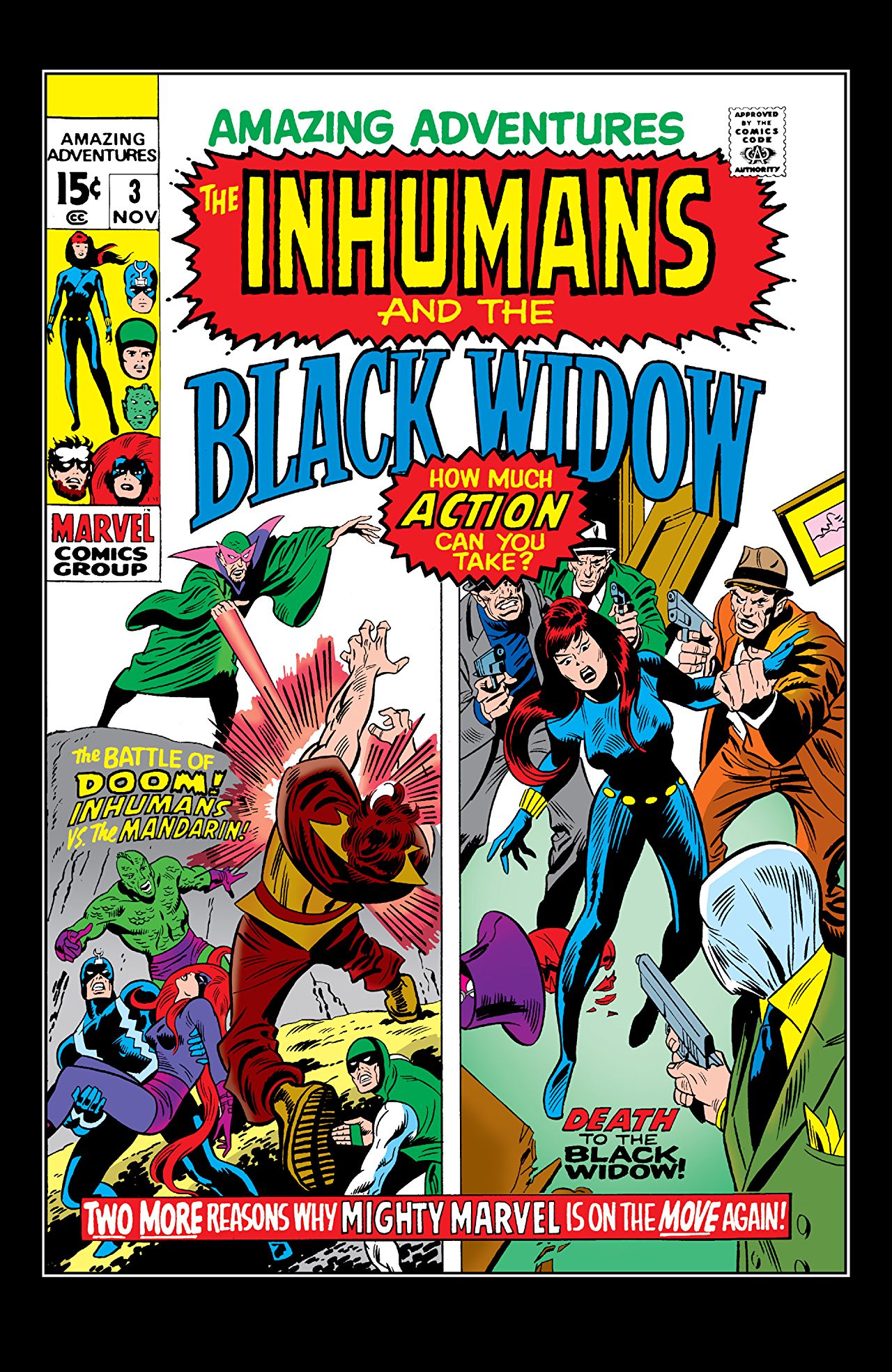
Amazing Adventures #3
☆ Be the first to review + Add to your collection — Join freeAmazing Adventures #3 is the third chapter of Marvel's bold early-Bronze Age experiment in split-book storytelling, pairing Jack Kirby's self-scripted Inhumans feature with the Black Widow's freshly launched solo series — the first time either property had anchored a dedicated ongoing title. The Inhumans story, 'Pawns of the Mandarin,' marks one of the rare instances of Kirby functioning as full writer-artist at Marvel during this final phase of his tenure, making the four-issue run a historically charged document of the King's creative independence just months before his departure for DC. On the Black Widow side, 'The Widow and the Militants' — drawn by Gene Colan and inked by Bill Everett — pushes Natasha deeper into the socially conscious, street-level storytelling that defined the early-1970s 'relevance' movement in superhero comics, grounding a glamorous Cold War spy firmly in the urban political anxieties of the Nixon era.
ComicBooks.com Value
Show all 16 grades ▾
This exact issue on ebay
Raw / ungraded ▾ $3.77–$45 10 listings
Read it digitally
Sell my copy
Have this issue — or a whole collection? Get a fair offer from us, skip the marketplace fees and the hassle.
We Buy Collections ▸History
The 1970 volume of Amazing Adventures was assembled as part of Marvel's strategy of testing characters in split anthology formats rather than committing to full-length solo books. Jack Kirby's involvement with the Inhumans half of the first four issues was essentially the sole concrete creative concession extracted from a tense December 1969 contract negotiation between Kirby and Marvel — negotiations that ultimately failed and precipitated his move to DC Comics. By issue #3, released with a November 1970 cover date and an on-sale date of August 18, 1970, the Black Widow feature had already transitioned its penciling duties from John Buscema (issues #1–2) to Gene Colan, while Gary Friedrich continued as writer, keeping the street-level, socially engaged tone consistent across the handoff.
Trivia · 8 facts
- Cover date: November 1970; on-sale date: August 18, 1970 (Marvel/Magazine Management Co.).
- Contains two stories: 'Pawns of the Mandarin' (Inhumans) — script and pencils by Jack Kirby, inks by Chic Stone; and 'The Widow and the Militants' (Black Widow) — script by Gary Friedrich, pencils by Gene Colan, inks by Bill Everett.
- Cover penciled by John Buscema, inked by John Verpoorten.
- 'Pawns of the Mandarin' pits the Inhumans (Black Bolt, Gorgon, Karnak, Medusa, Triton) against the Mandarin (Gene Kahn), who sends a robotic double to lure them into excavating the ancient Eye of Yin artifact on his behalf — a cliffhanger continued in issue #4.
- This is one of only four issues in which Kirby served as full scripter on the Inhumans feature at Marvel, a creative arrangement that was a direct result of his late-1969 contract negotiations with the company.
- 'The Widow and the Militants' features Natasha (in her then-new black catsuit) abducted while caught up in a politically charged youth occupation of a building; the story includes cameo appearances by Peter Parker and J. Jonah Jameson and references New York City Mayor John Lindsay by likeness.
- The issue has been reprinted in Marvel Masterworks: The Inhumans Vol. 1 (2009), the Black Widow Epic Collection Vol. 1: Beware the Black Widow (2019), and The Black Widow Strikes Omnibus (2019), among other collected editions.
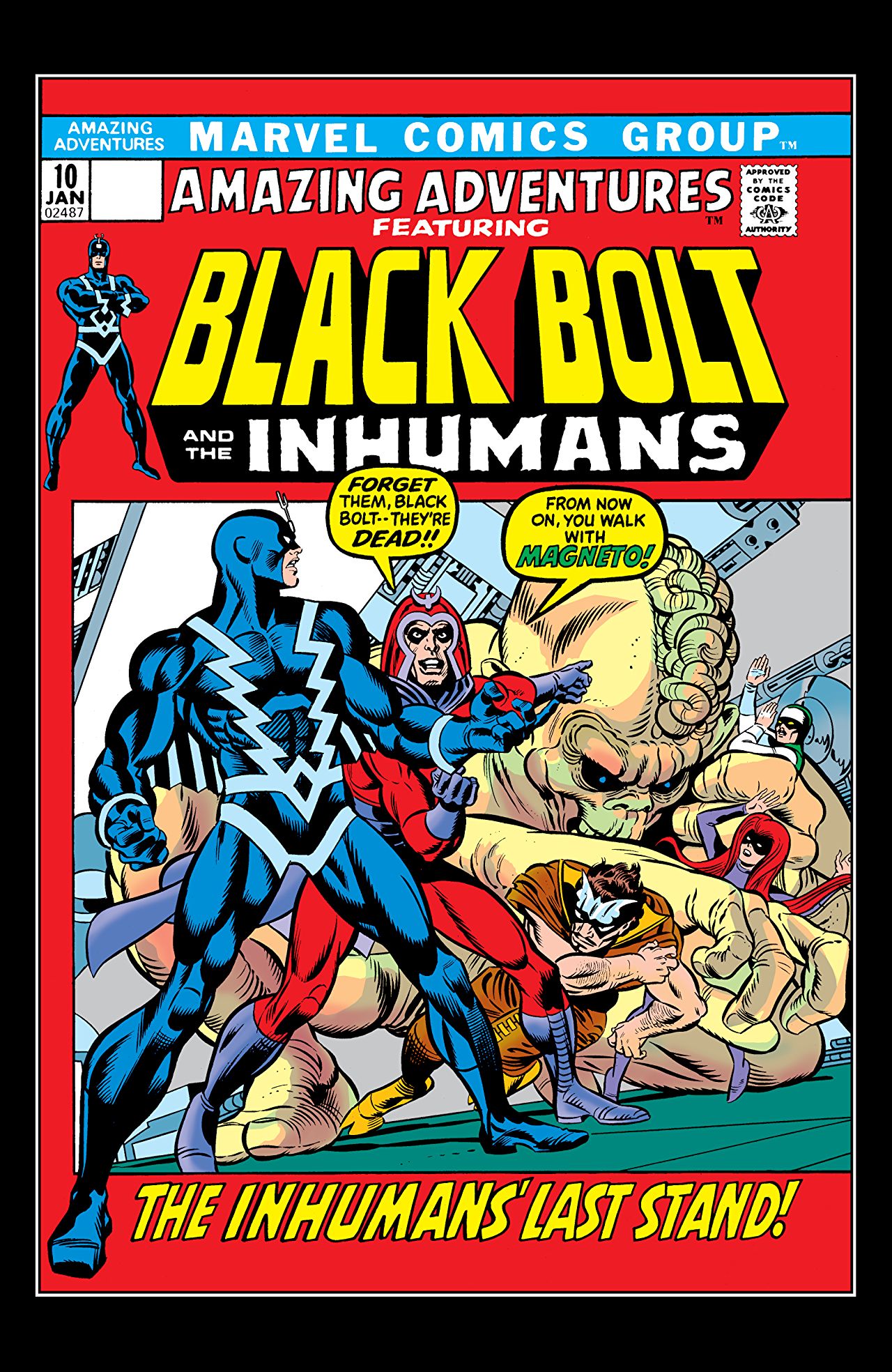
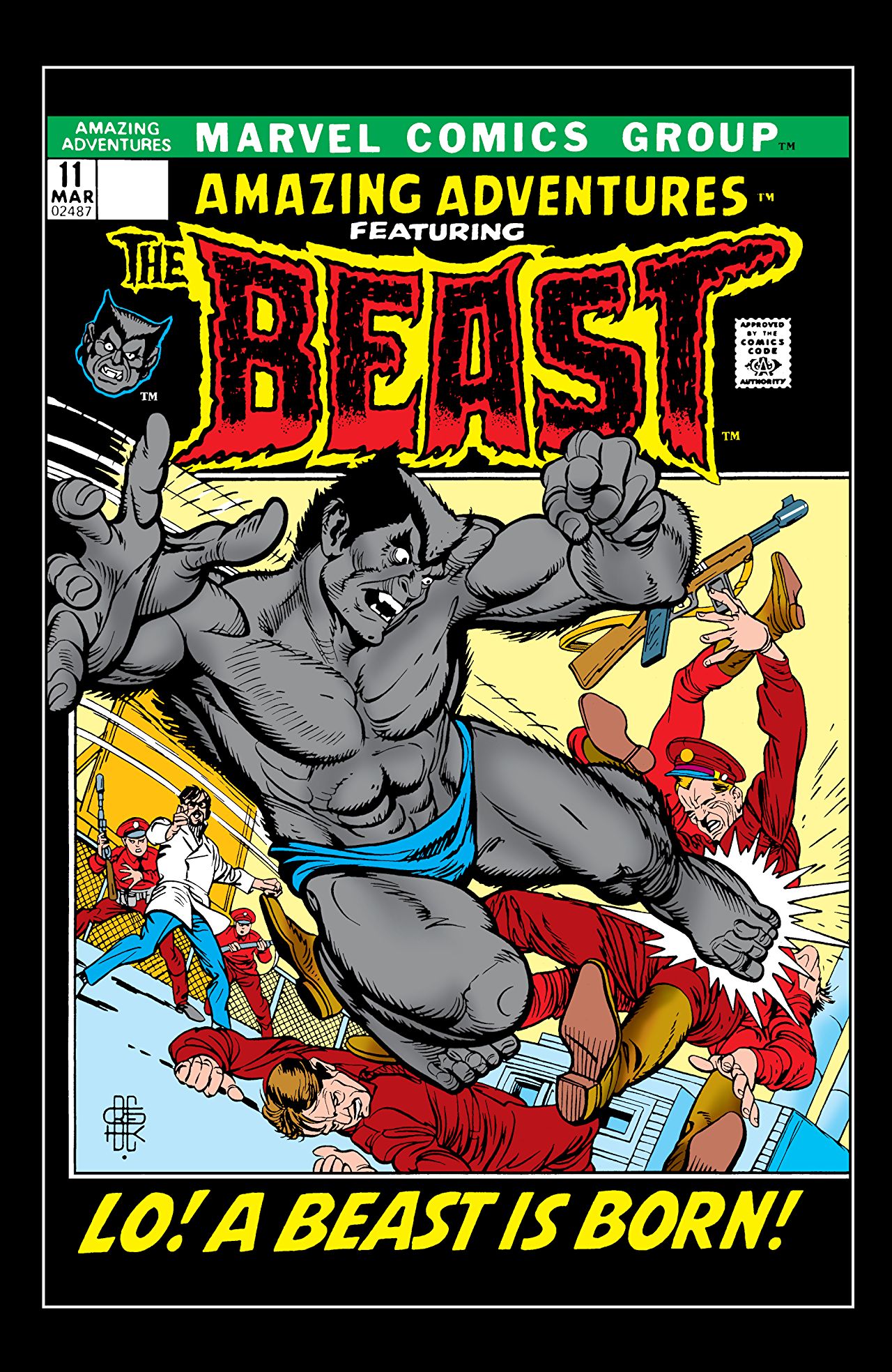
- The split-book format of Amazing Adventures ran through issue #8 for the Black Widow feature and through issue #10 for the Inhumans, after which the title shifted to full-length Beast stories beginning with issue #11.
Cast · 15 characters
Full credits
Reprints
Reprinted in Marvelmania Monthly Magazine #3 (1970), Il Mitico Thor #52 (1973), Il Mitico Thor #68 (1973), Il Mitico Thor #69 (1973), Frankenstein #2 (1975), L'Inattendu #3 (1975), Black Widow: The Sting of the Widow #[nn] (2009), Marvel Masterworks: The Inhumans #1 (2009), Marvel Masterworks: Daredevil #8 (2014), The Inhumans: Beware the Inhumans #[nn] (2018), Marvel. Официальная коллекция комиксов #114 (2018), Black Widow Epic Collection #1 (2019), The Black Widow Strikes Omnibus #[nn] (2019), Daredevil Omnibus #3 (2024), Marvel Limited Edition TPB. Los Inhumanos #1 (2024)
Key issues in Amazing Adventures
Variants (1)
Reviews
Reader reviews
No reader reviews yet.