ComicBooks.com Register / Loginit's free!
HomeMarvels of Science#1Read

★ ComicBooks.com Reading Room

Marvels of Science #1 (1946)

Charlton · 1946 · 52 pages

Free to read · restored edition by ComicBooks.com · Issue details →
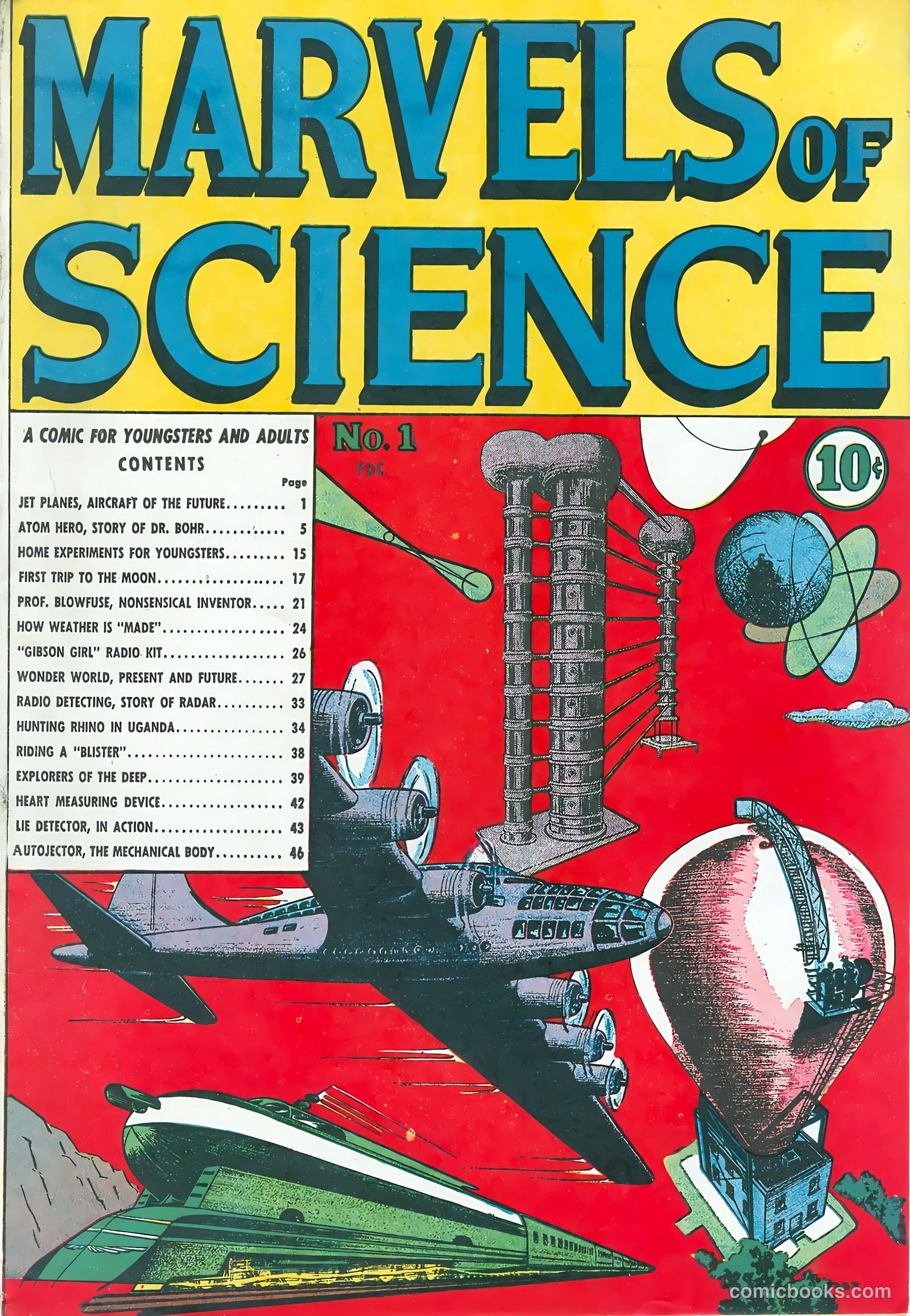
Marvels of Science #1 (1946) — page 1 of 52
1 / 52
Marvels of Science #1 (1946) — page 2 of 52
2 / 52
Marvels of Science #1 (1946) — page 3 of 52
3 / 52
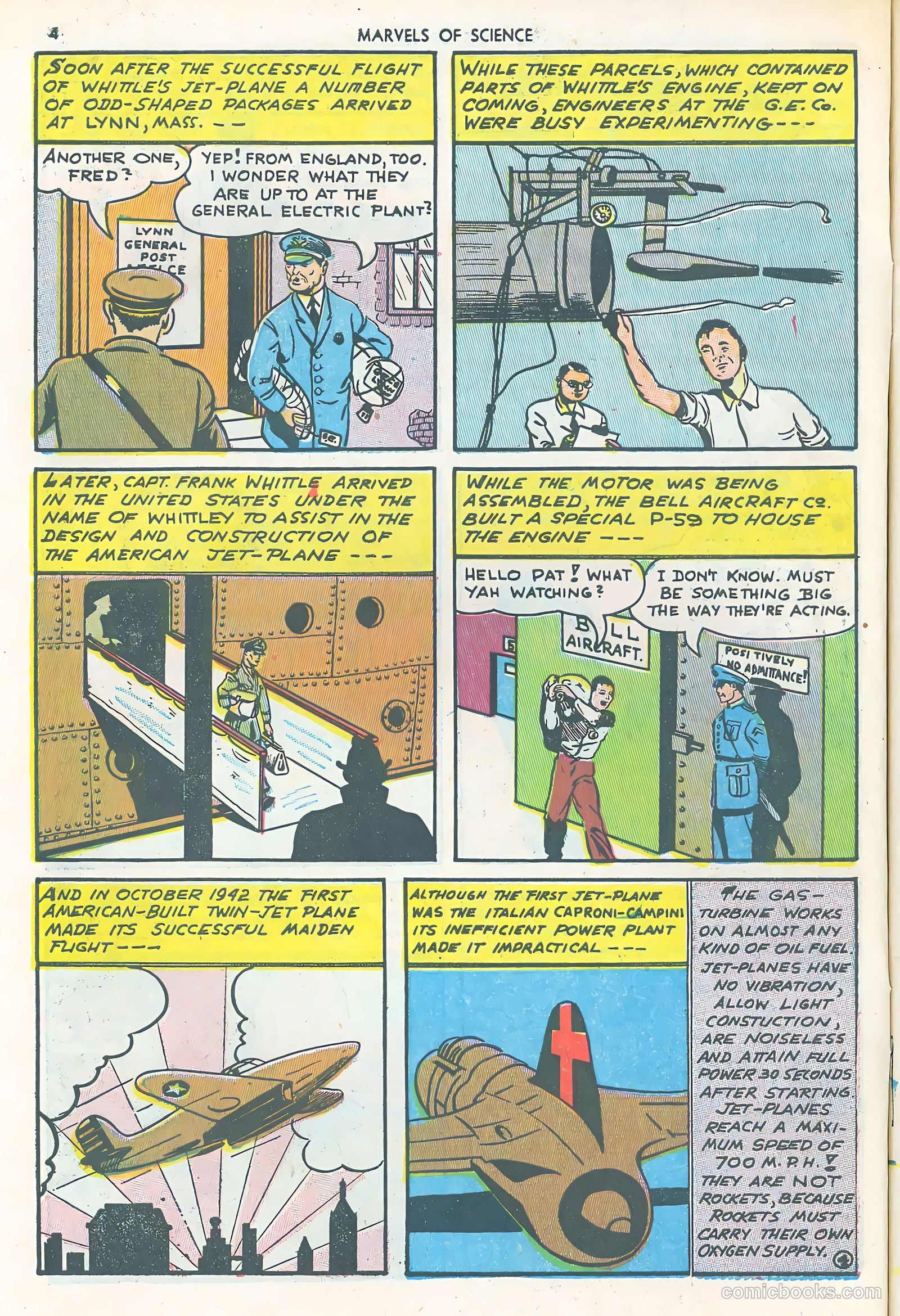
Marvels of Science #1 (1946) — page 4 of 52
4 / 52
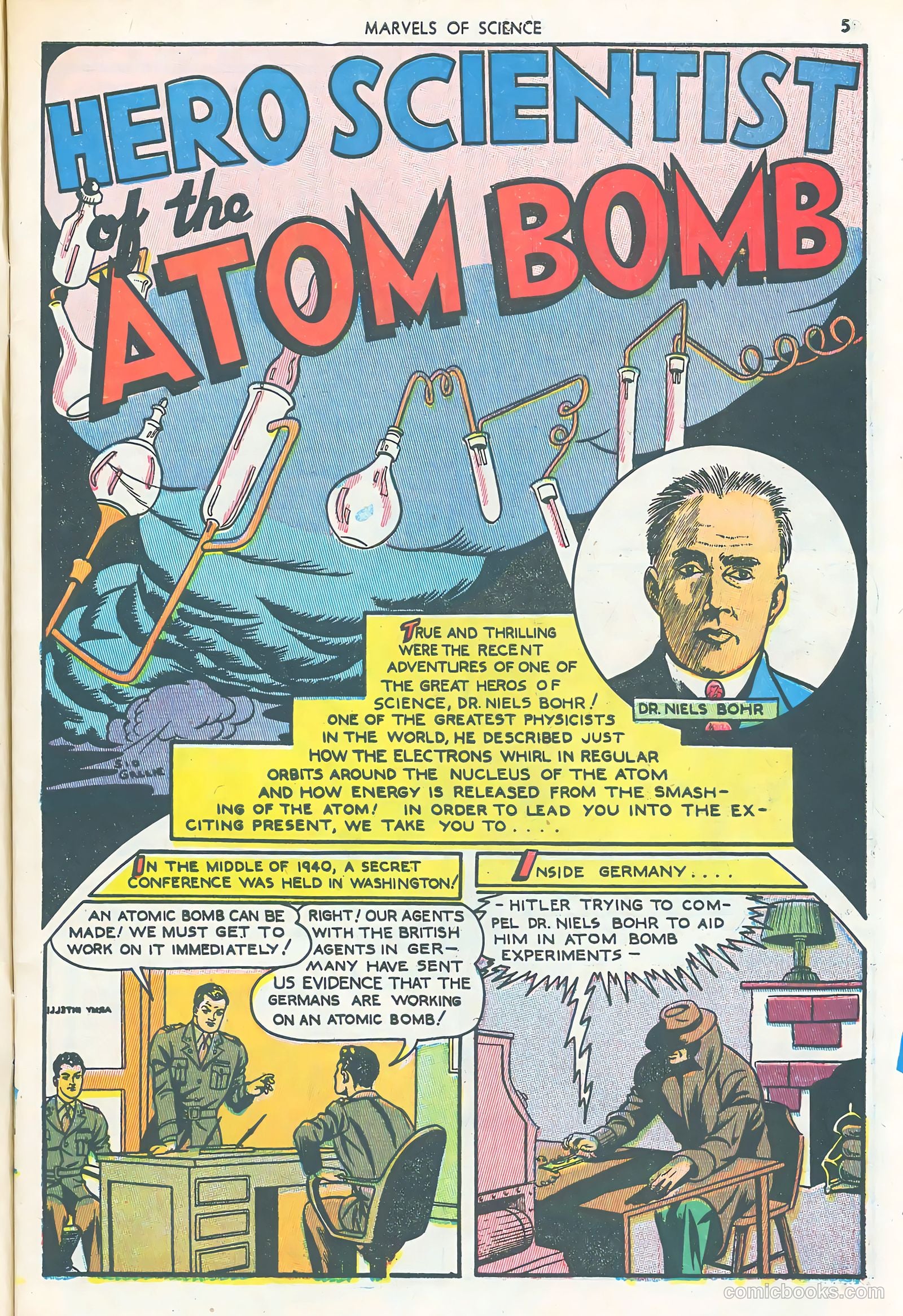
Marvels of Science #1 (1946) — page 5 of 52
5 / 52
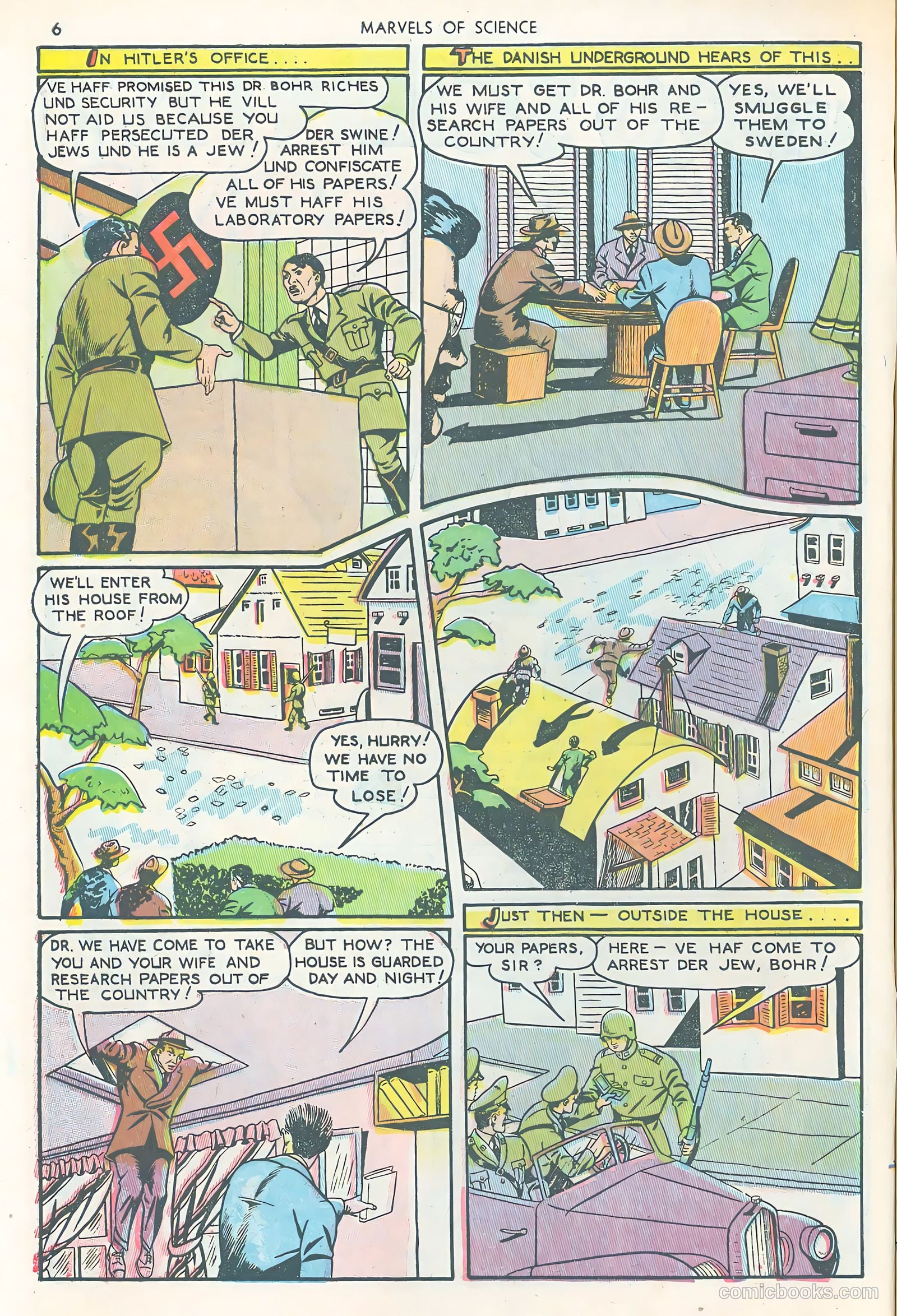
Marvels of Science #1 (1946) — page 6 of 52
6 / 52
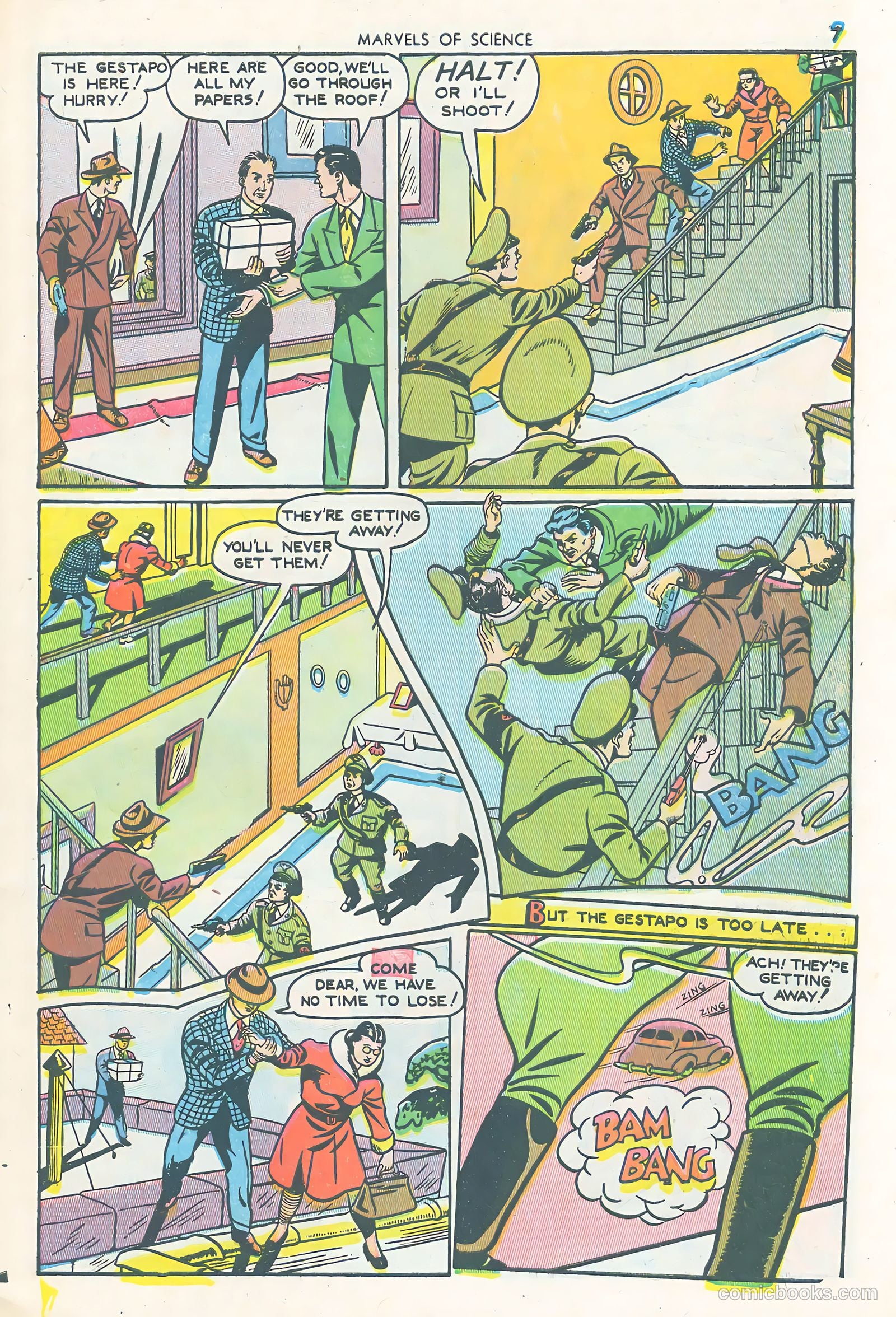
Marvels of Science #1 (1946) — page 7 of 52
7 / 52
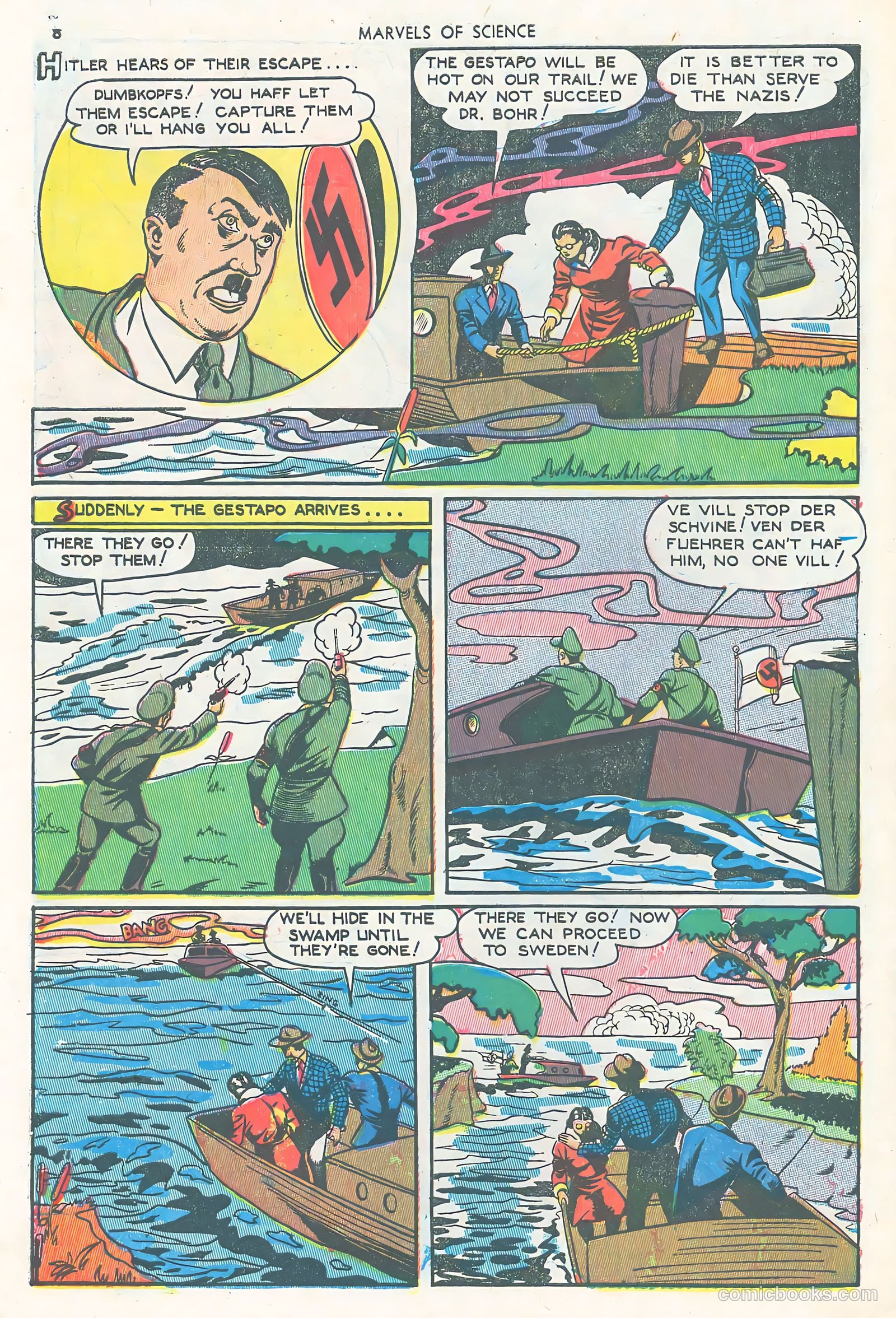
Marvels of Science #1 (1946) — page 8 of 52
8 / 52
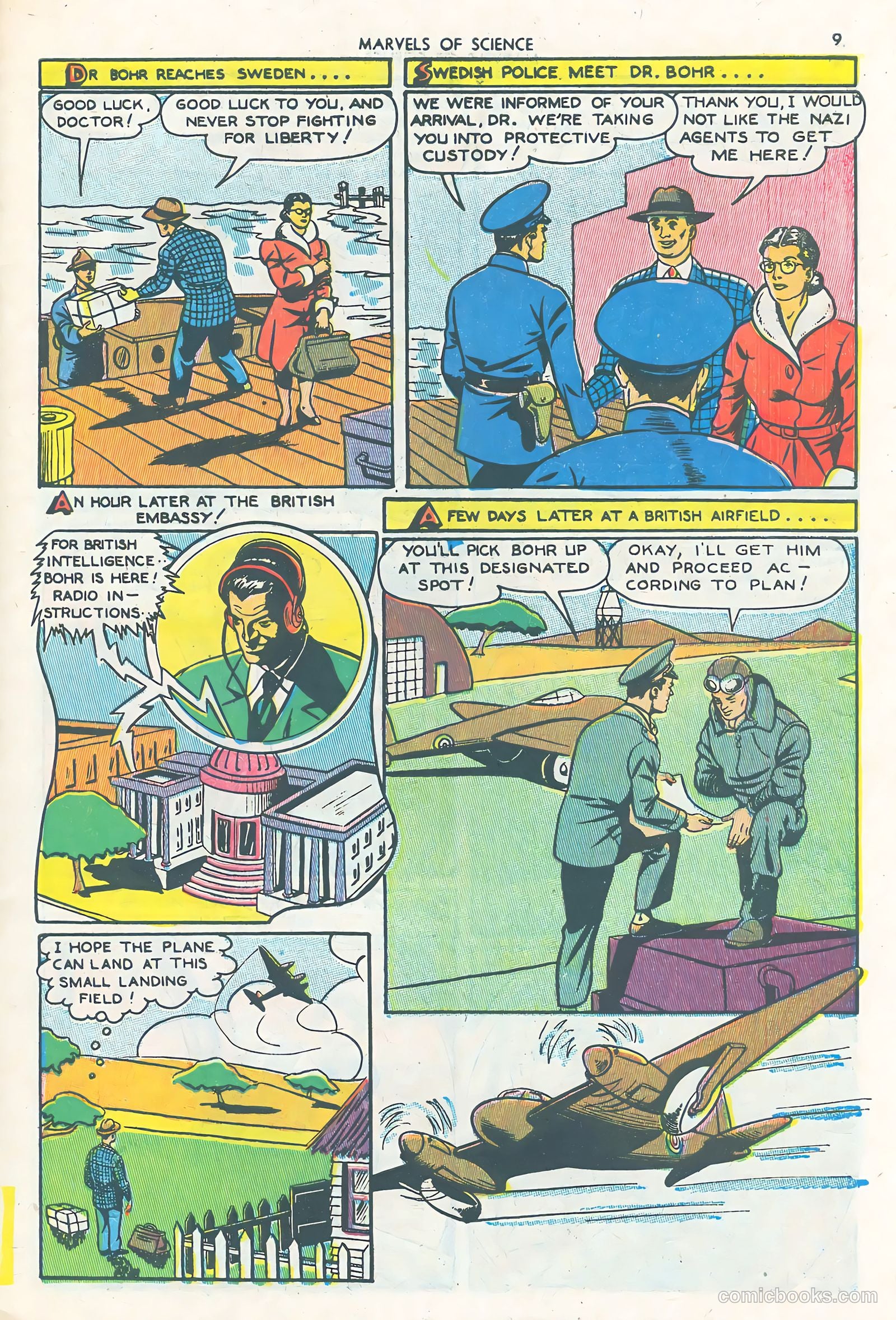
Marvels of Science #1 (1946) — page 9 of 52
9 / 52
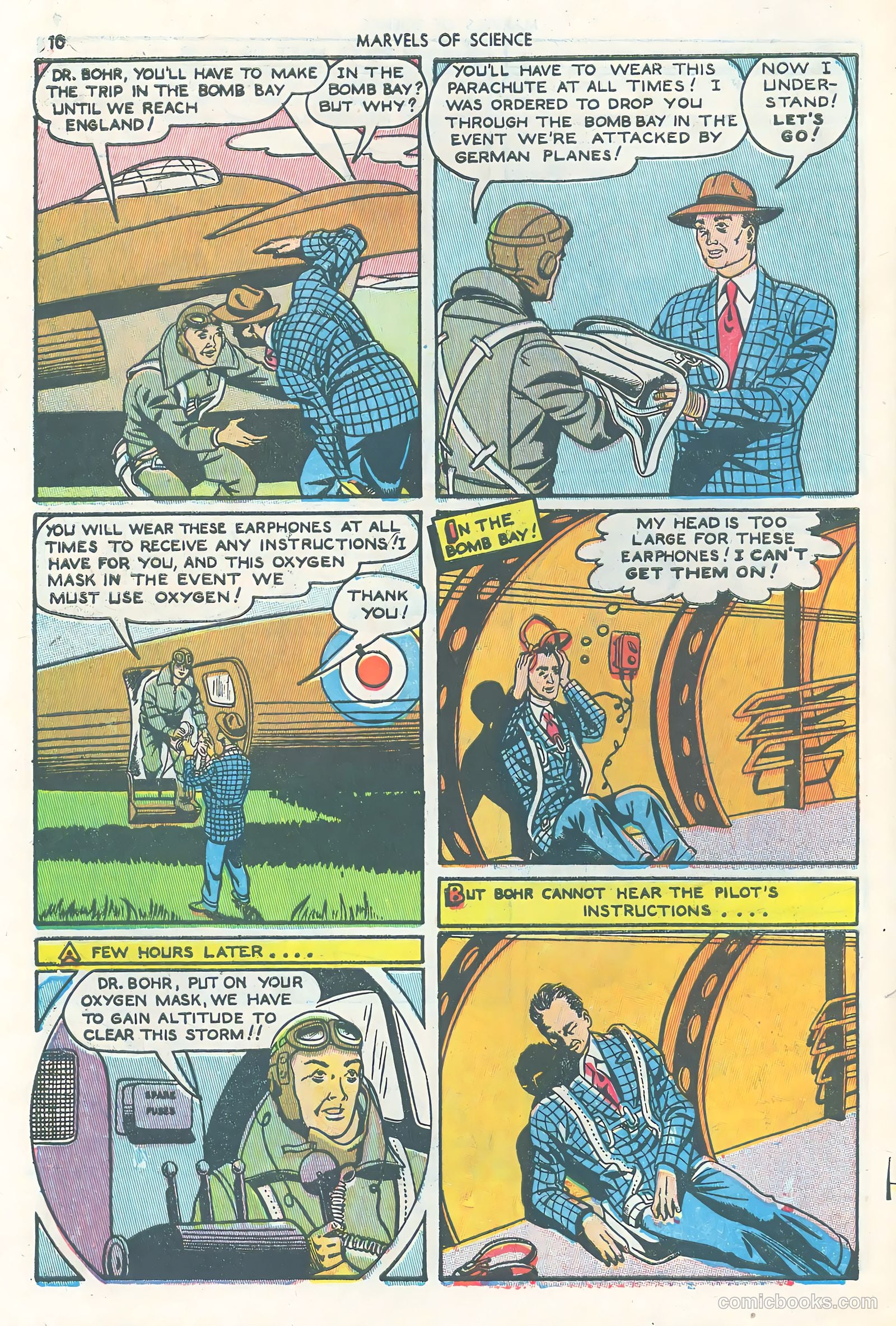
Marvels of Science #1 (1946) — page 10 of 52
10 / 52
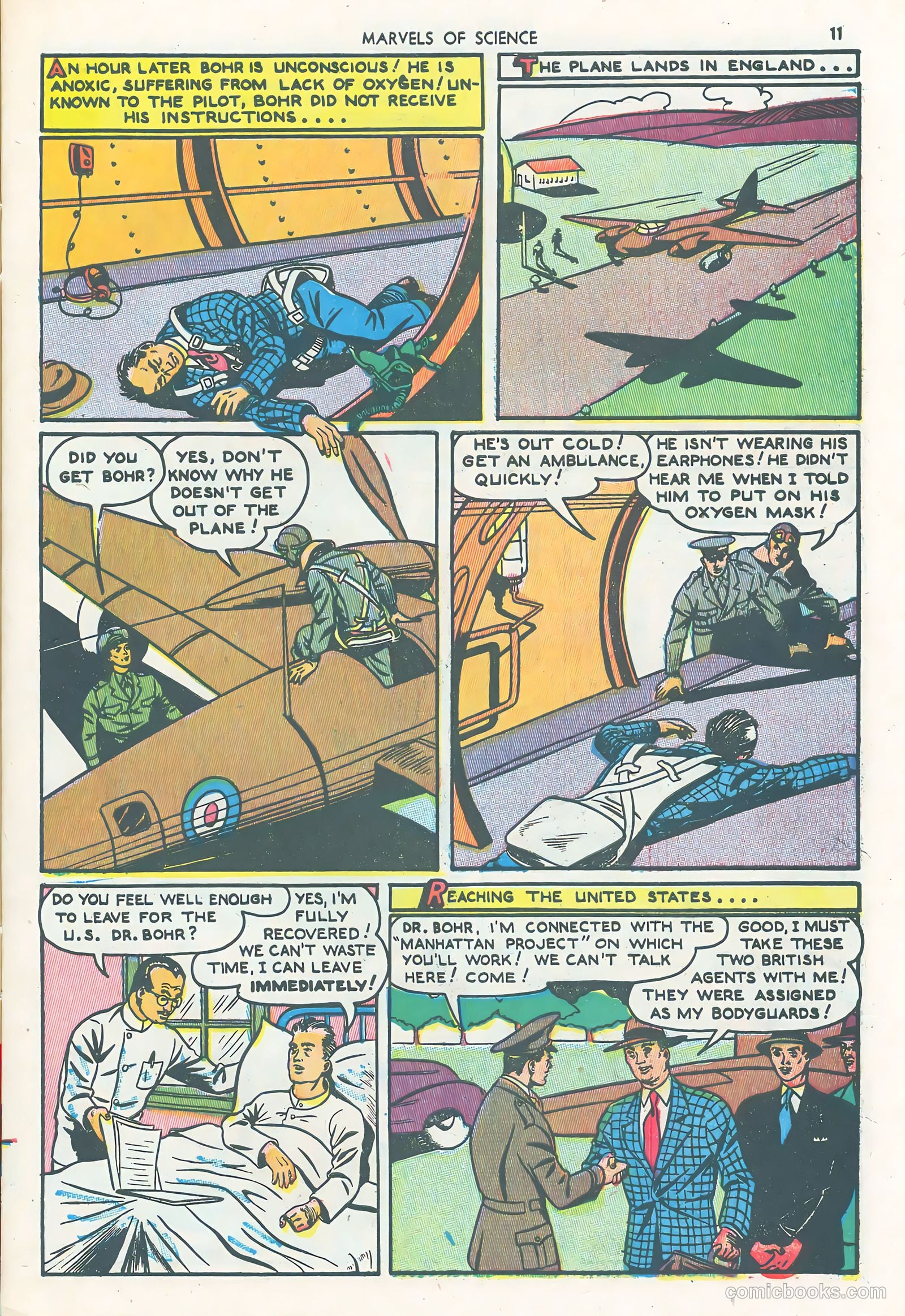
Marvels of Science #1 (1946) — page 11 of 52
11 / 52
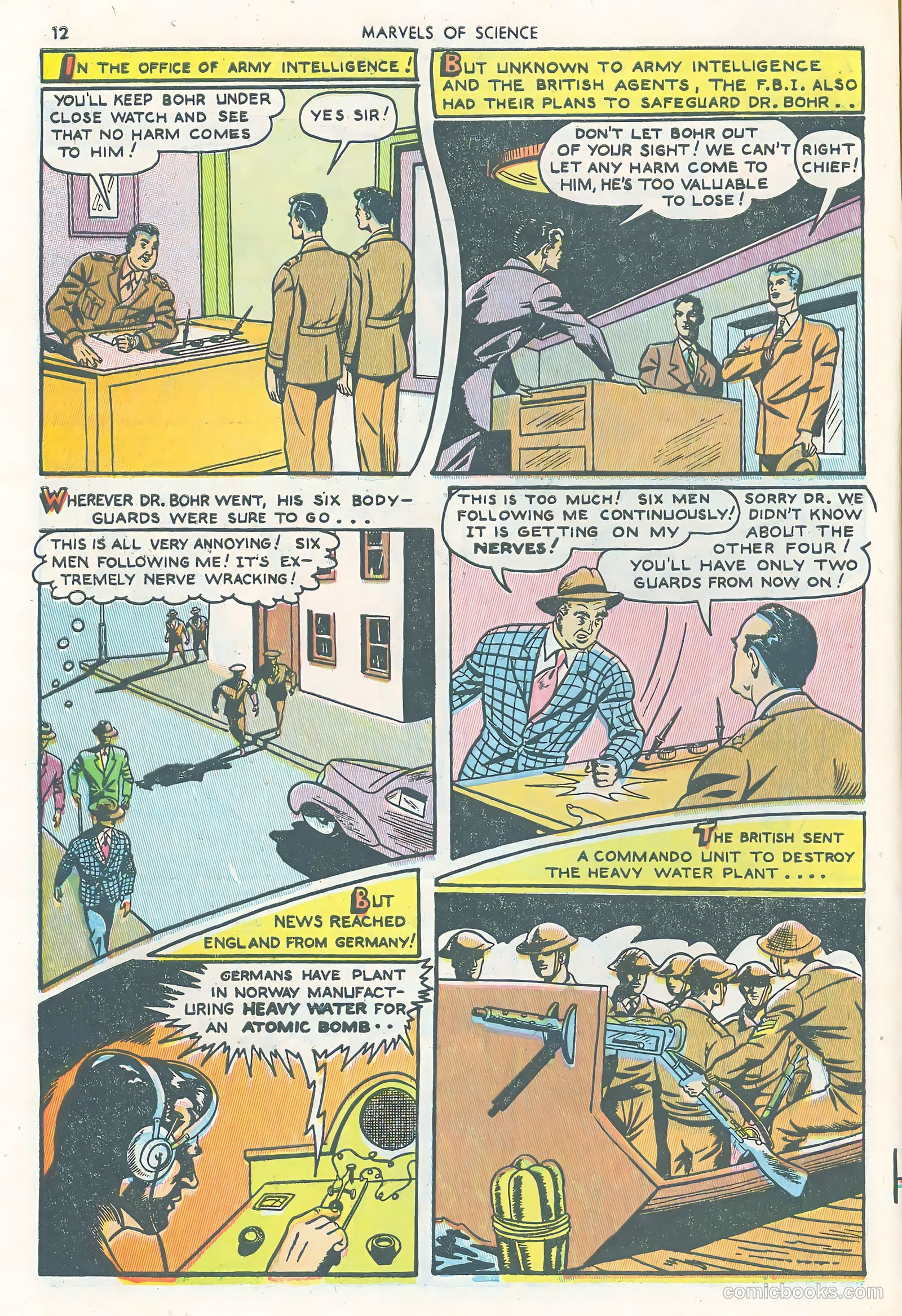
Marvels of Science #1 (1946) — page 12 of 52
12 / 52
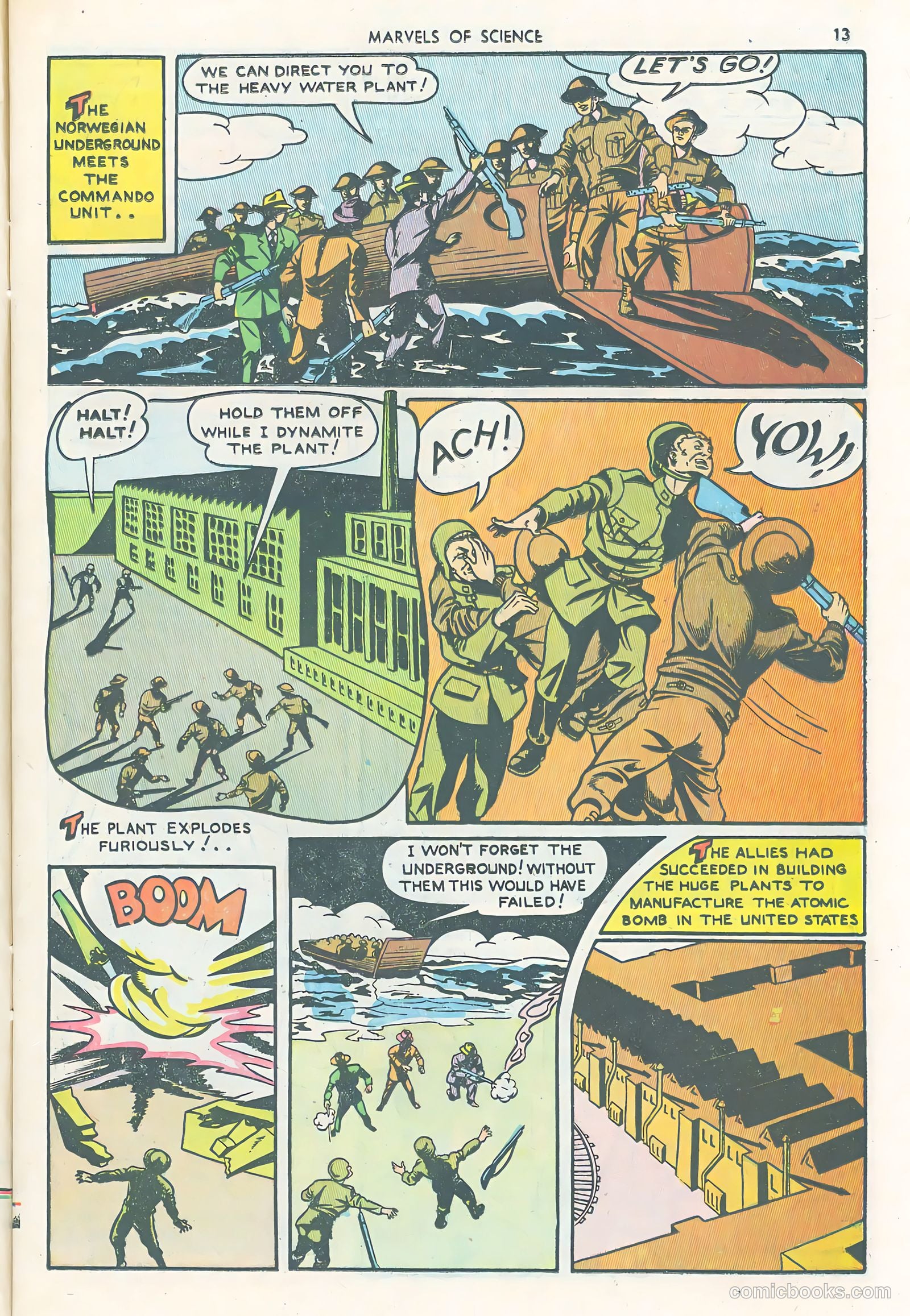
Marvels of Science #1 (1946) — page 13 of 52
13 / 52
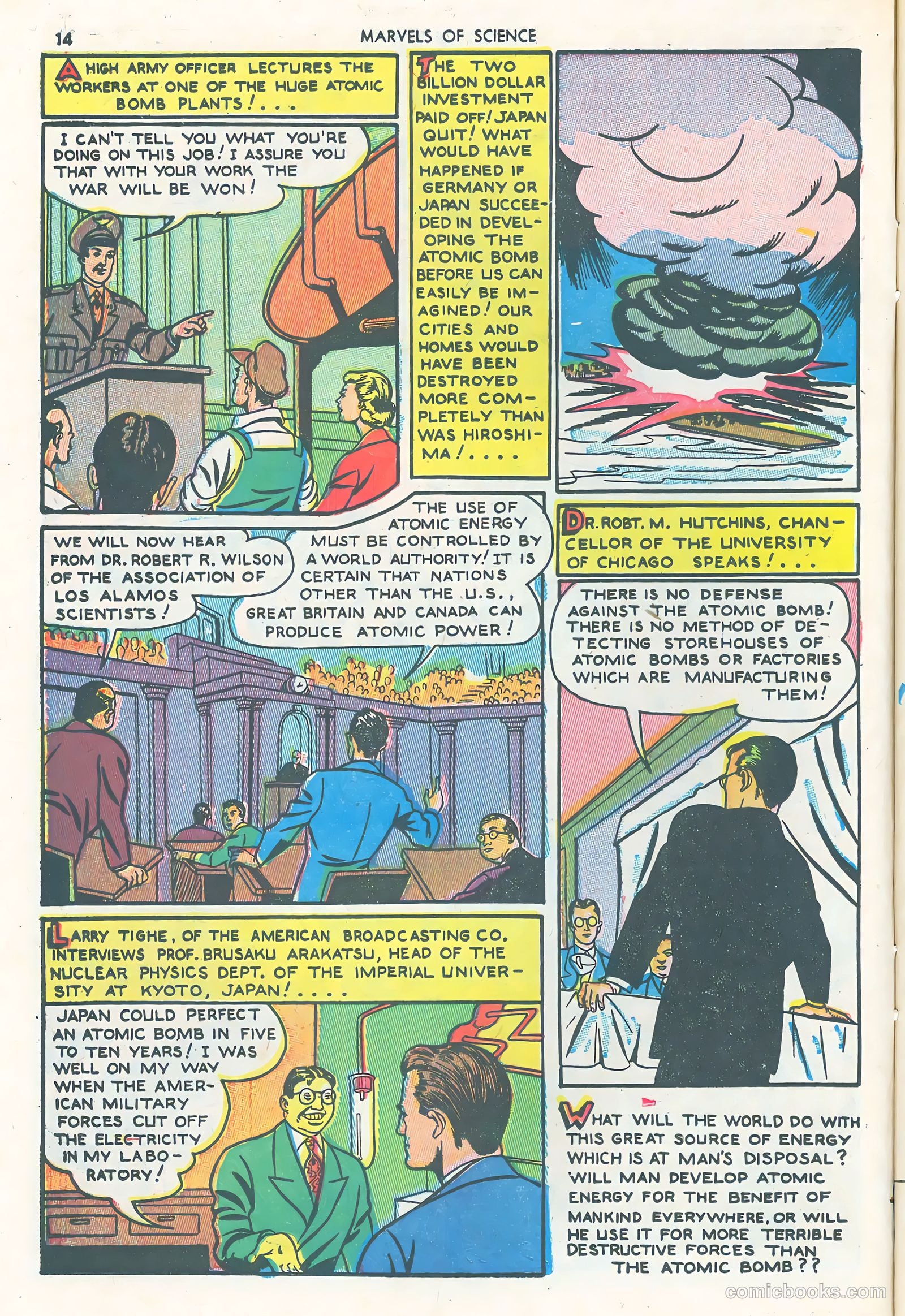
Marvels of Science #1 (1946) — page 14 of 52
14 / 52
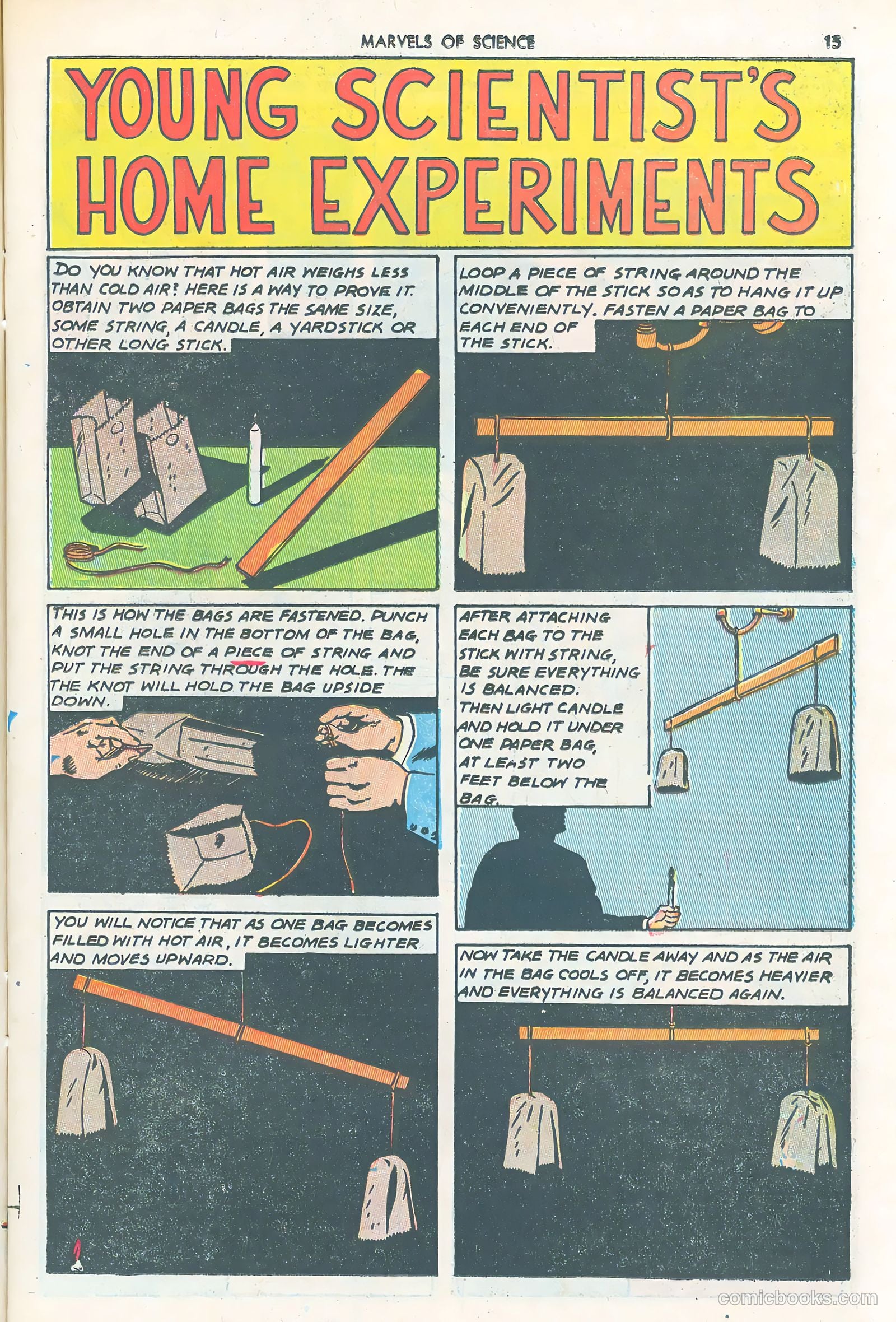
Marvels of Science #1 (1946) — page 15 of 52
15 / 52
Marvels of Science #1 (1946) — page 16 of 52
16 / 52
Marvels of Science #1 (1946) — page 17 of 52
17 / 52
Marvels of Science #1 (1946) — page 18 of 52
18 / 52
Marvels of Science #1 (1946) — page 19 of 52
19 / 52
Marvels of Science #1 (1946) — page 20 of 52
20 / 52
Marvels of Science #1 (1946) — page 21 of 52
21 / 52
Marvels of Science #1 (1946) — page 22 of 52
22 / 52
Marvels of Science #1 (1946) — page 23 of 52
23 / 52
Marvels of Science #1 (1946) — page 24 of 52
24 / 52
Marvels of Science #1 (1946) — page 25 of 52
25 / 52
Marvels of Science #1 (1946) — page 26 of 52
26 / 52
Marvels of Science #1 (1946) — page 27 of 52
27 / 52
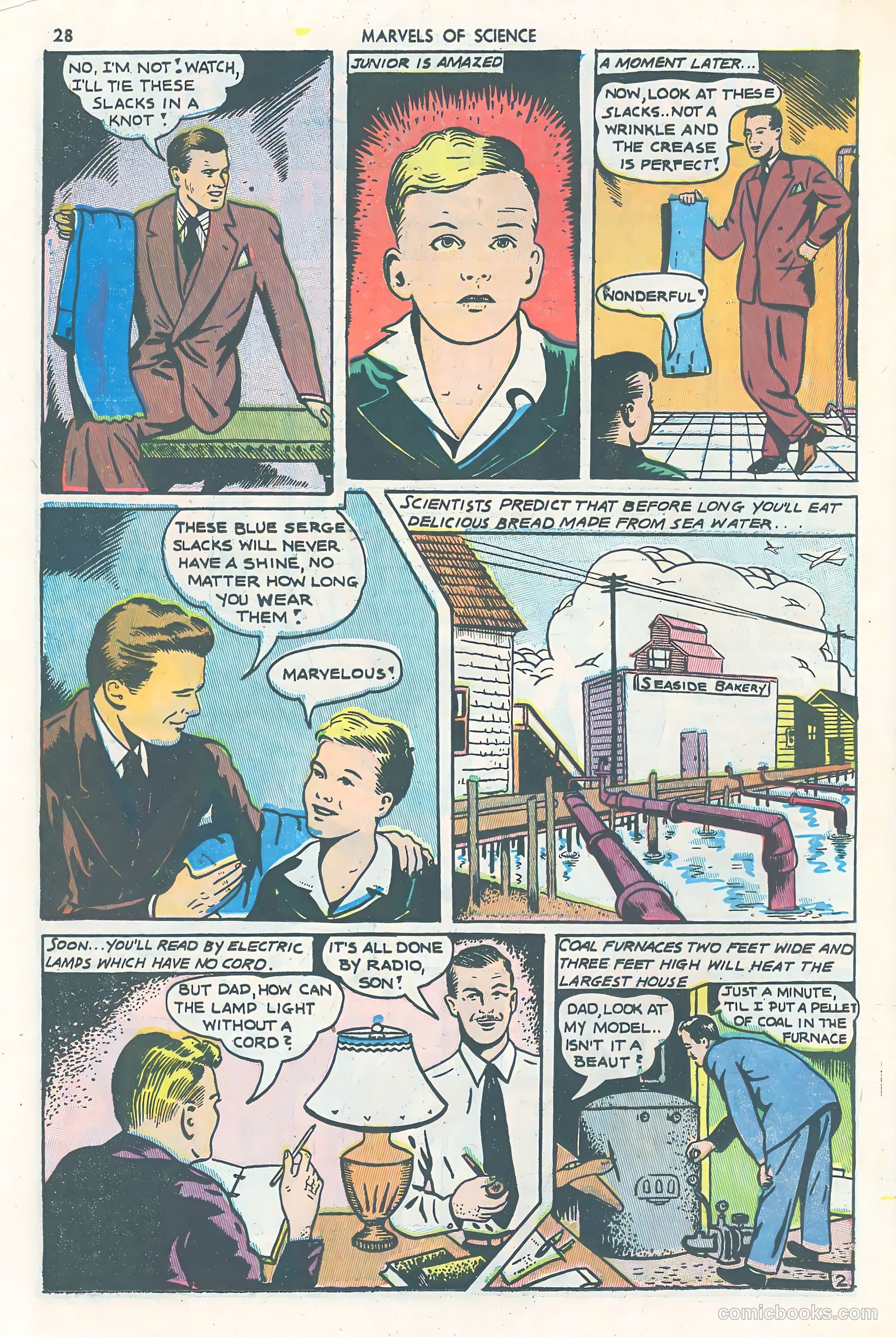
Marvels of Science #1 (1946) — page 28 of 52
28 / 52
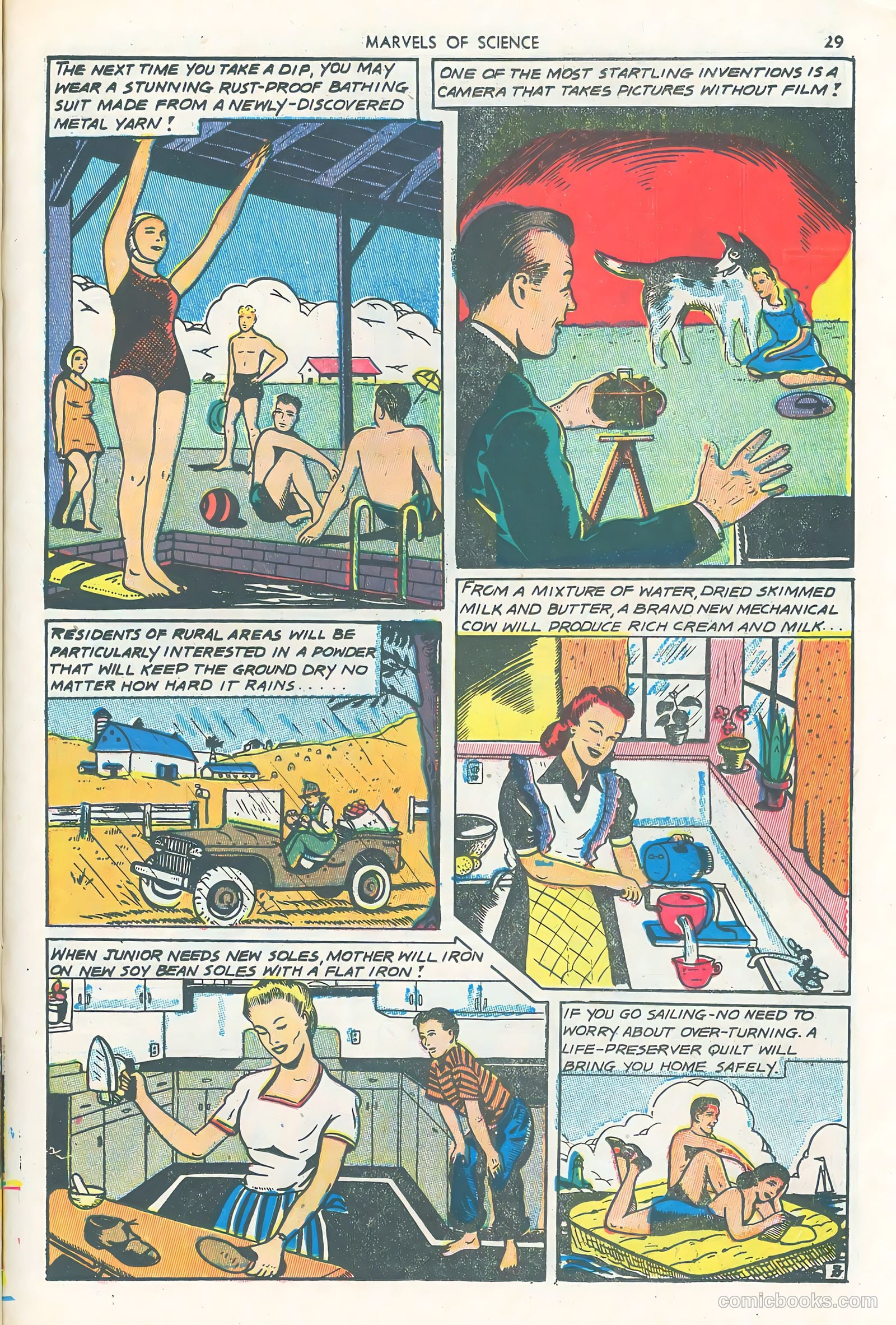
Marvels of Science #1 (1946) — page 29 of 52
29 / 52
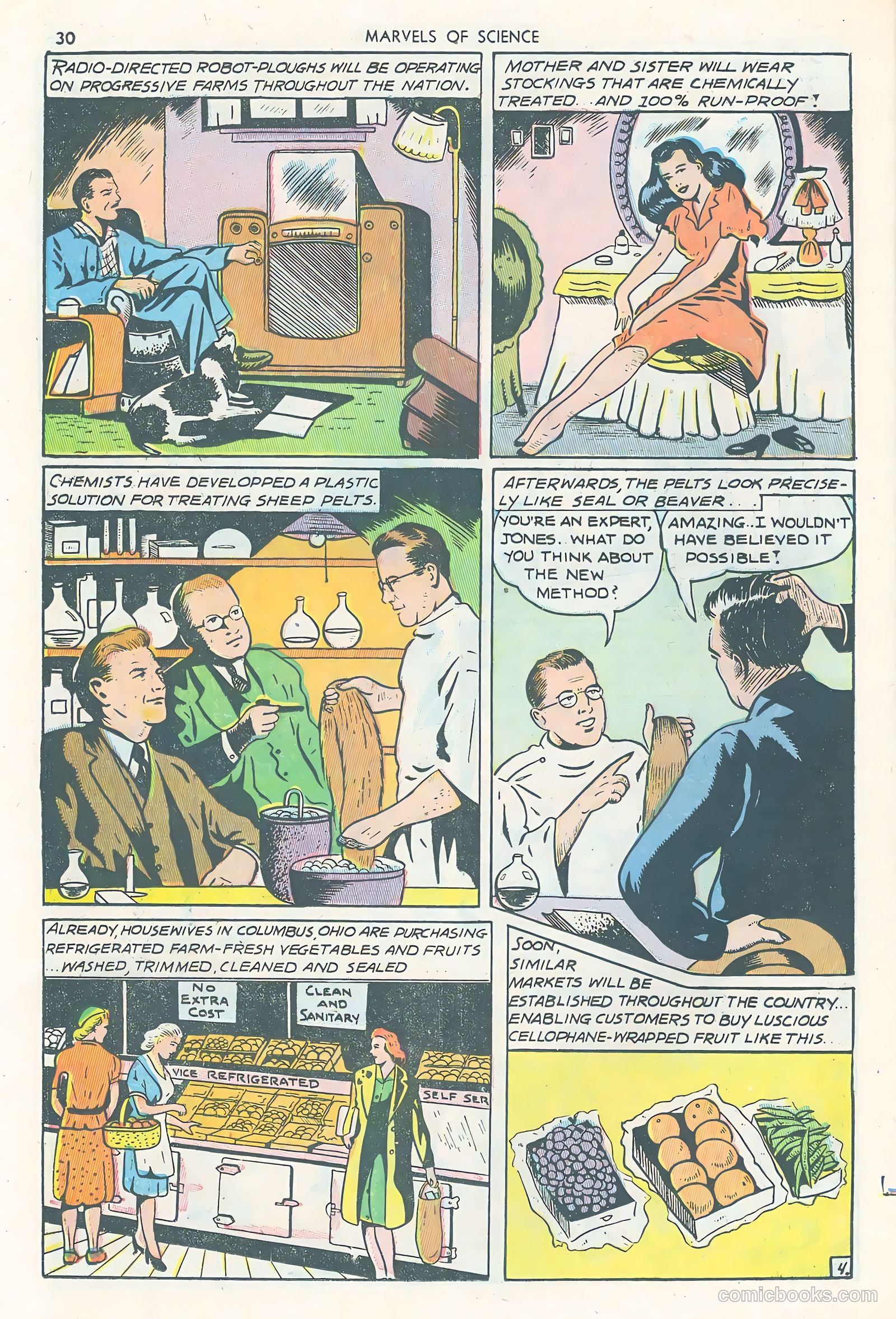
Marvels of Science #1 (1946) — page 30 of 52
30 / 52
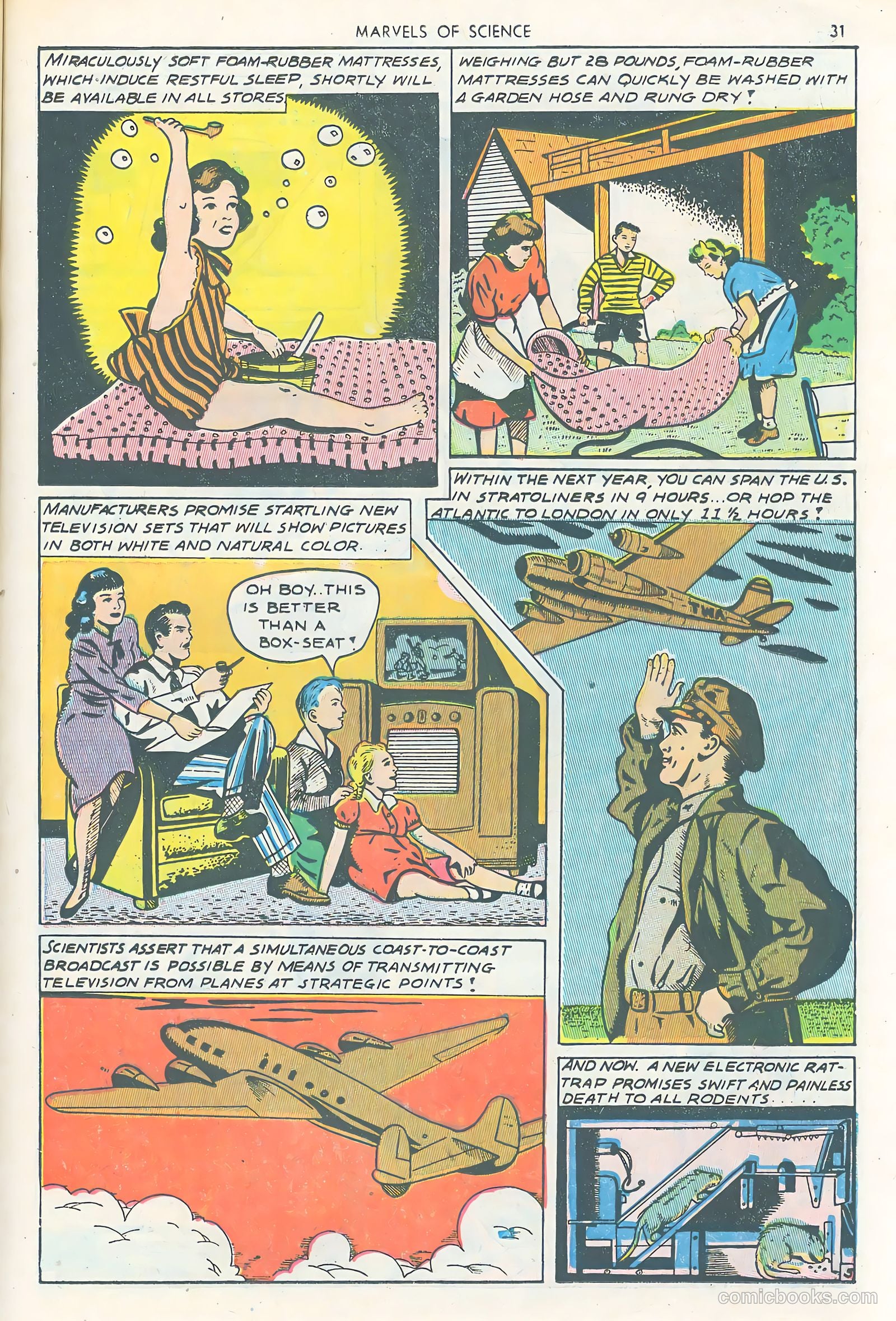
Marvels of Science #1 (1946) — page 31 of 52
31 / 52
Marvels of Science #1 (1946) — page 32 of 52
32 / 52
Marvels of Science #1 (1946) — page 33 of 52
33 / 52
Marvels of Science #1 (1946) — page 34 of 52
34 / 52
Marvels of Science #1 (1946) — page 35 of 52
35 / 52
Marvels of Science #1 (1946) — page 36 of 52
36 / 52
Marvels of Science #1 (1946) — page 37 of 52
37 / 52
Marvels of Science #1 (1946) — page 38 of 52
38 / 52
Marvels of Science #1 (1946) — page 39 of 52
39 / 52
Marvels of Science #1 (1946) — page 40 of 52
40 / 52
Marvels of Science #1 (1946) — page 41 of 52
41 / 52
Marvels of Science #1 (1946) — page 42 of 52
42 / 52
Marvels of Science #1 (1946) — page 43 of 52
43 / 52
Marvels of Science #1 (1946) — page 44 of 52
44 / 52
Marvels of Science #1 (1946) — page 45 of 52
45 / 52
Marvels of Science #1 (1946) — page 46 of 52
46 / 52
Marvels of Science #1 (1946) — page 47 of 52
47 / 52
Marvels of Science #1 (1946) — page 48 of 52
48 / 52
Marvels of Science #1 (1946) — page 49 of 52
49 / 52
Marvels of Science #1 (1946) — page 50 of 52
50 / 52
Marvels of Science #1 (1946) — page 51 of 52
51 / 52
Marvels of Science #1 (1946) — page 52 of 52
52 / 52
ContinueMarvels of Science #2 →
Contains 14 stories
Jet Plane the Aircraft of the Future
4 pp · non-fiction

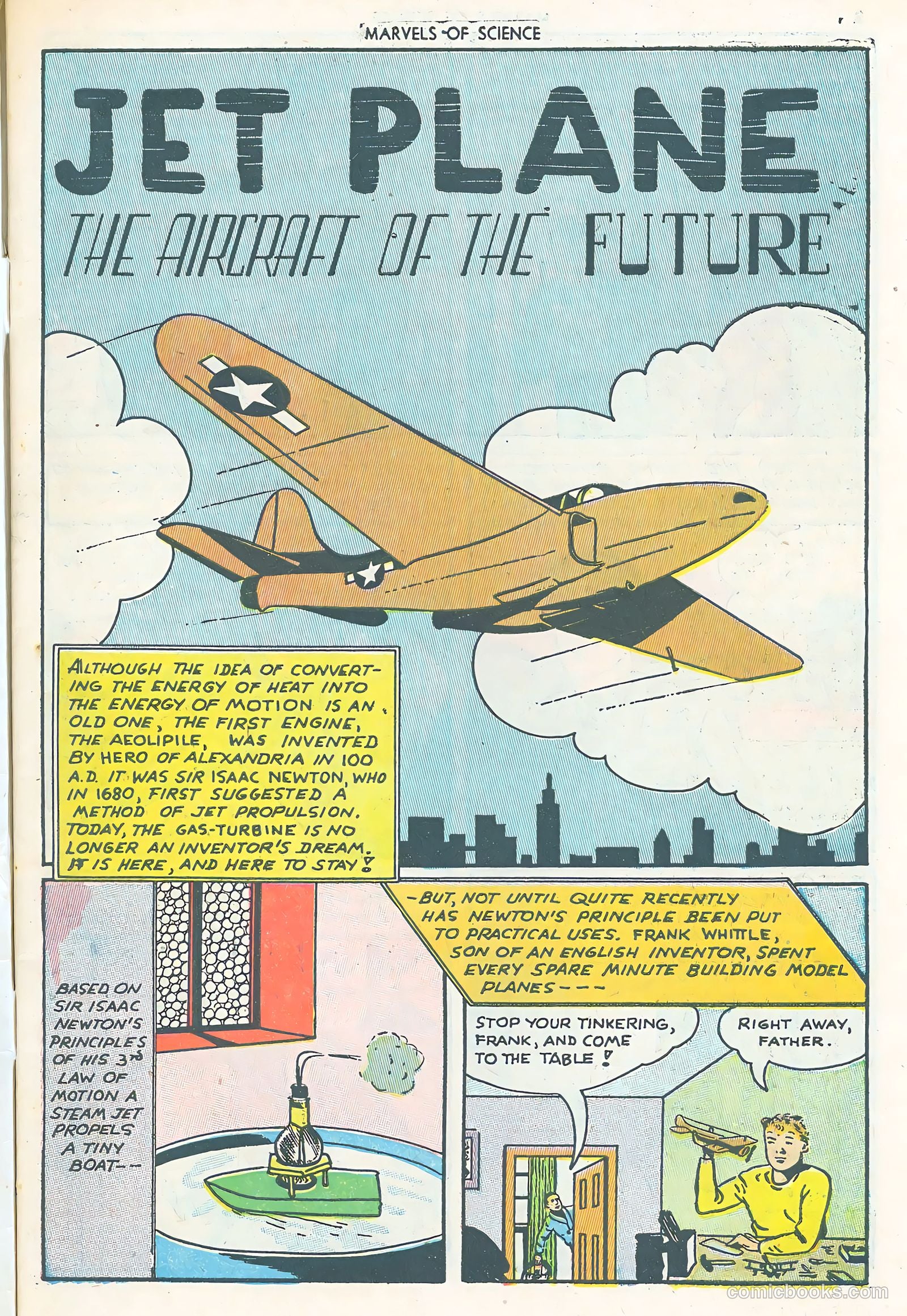
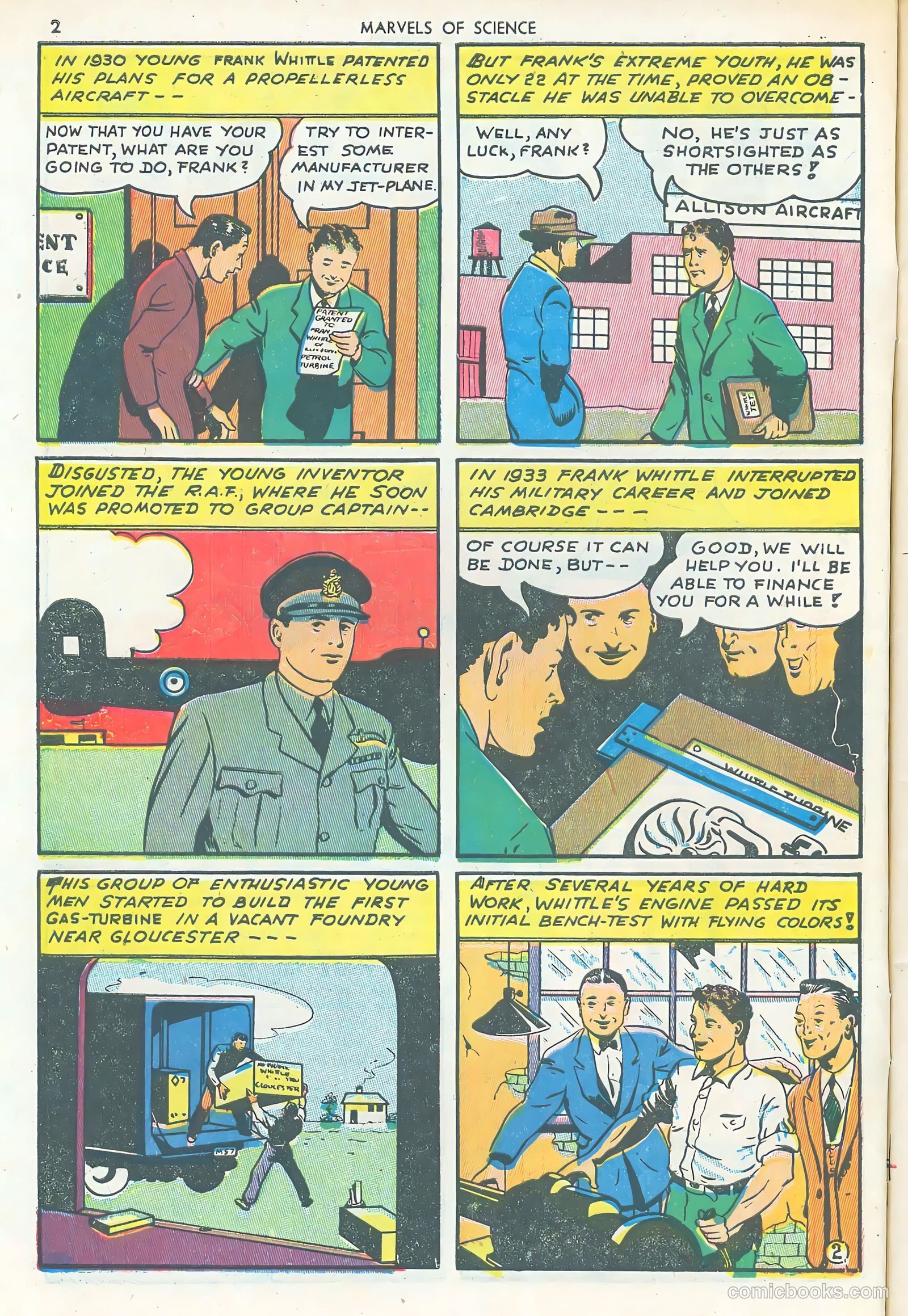
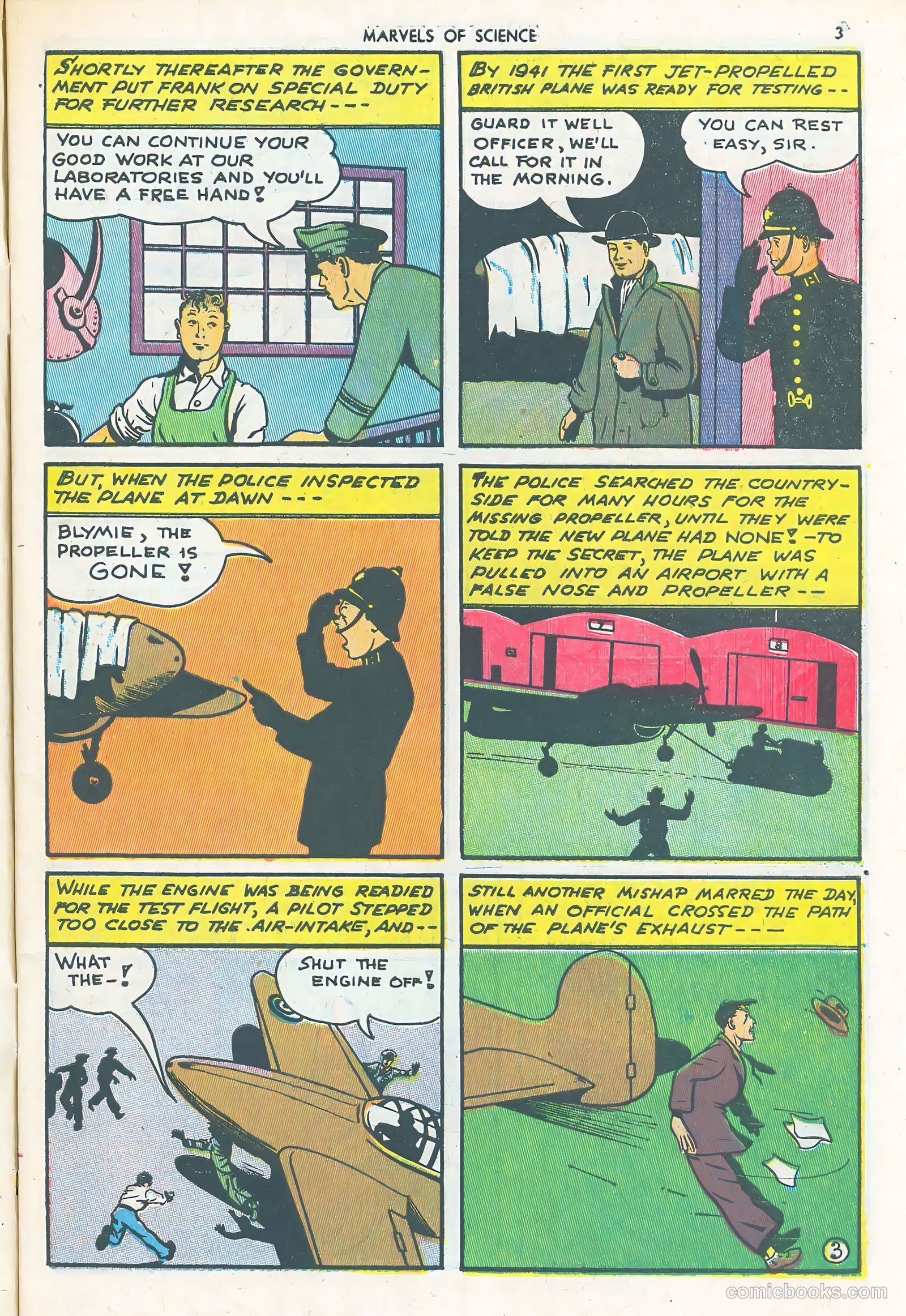
Follow the pioneering work of Frank Whittle, an English inventor who spent decades turning Sir Isaac Newton's jet propulsion principles into reality—from patching together model planes as a young man to securing a patent at just 22, only to face rejection from manufacturers and the obstacles of his own inexperience. Watch as Whittle finally gains support, builds the first working gas-turbine engine with a team of enthusiasts, and sees his revolutionary propellerless aircraft take to the skies, ultimately inspiring American engineers to develop their own jet-powered plane. This 1946 non-fiction feature traces the fascinating evolution of an invention that promised to transform aviation forever.

Hero Scientist of the Atom Bomb
10 pp · non-fiction; biography
Young Scientist's Home Experiments
2 pp · non-fiction

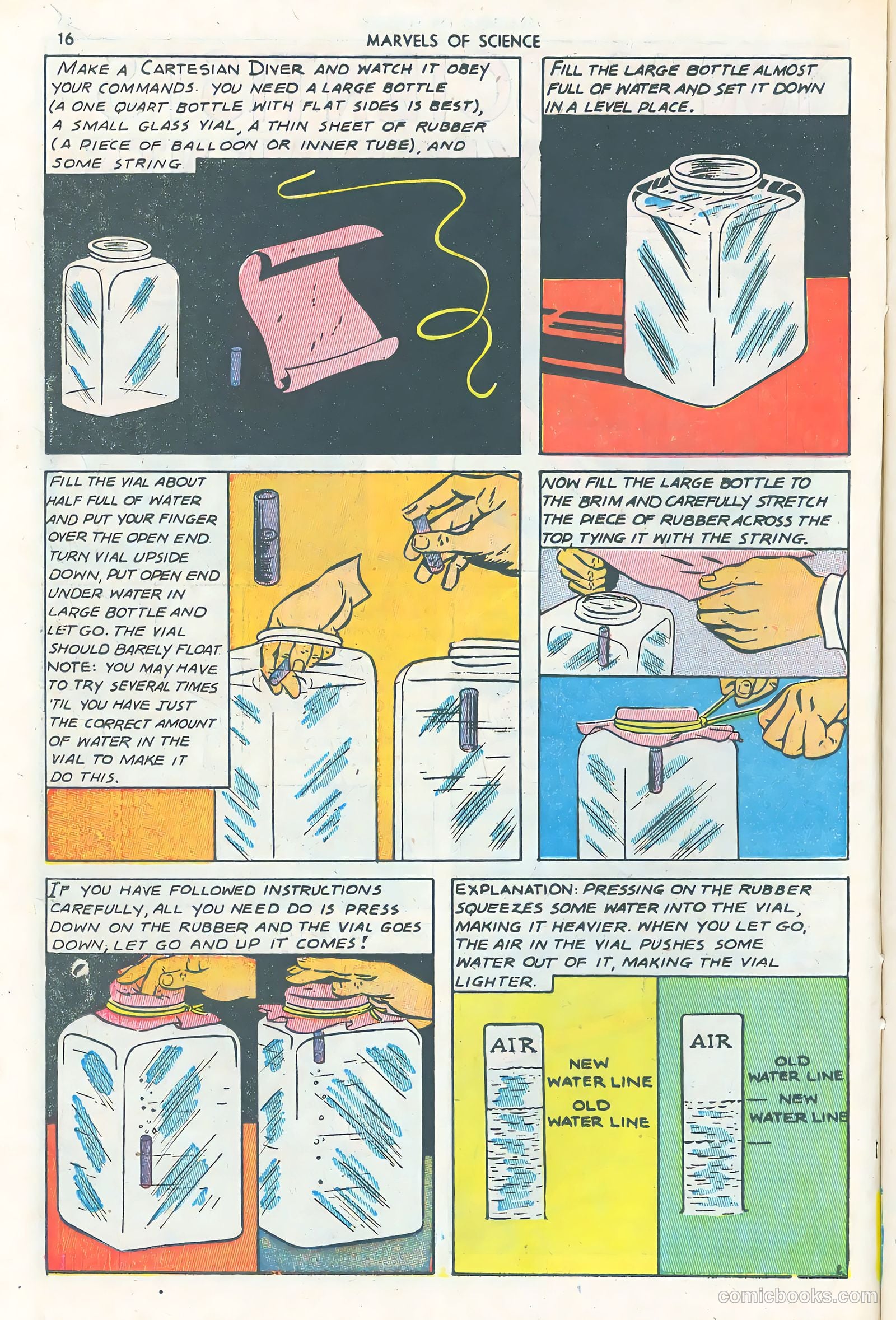
A young scientist discovers the principles of air pressure and buoyancy through two hands-on experiments conducted right at home. Using simple household materials—paper bags, a stick, and a candle—they'll learn why hot air rises, then build a Cartesian diver to command water and air with nothing more than finger pressure on a rubber membrane. These practical demonstrations transform abstract scientific concepts into tangible, repeatable results that prove physics works exactly as the laws predict.

The First Trip to the Moon
4 pp · non-fiction

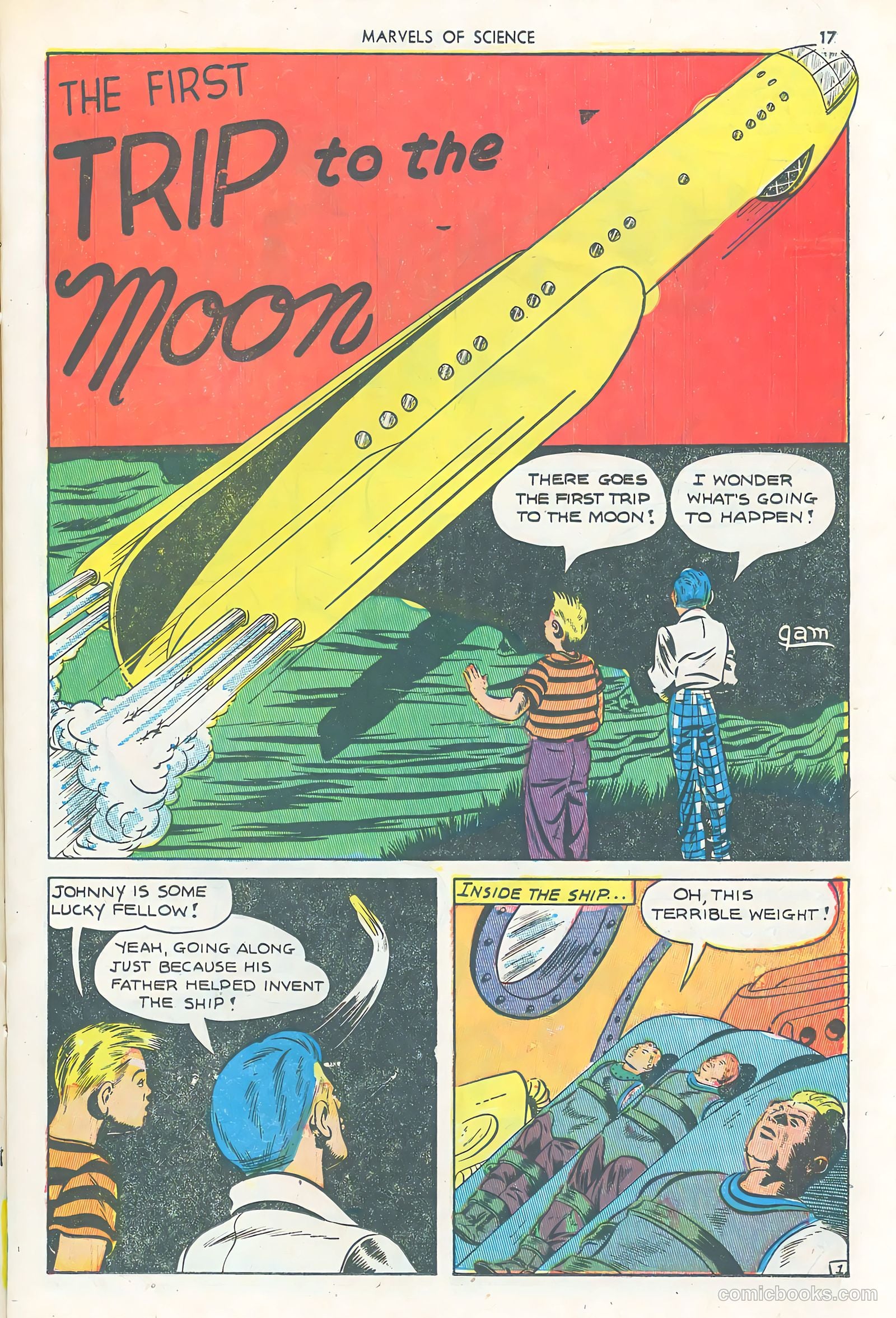
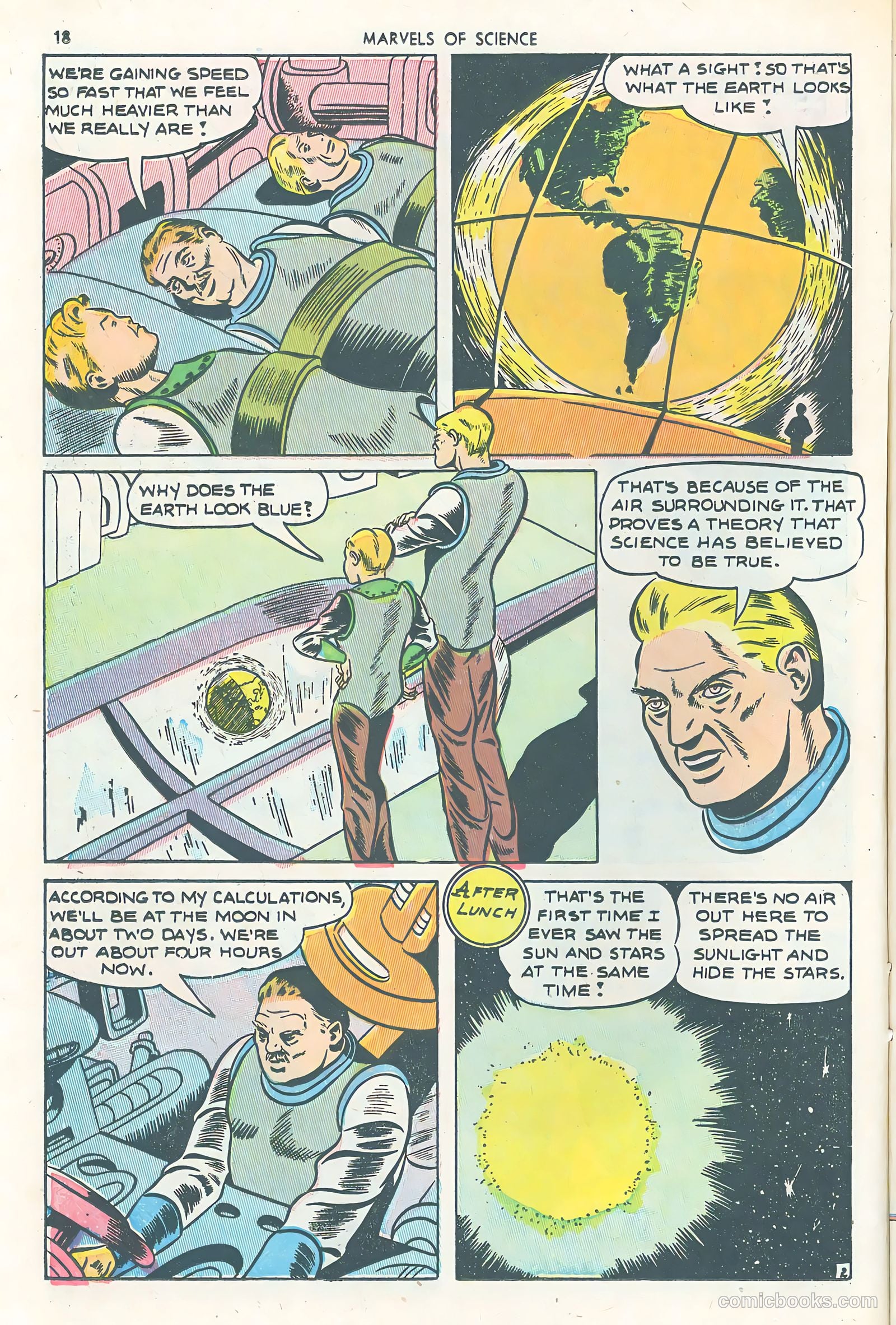
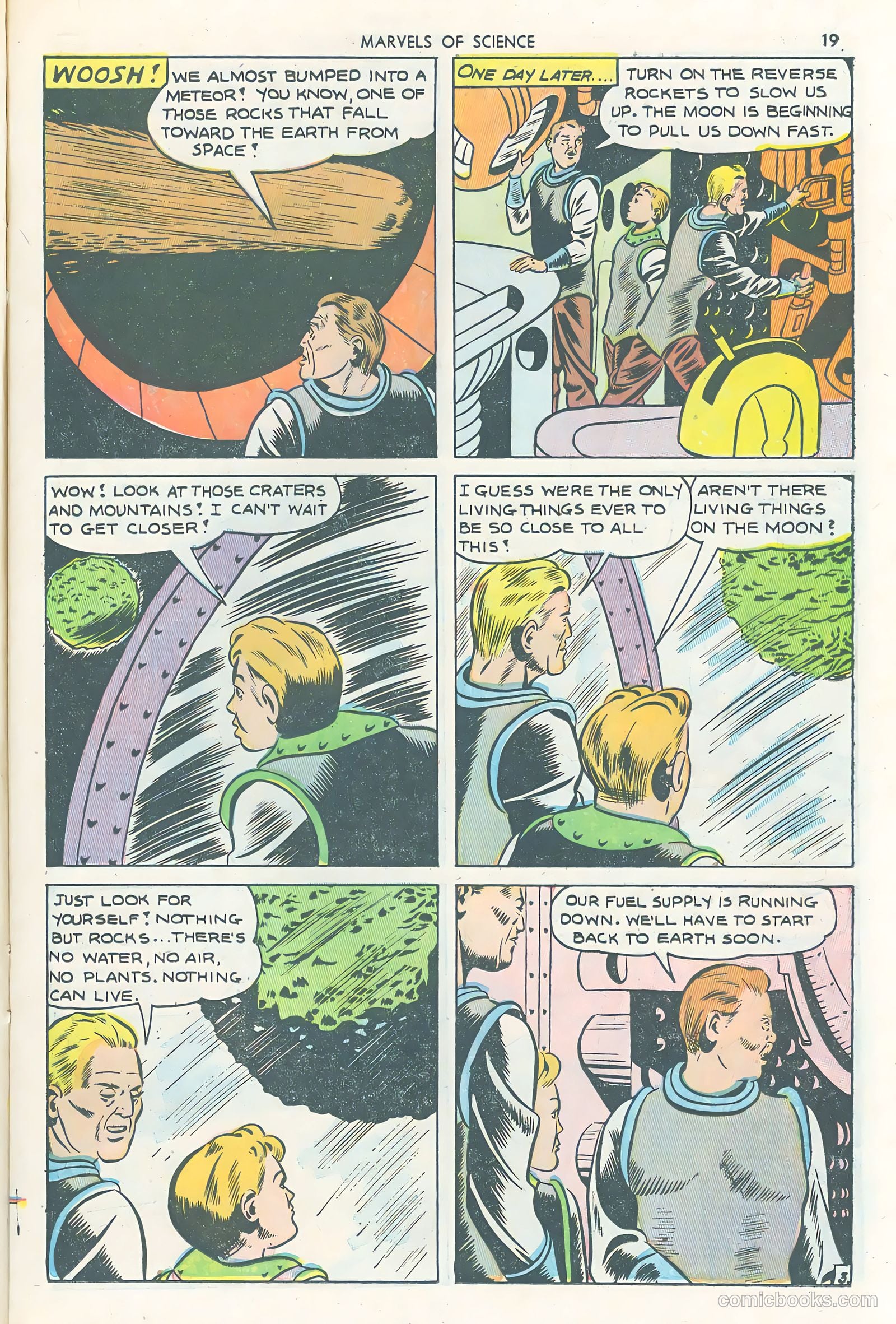
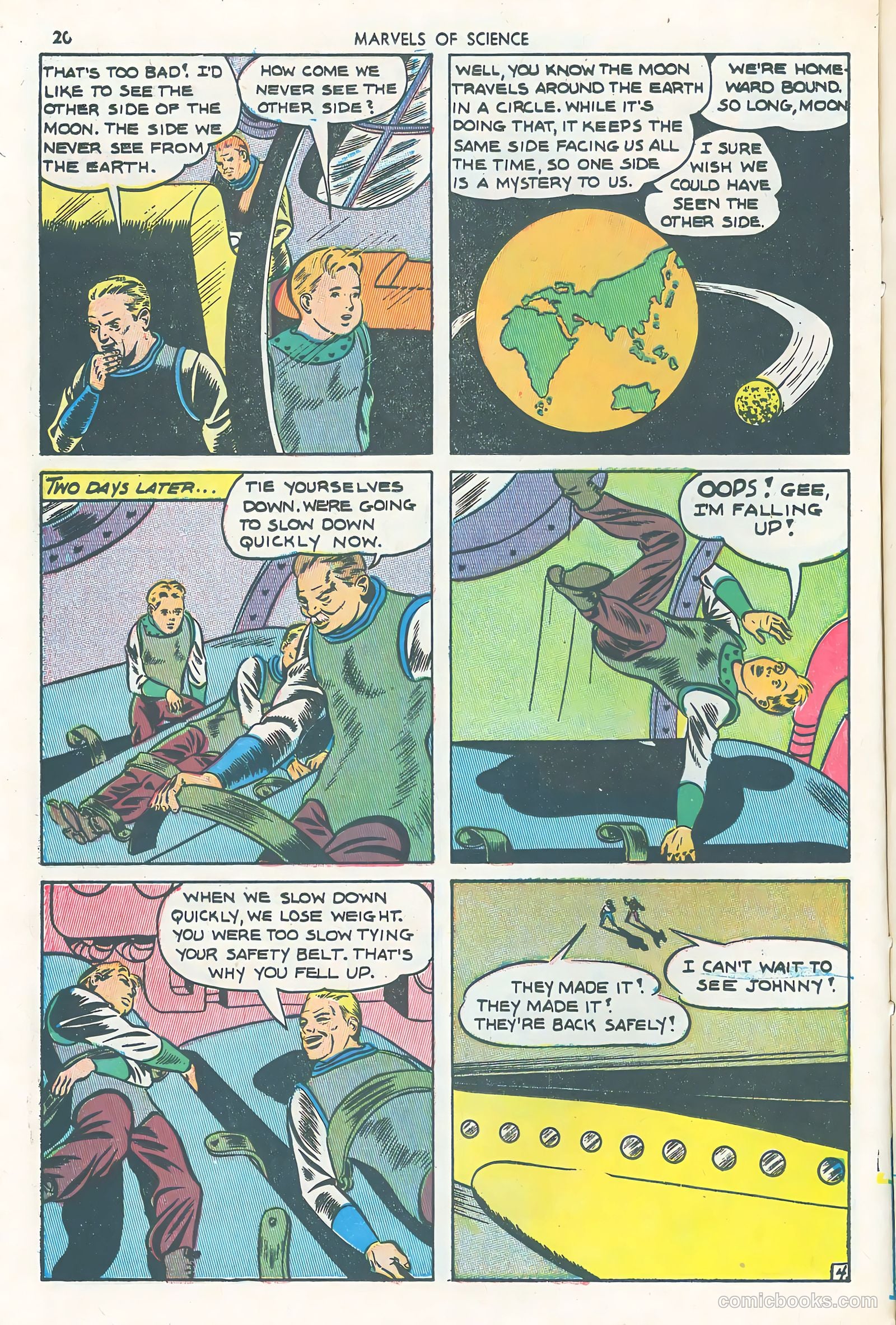
A young man named Johnny joins humanity's first crewed mission to the Moon aboard a revolutionary spacecraft, courtesy of his father's role in the ship's invention. As the crew journeys through space over several days, they witness extraordinary sights—the blue Earth receding behind them, meteors streaking past, and finally the Moon's cratered surface drawing near—while learning the scientific principles behind each phenomenon. When fuel forces them to abandon their dream of exploring the lunar far side and begin the return voyage, they face one last dramatic challenge before touching down safely on Earth.

Professor Blowfuse I.S. N.U.T.S.
3 pp · humor

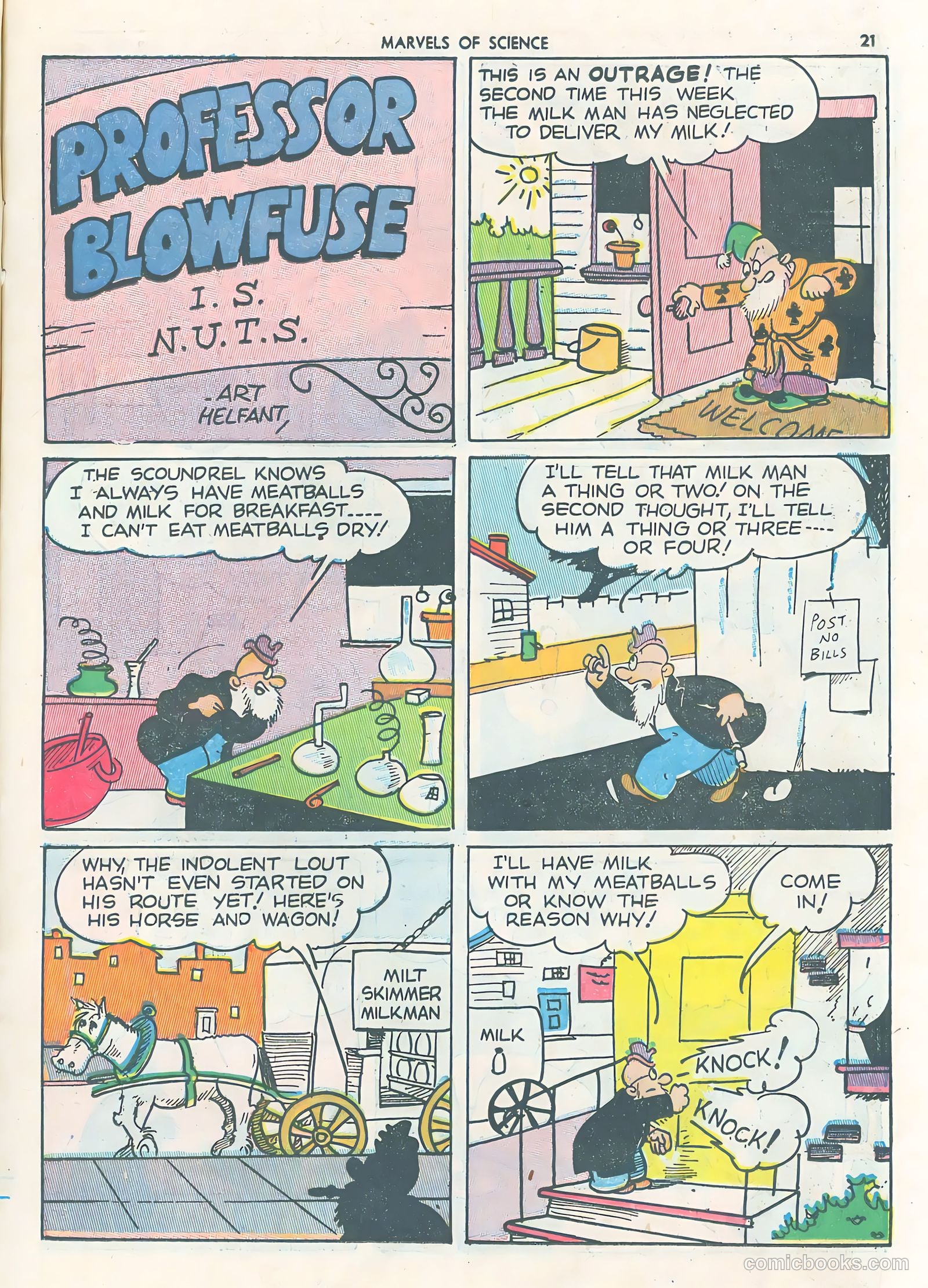
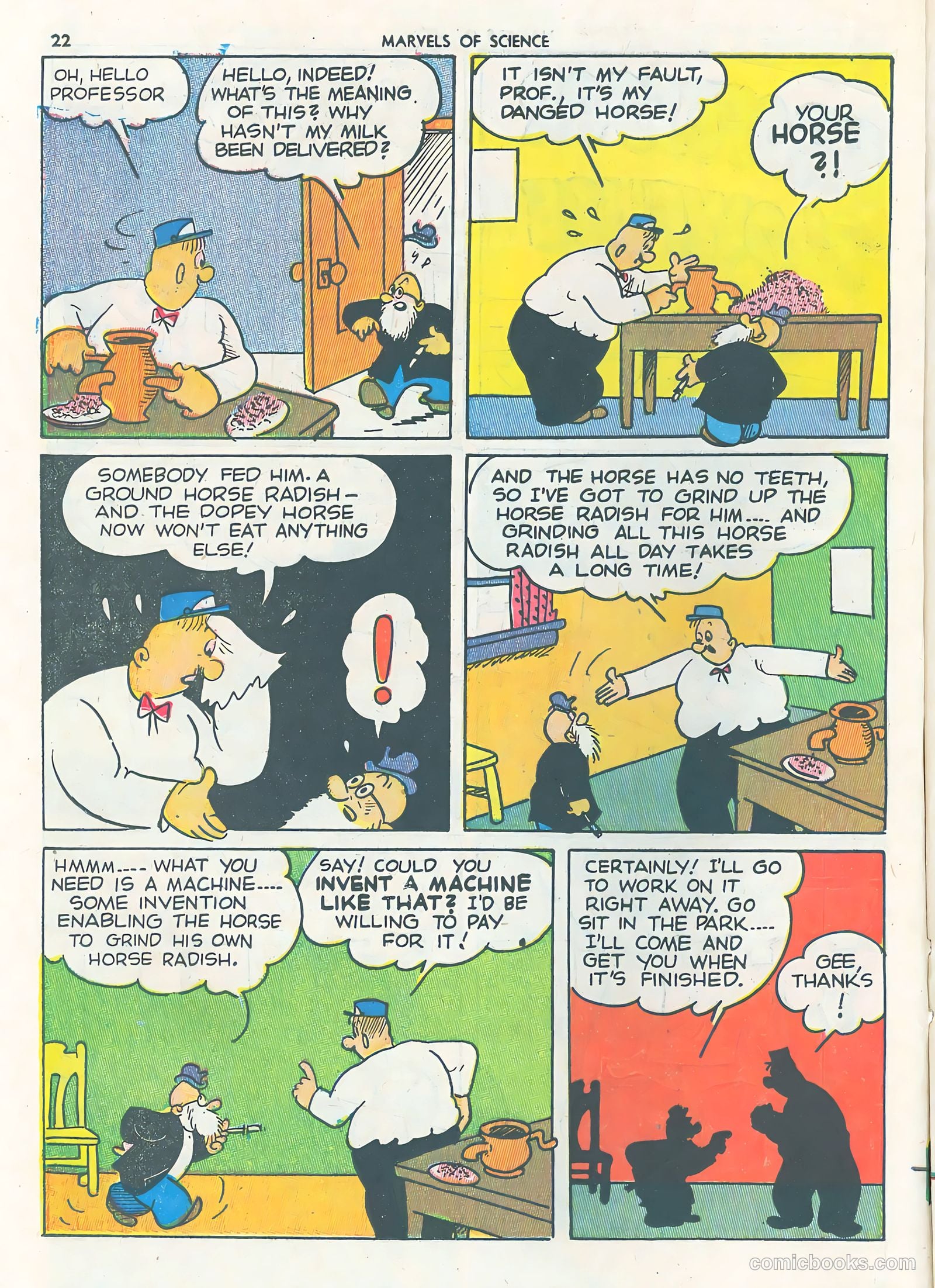
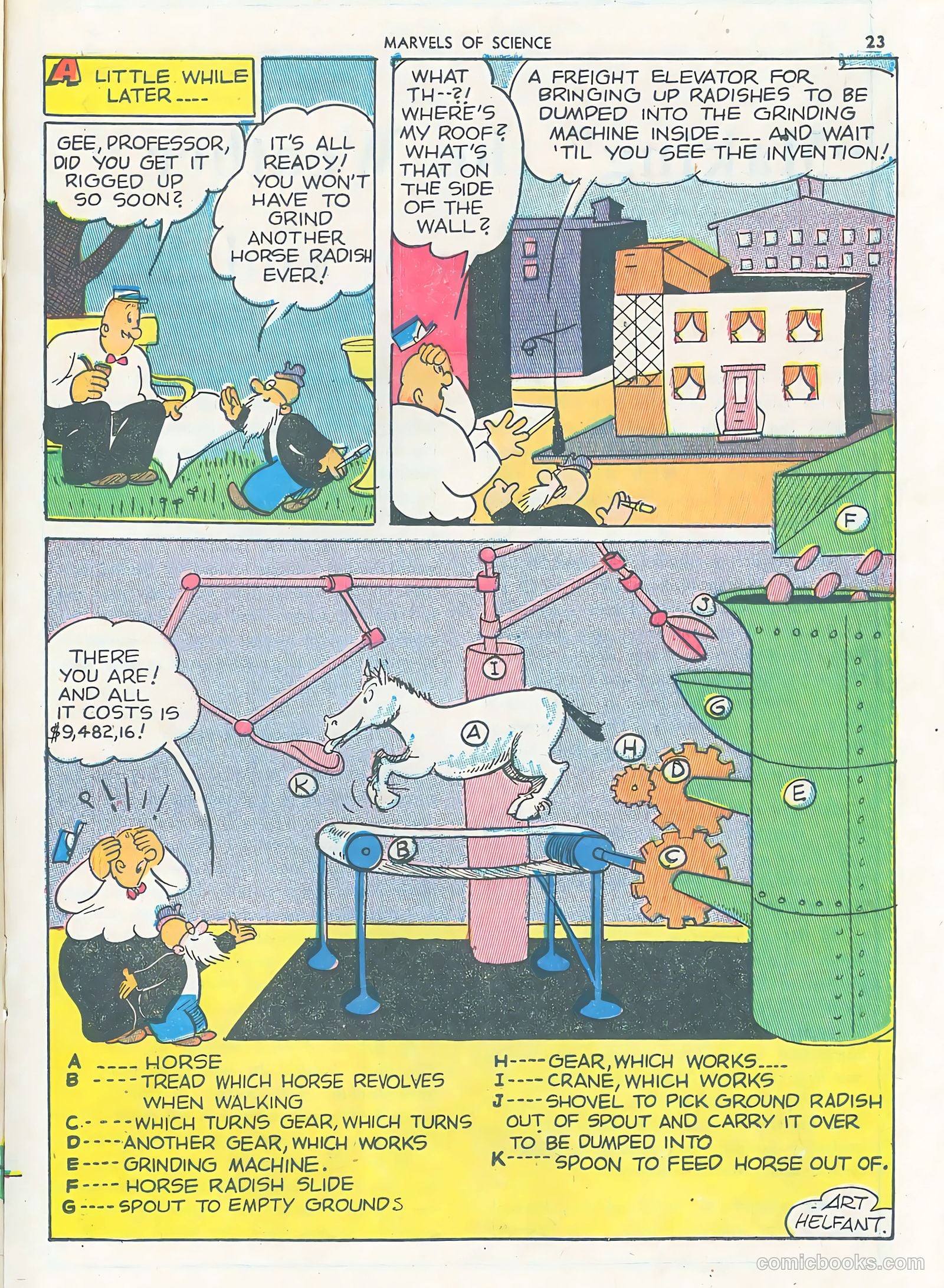
Professor Blowfuse springs into action when a frustrated milkman—unable to deliver due to a peculiar horse that refuses everything but ground horseradish—seeks help. The eccentric inventor takes on the challenge of building a machine to solve the problem, but what he delivers is a gloriously overcomplicated contraption that's equal parts solution and spectacle.

"Gibson Girl", Radio Kit...
1 pp · non-fiction

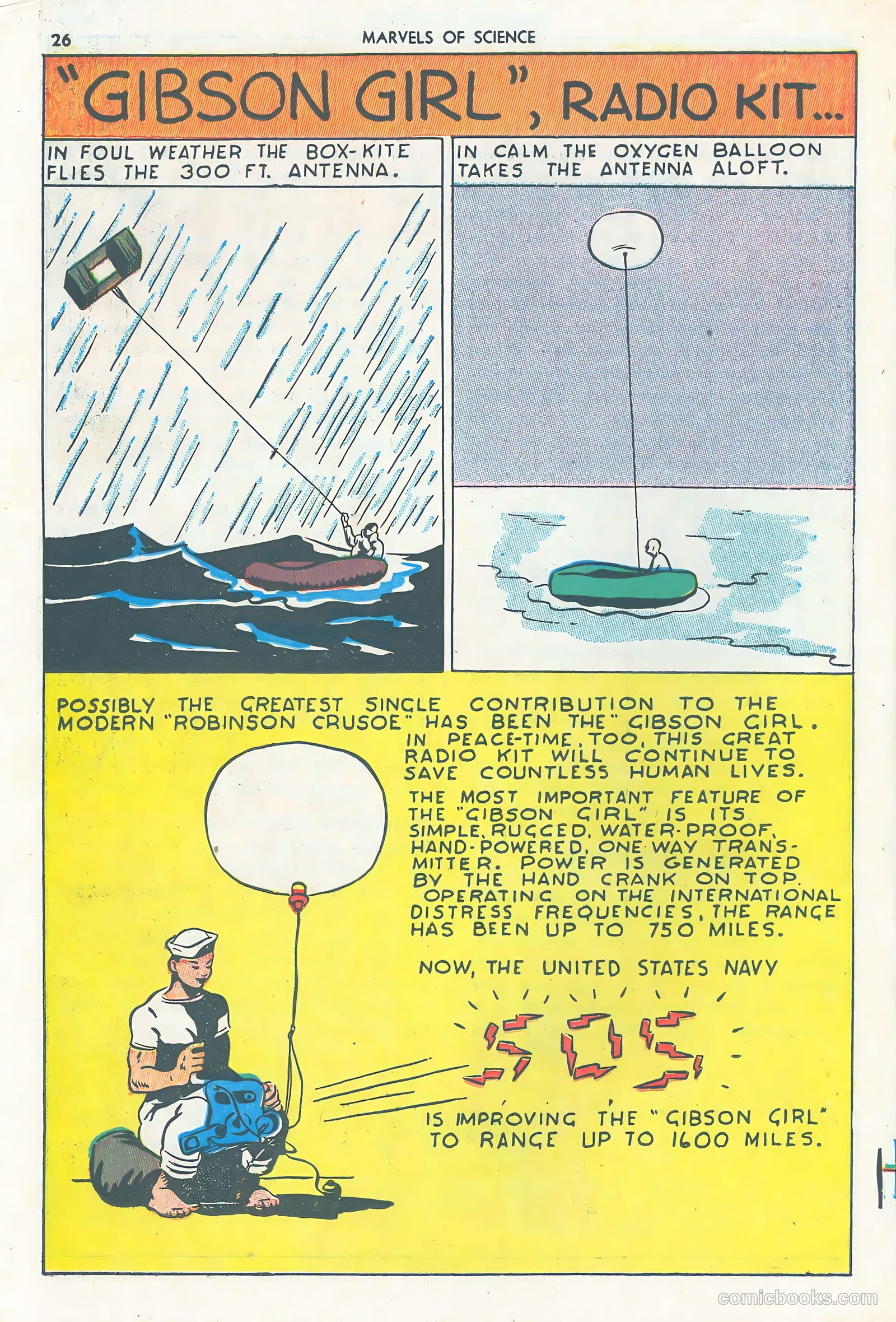
Discover how the "Gibson Girl" radio kit—a hand-cranked, waterproof transmitter that's already saved countless lives at sea—works its lifesaving magic in emergencies. Whether powered by a box-kite antenna in rough weather or an oxygen balloon in calm conditions, this rugged device can broadcast distress signals across hundreds of miles, and the U.S. Navy is now pushing its range even further to help marooned sailors and castaways get home.

Wonder World of the Present & Future
6 pp · non-fiction; science fiction · pencils Robert Sanders · inks Robert Sanders

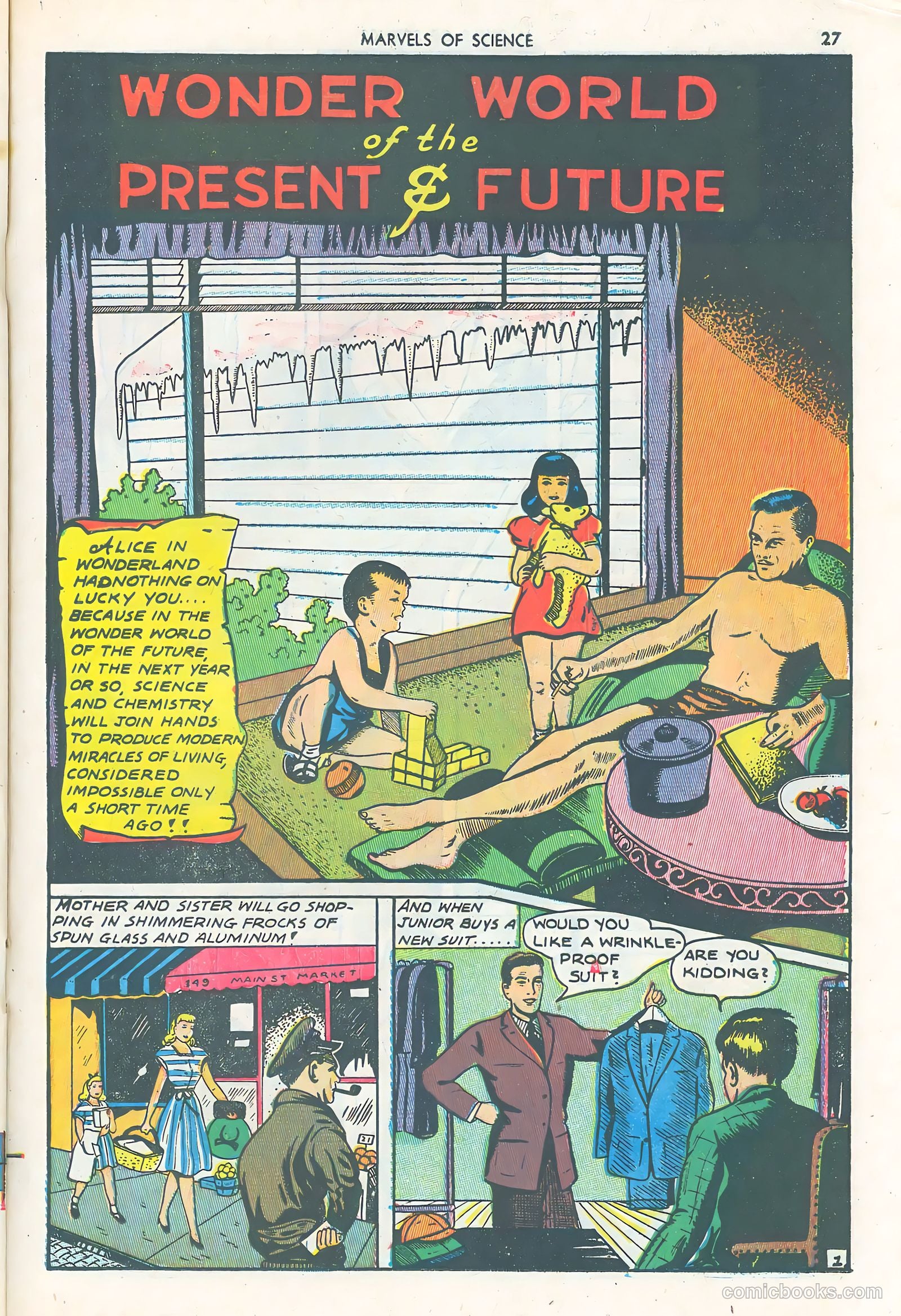
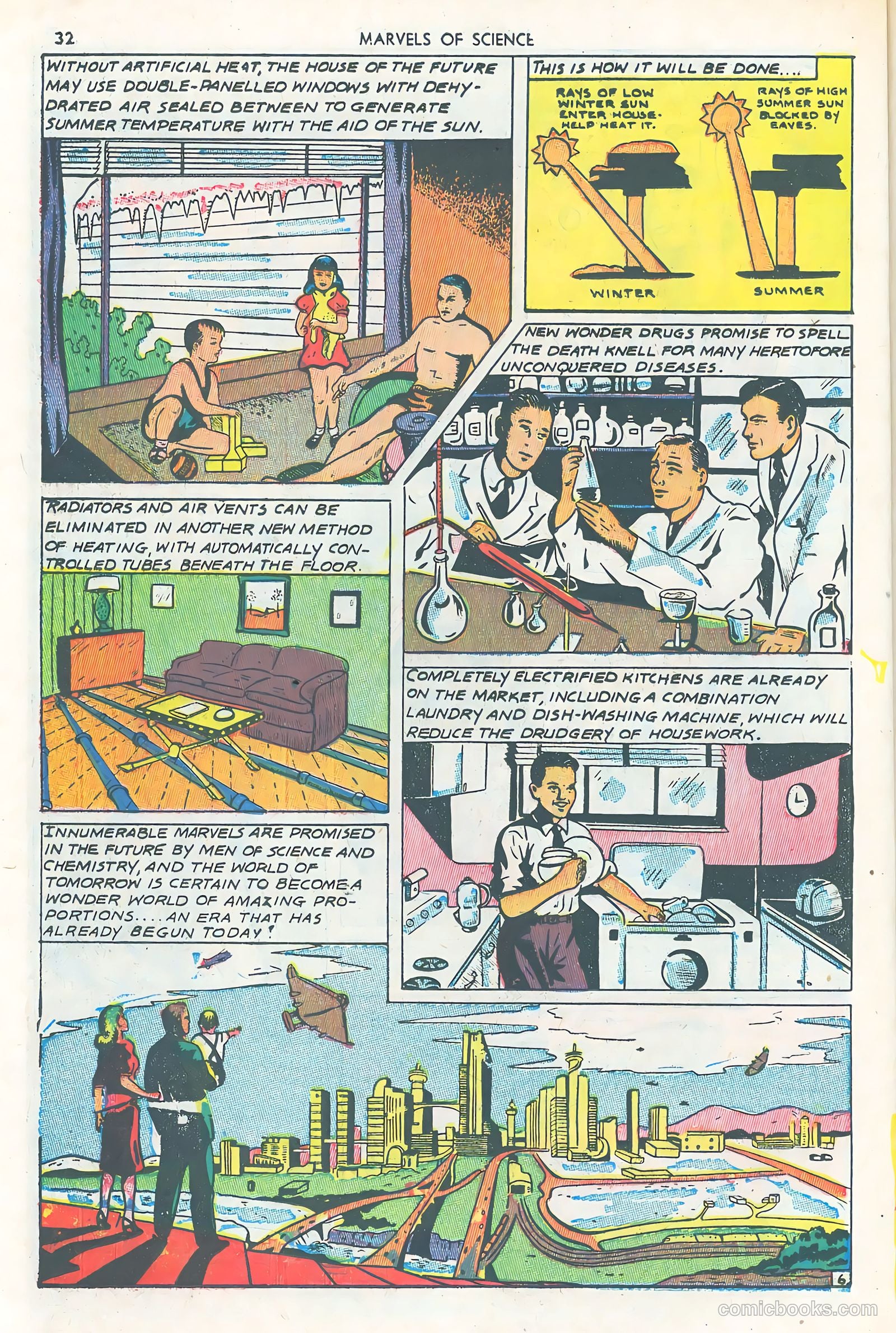
Robert Sanders' pencils and inks bring a 1946 vision of everyday marvels to life in this non-fiction survey of near-future innovations—wrinkle-proof fabrics, cordless electric lamps, mechanical cows, foam-rubber mattresses, and color television among them. From space-age kitchen appliances to radio-controlled farm equipment and rapid transatlantic travel, the story celebrates the scientific and chemical breakthroughs that were reshaping modern living. A fascinating snapshot of what mid-century optimism imagined the "Wonder World" would soon deliver to homes and households across America.

Untitled story
1 pp · non-fiction
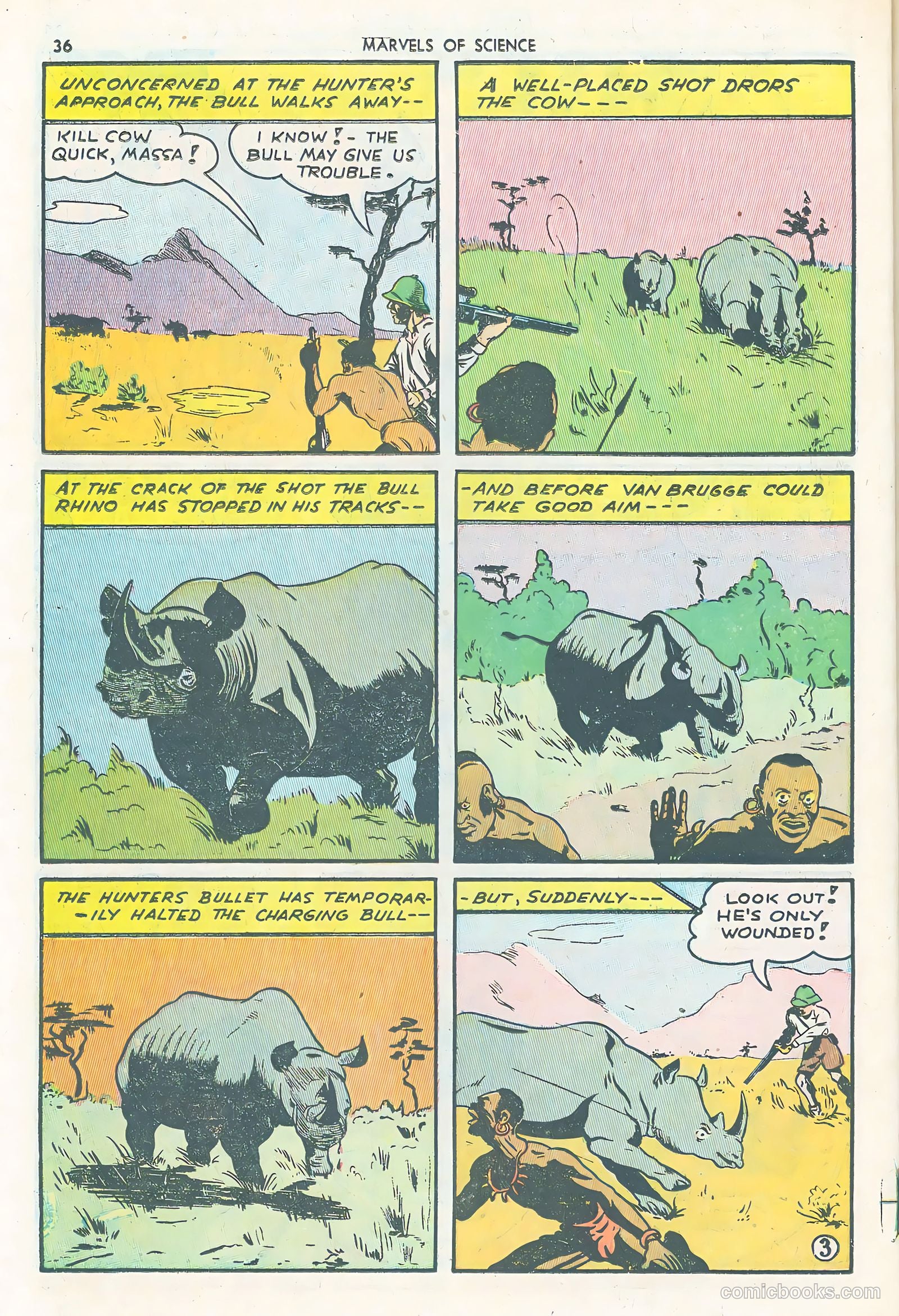
Hunting Rhino in Uganda
4 pp · non-fiction

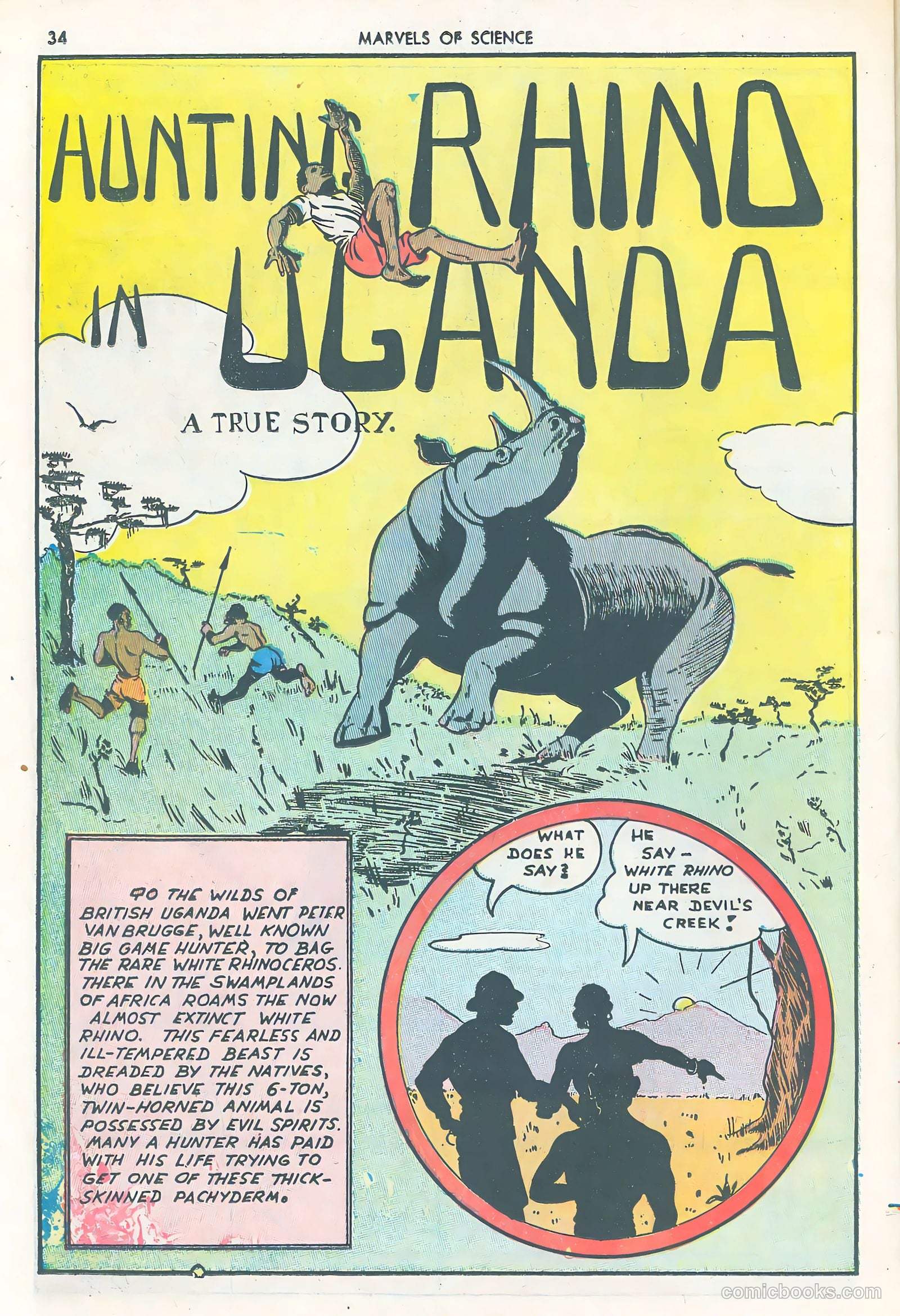
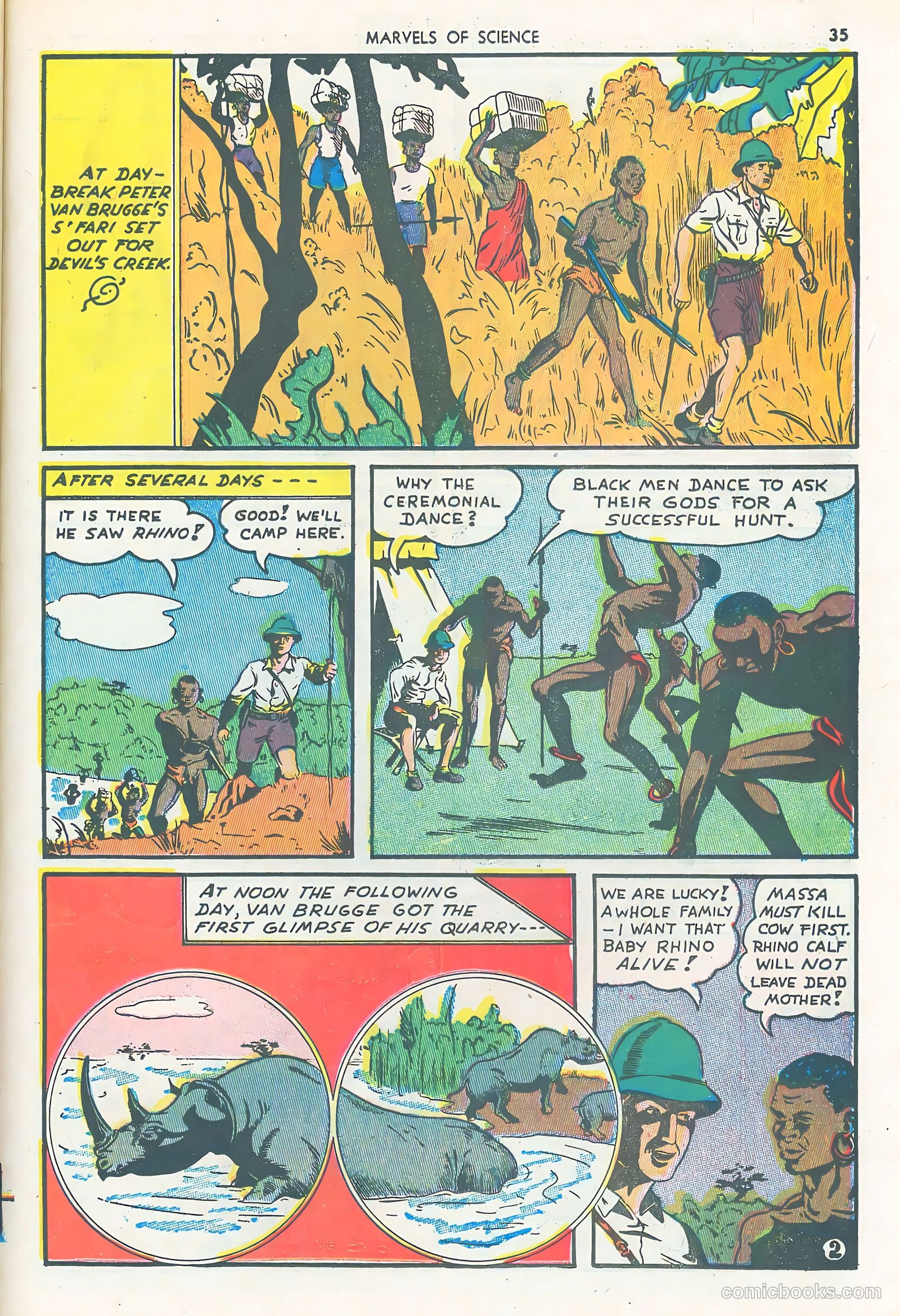
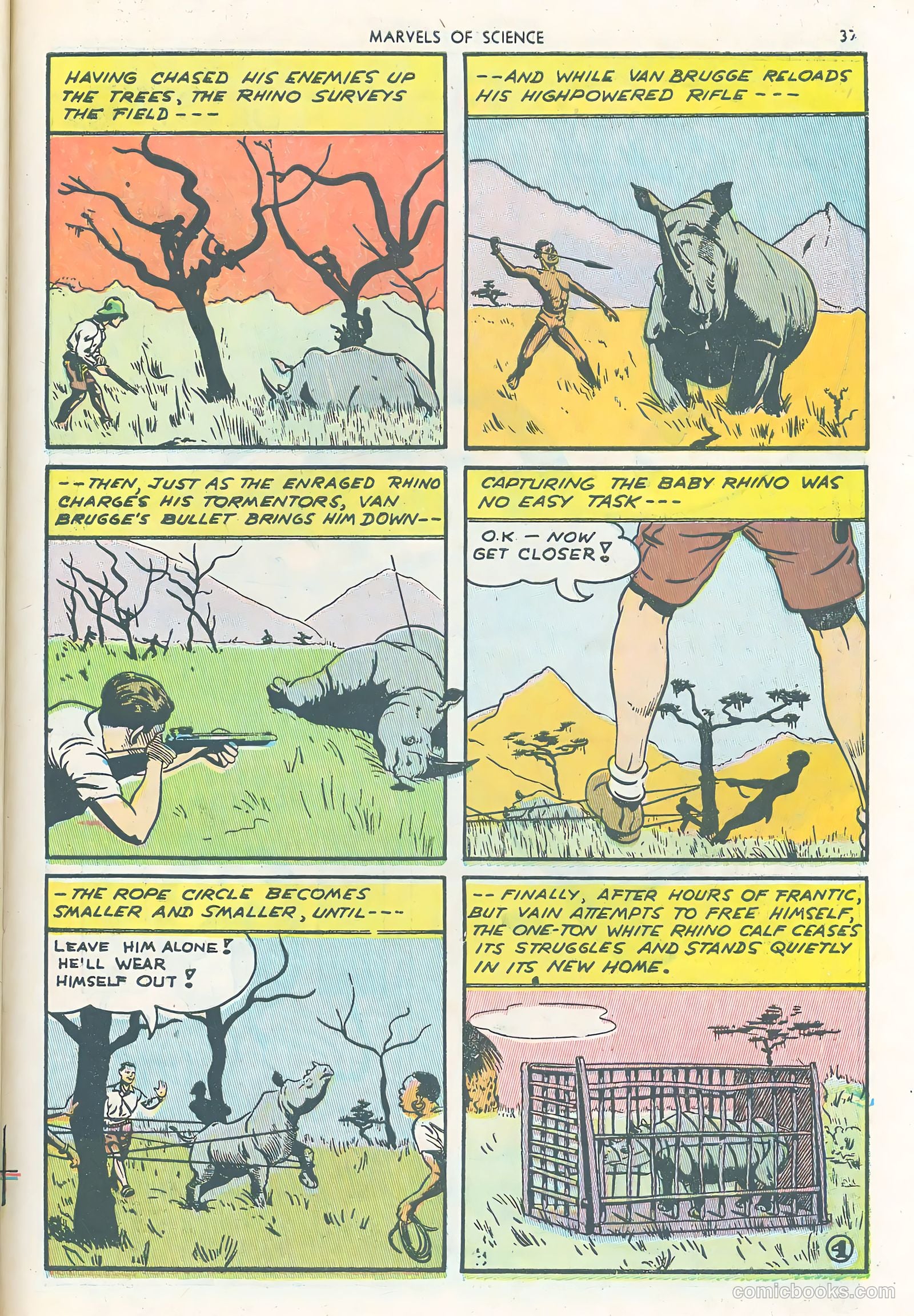
Big game hunter Peter Van Brugge ventures into the swamplands of Uganda to track the rare and temperamental white rhinoceros—a fearless six-ton beast that locals believe is possessed by evil spirits. When Van Brugge spots an entire rhino family near Devil's Creek, he sets his sights on capturing the young calf alive, leading to a tense hunt across dangerous African terrain.

Riding a Blister...
1 pp · non-fiction
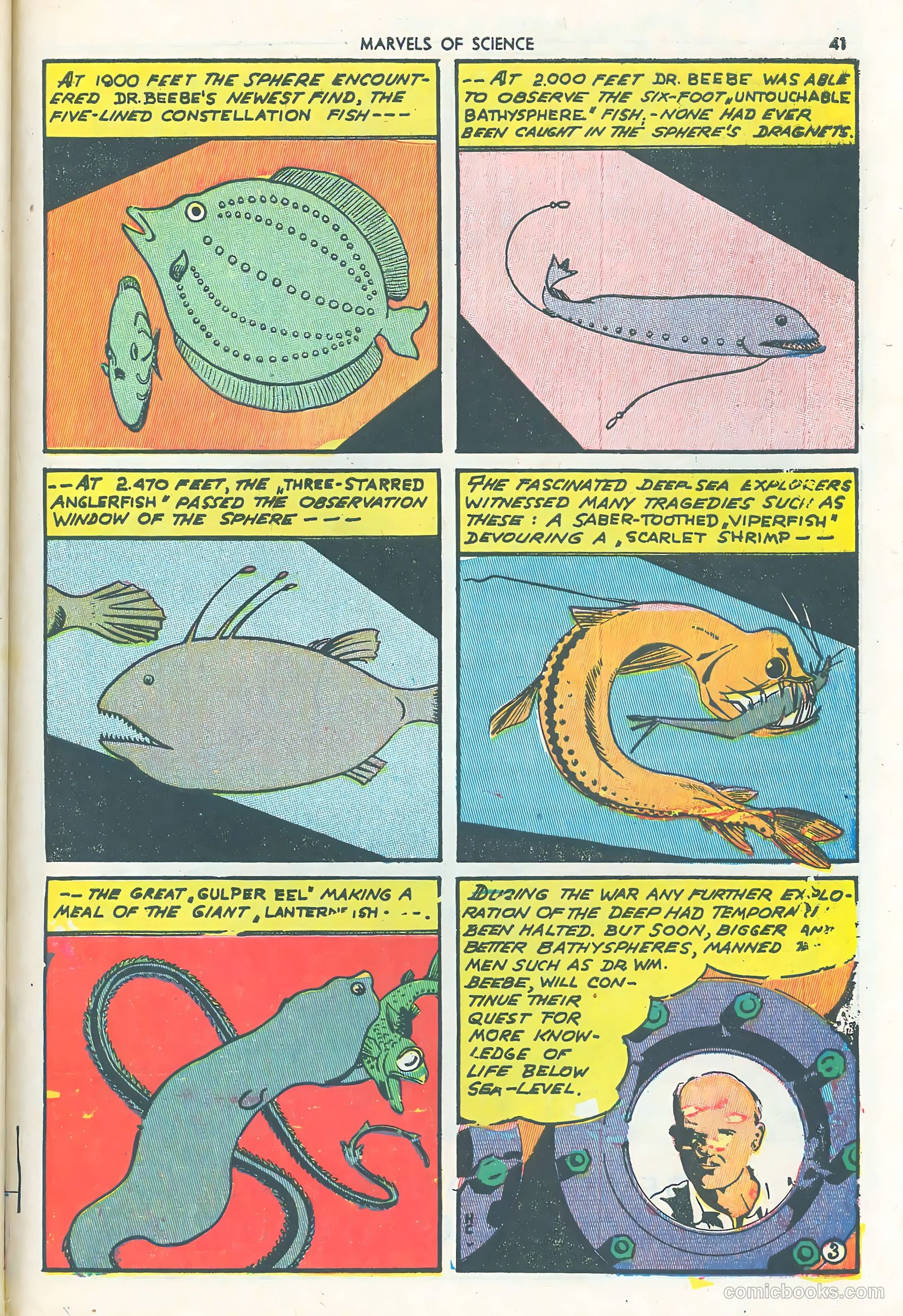
Explorers of the Deep Sea
3 pp · non-fiction
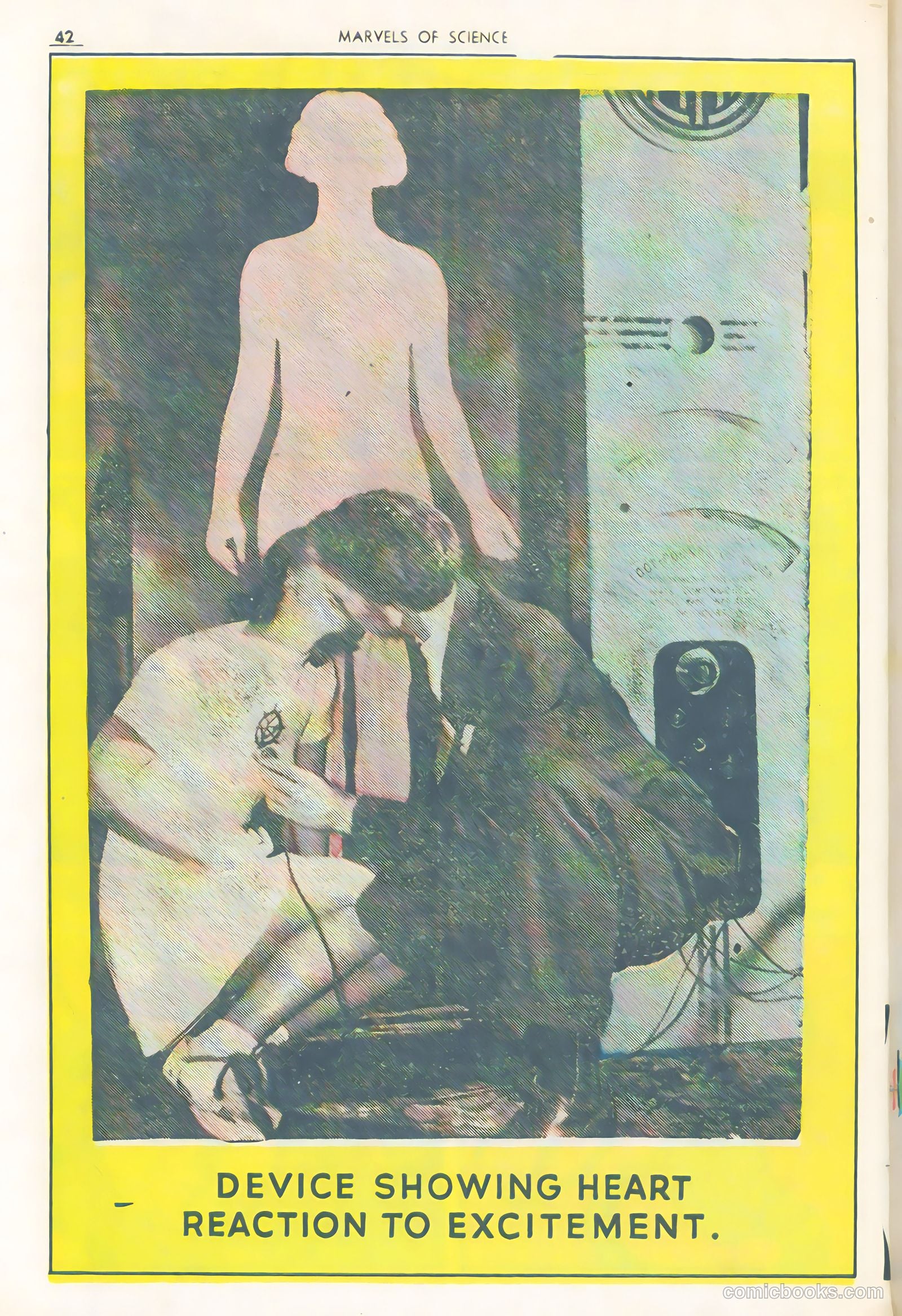
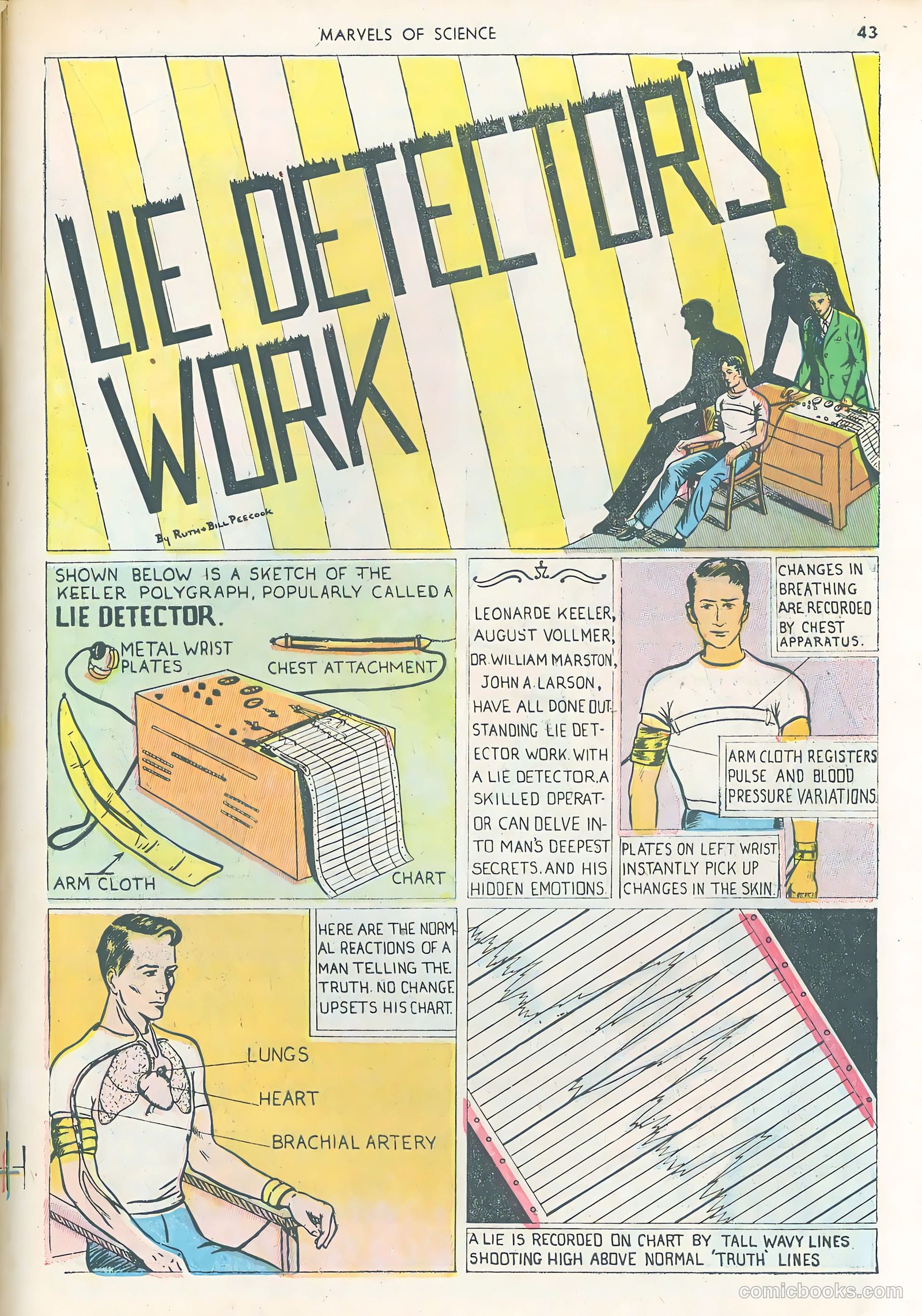
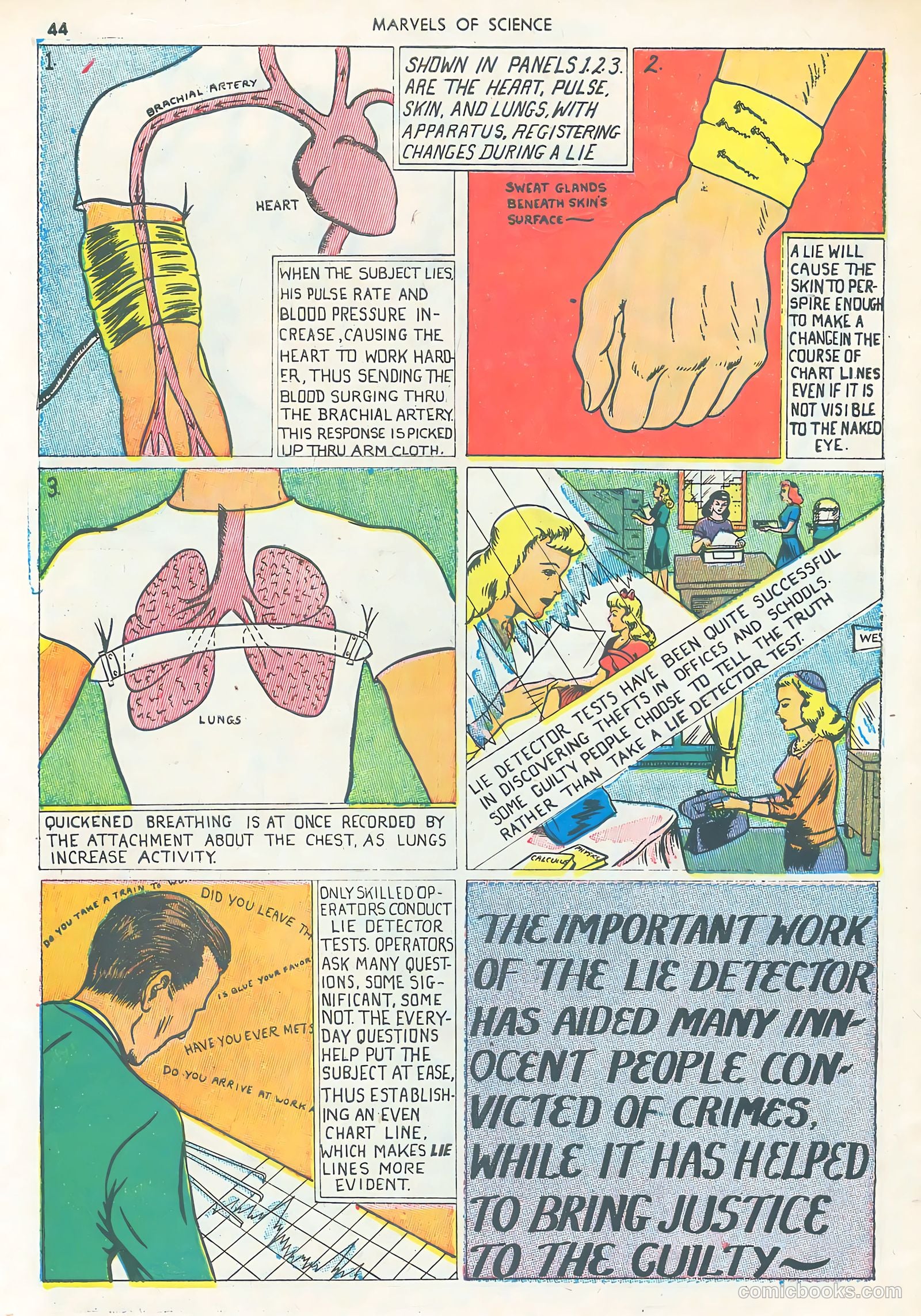
Lie Detector's Work
2 pp · non-fiction · script ? [as Ruth + Bill Peecook] · pencils ? [as Ruth + Bill Peecook] · inks ? [as Ruth + Bill Peecook]
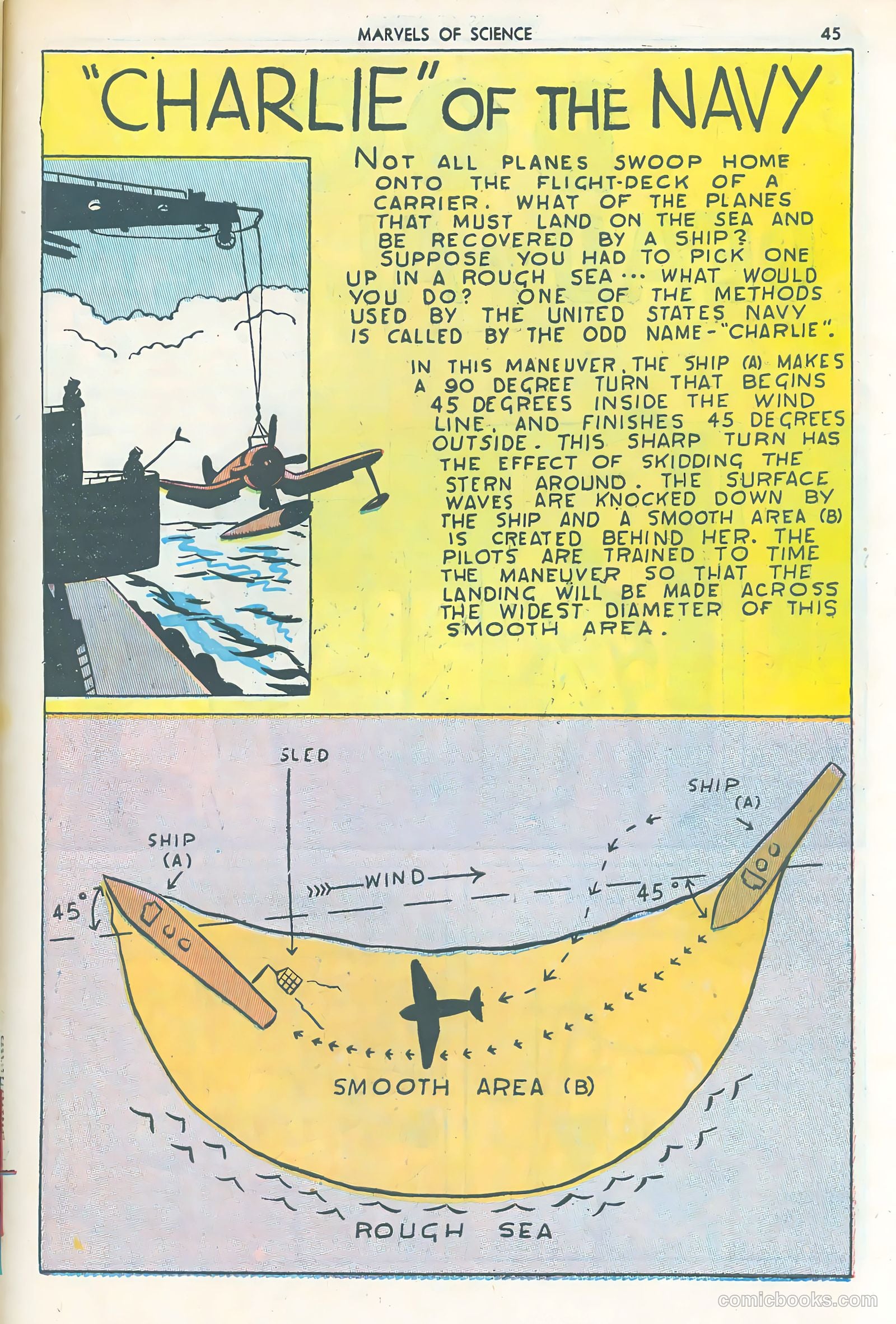
"Charlie" of the Navy
1 pp · non-fiction

This non-fiction feature explains the Navy's "Charlie" maneuver, an ingenious technique for recovering aircraft that must ditch in rough seas rather than land on a carrier deck. Through diagrams and clear instruction, the piece walks readers through how a ship executes a precisely angled 90-degree turn to create a smooth water surface behind it—giving pilots a safe touchdown zone even in choppy conditions. It's a fascinating look at naval aviation problem-solving in action.

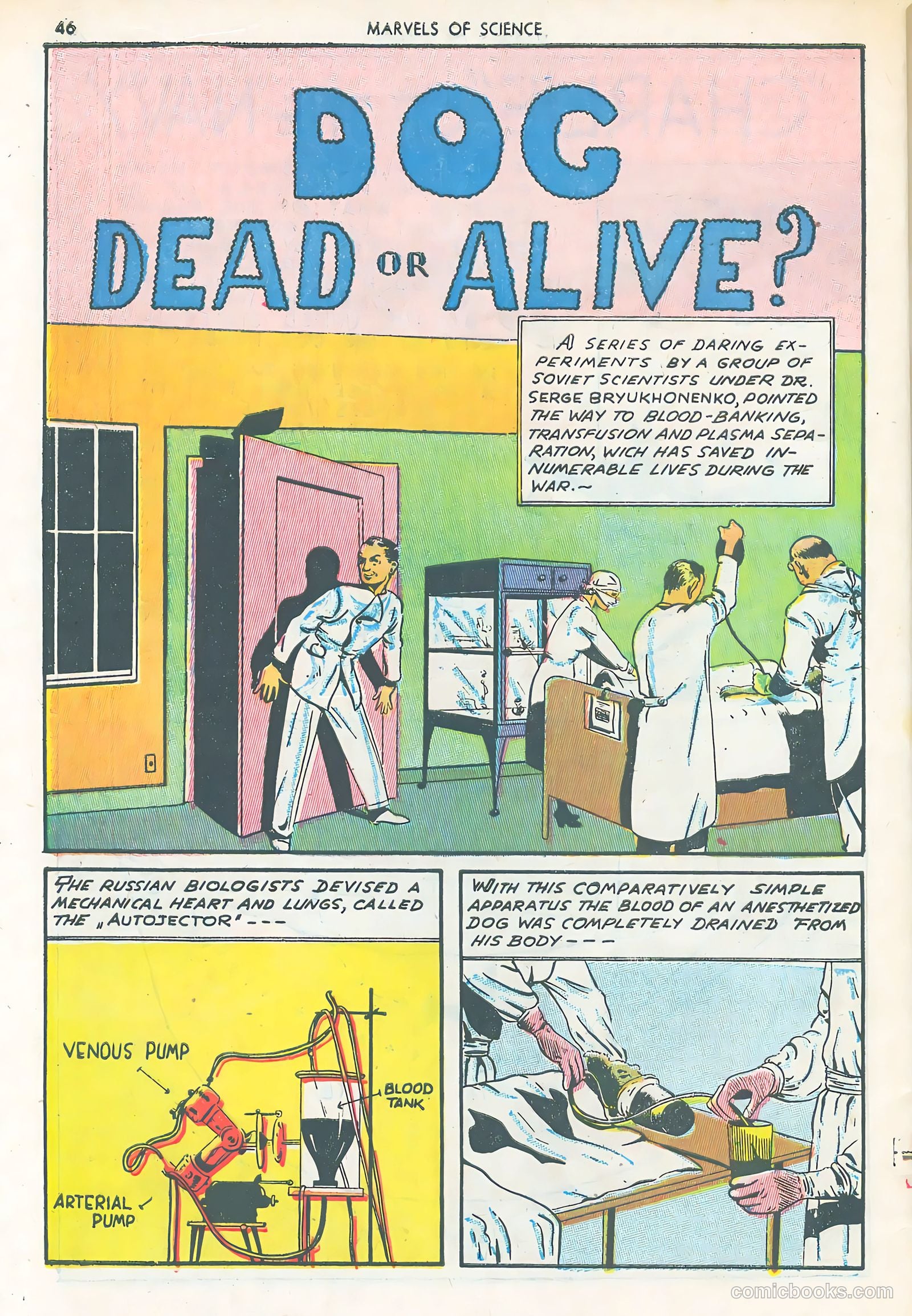
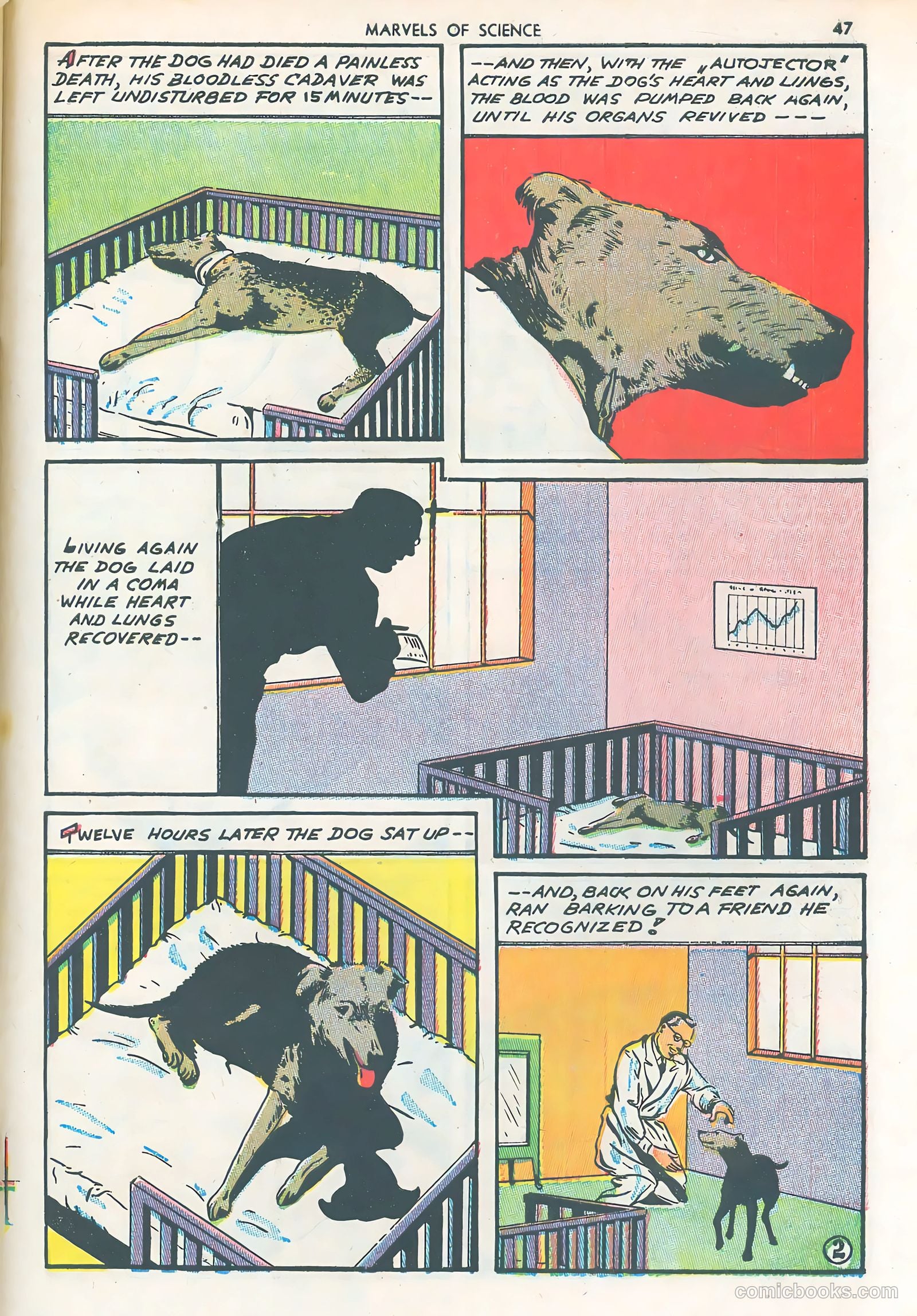
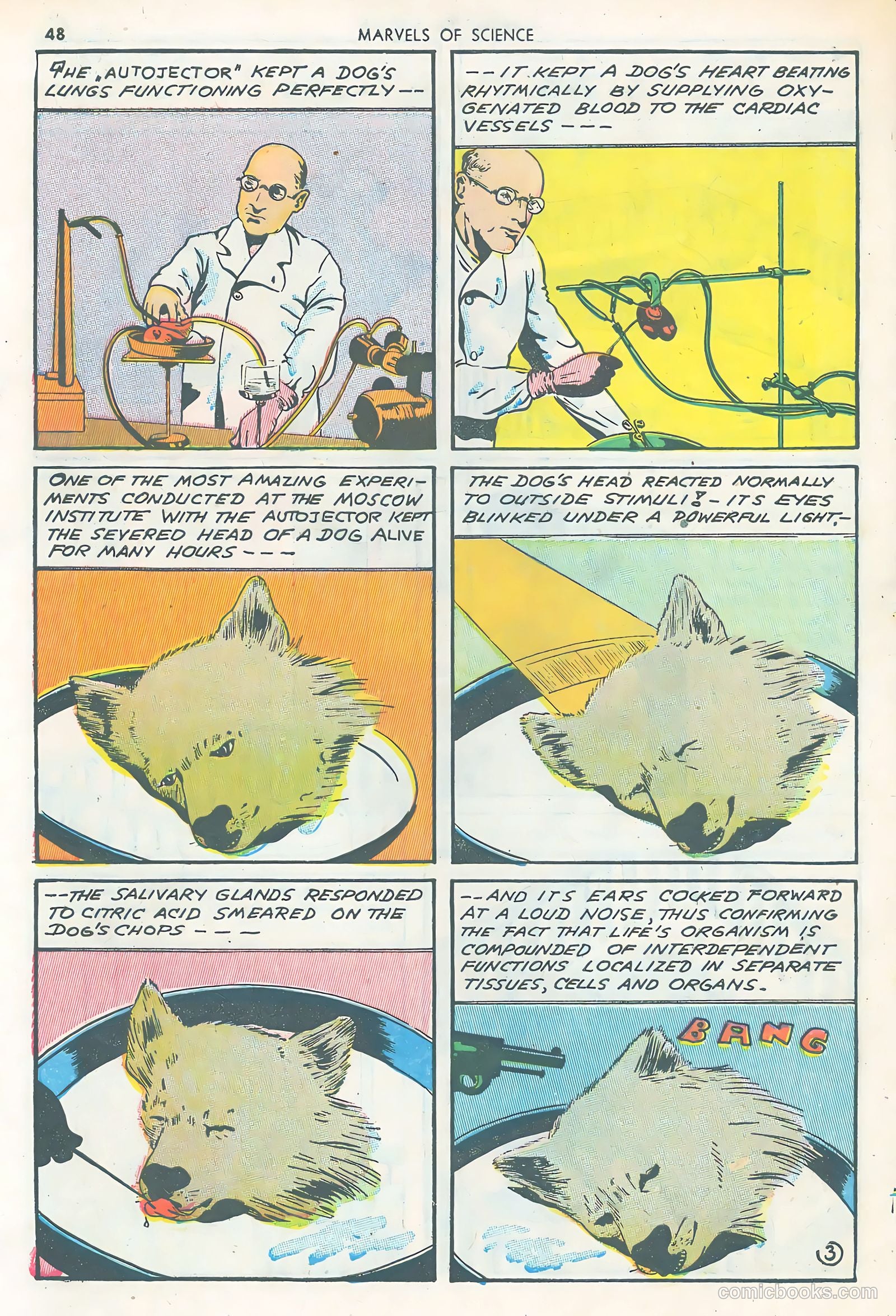
Dog Dead or Alive?
3 pp · non-fiction

Soviet scientists under Dr. Serge Bryukhonenko conduct extraordinary experiments with the "Autojector," a mechanical heart and lungs device that drains a dog's blood completely, then restores it hours later—reviving the animal to full consciousness and health. The apparatus proves so effective that researchers push even further, keeping a severed dog's head alive and responsive for many hours, demonstrating that life itself depends on the coordinated function of separate organs and tissues. These groundbreaking experiments, conducted at the Moscow Institute, point the way toward blood-banking and plasma separation techniques that would save countless lives during wartime.

Restored edition © ComicBooks.com. Our digitization, remastering, and presentation are our own work.

See something wrong with this issue? Report it.