
The Cartoon Conscience
Before comics entertained, cartoons could topple a king—or a boss.
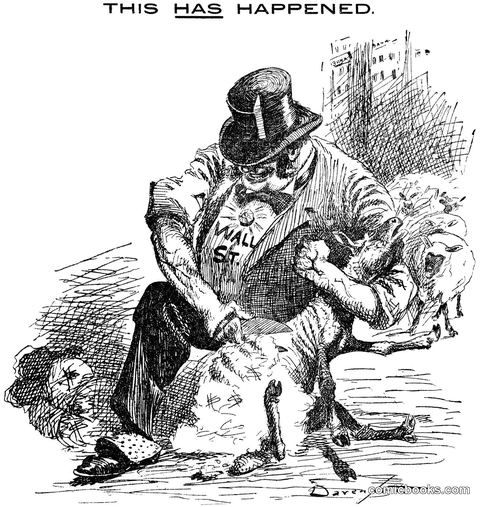
Long before the comic book found its shape, the drawn line had already learned to draw blood. The satirical and editorial cartoon is comics' other bloodline—not the funny page but the fighting page, where caricature became a social weapon aimed at the powerful. Here the exaggerated jaw, the bloated belly, the pointed label do the work of a thousand pamphlets. This is the tradition that proved a picture could argue, accuse, and even govern.
From Georgian London to Revolutionary Paris
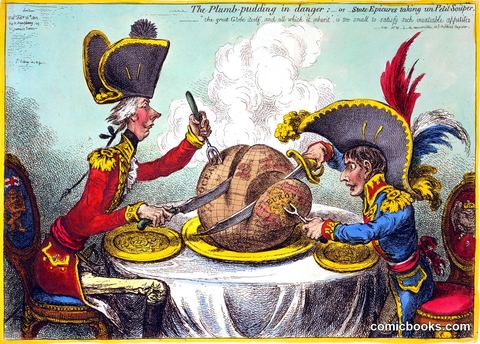
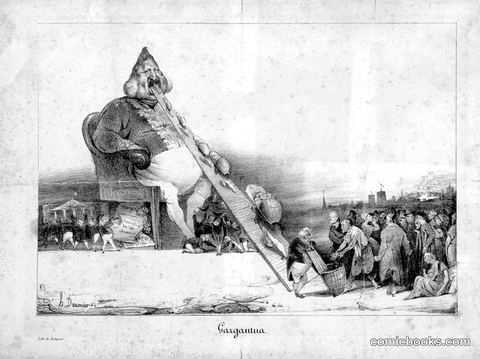
The golden age of British caricature crackled to life in Georgian England, where printshop windows drew crowds and artists like James Gillray turned monarchs, ministers, and Napoleon himself into grotesque comedy. Gillray's etchings were savage, brilliant, and hugely popular, establishing a visual grammar—the swollen figure, the biting caption—that cartoonists still use. Across the Channel, the weapon proved so dangerous that governments fought back. In France, Honoré Daumier wielded lithography against King Louis-Philippe and the bourgeois order with such force that his work landed him in prison. The French cartoon became a frontline in the long struggle over press freedom, a reminder that authorities feared the pencil precisely because it worked.
The American Cartoon Comes to Power
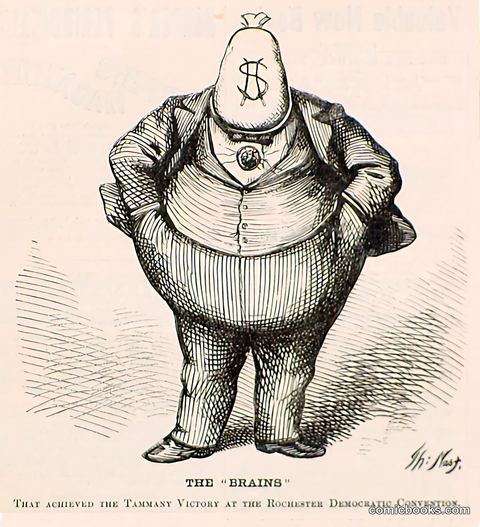
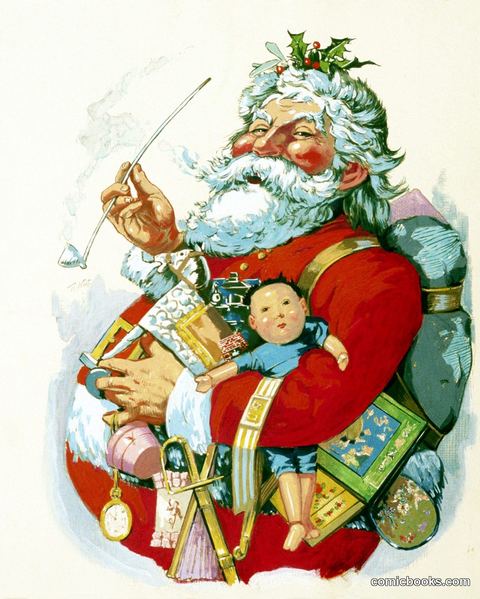
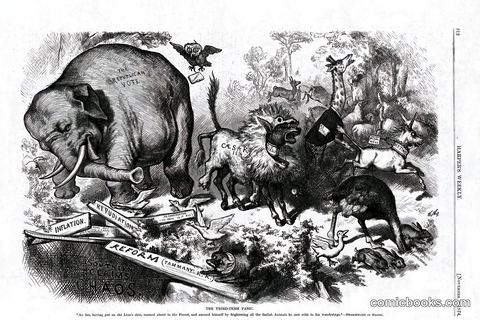
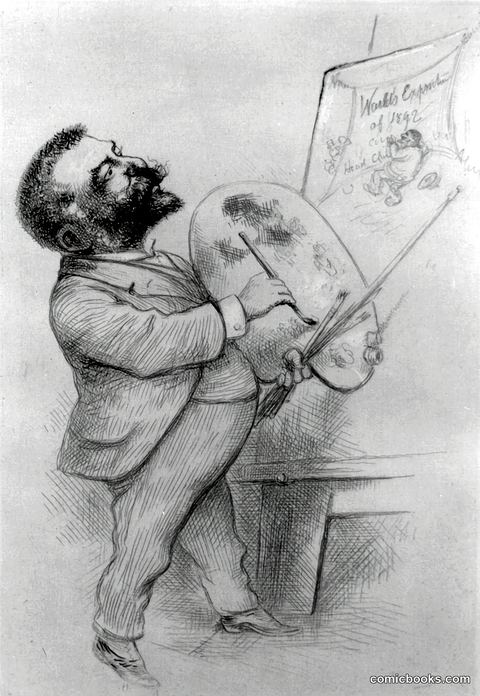
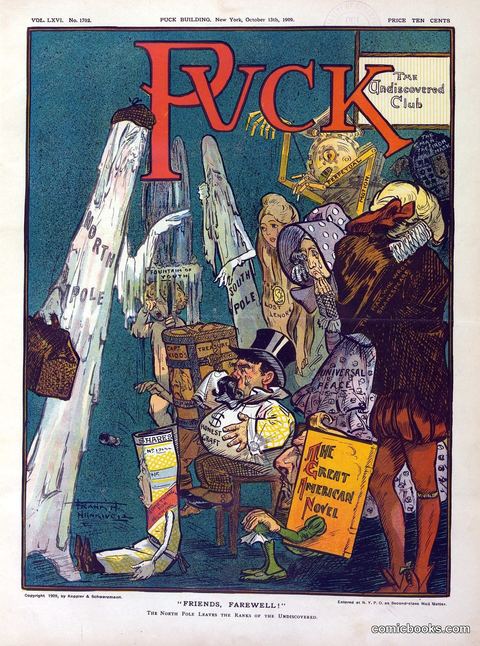
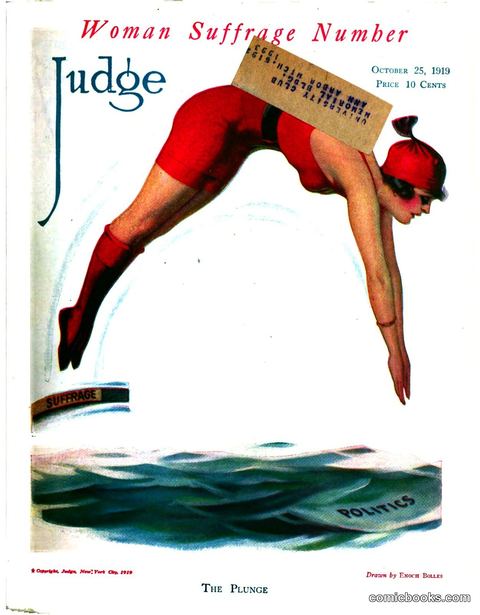
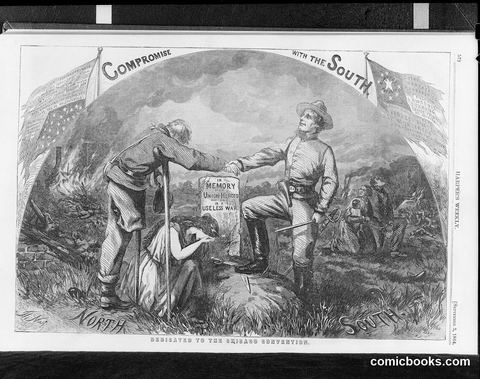
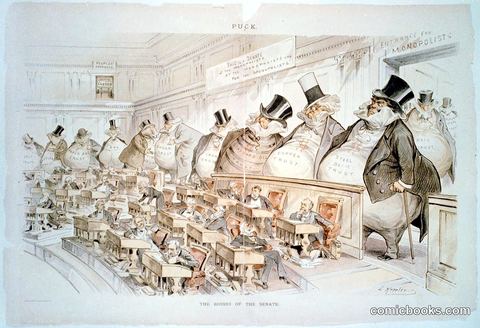
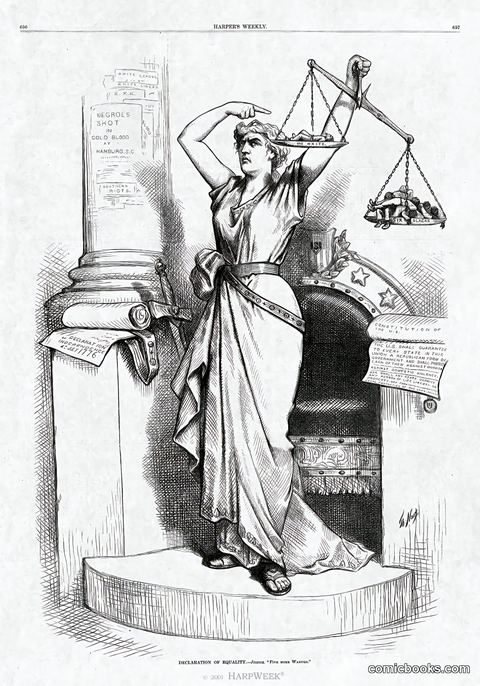
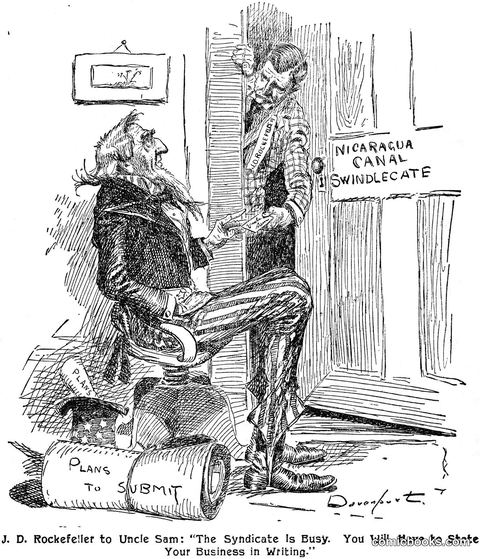
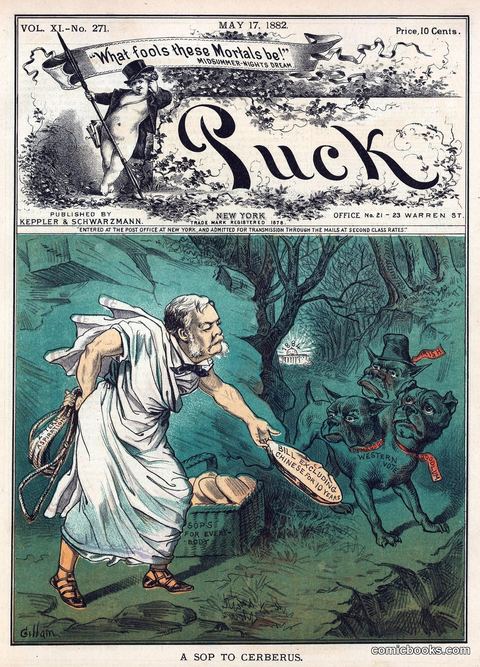
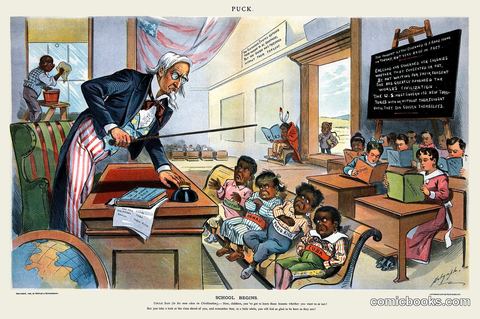
Nowhere did the editorial cartoon flex more muscle than in Gilded Age America. Thomas Nast, working in the pages of Harper's Weekly, waged a relentless campaign against Boss Tweed and the corrupt Tammany Hall machine—and helped bring it down, coining the ravening "Tammany Tiger" along the way. Nast did more than destroy; he built the nation's visual vocabulary, popularizing the Republican elephant and the Democratic donkey and shaping the modern, jolly image of Santa Claus. Around him rose the great humor magazines—Puck and Judge—lavish, color-lithographed weeklies that became proving grounds for a generation of cartoonists. In their crowded, allegorical spreads, the craft of sequential, character-driven picture-making matured. When comics finally arrived, they inherited this inheritance: the conviction that cartooning is never merely decoration, but a form of power.
All works shown are in the public domain, digitally restored by ComicBooks.com.