
Judge, 1929-02-23 · page 24 of 36
Judge — February 23, 1929 — page 24: what you’re looking at
What you’re looking at
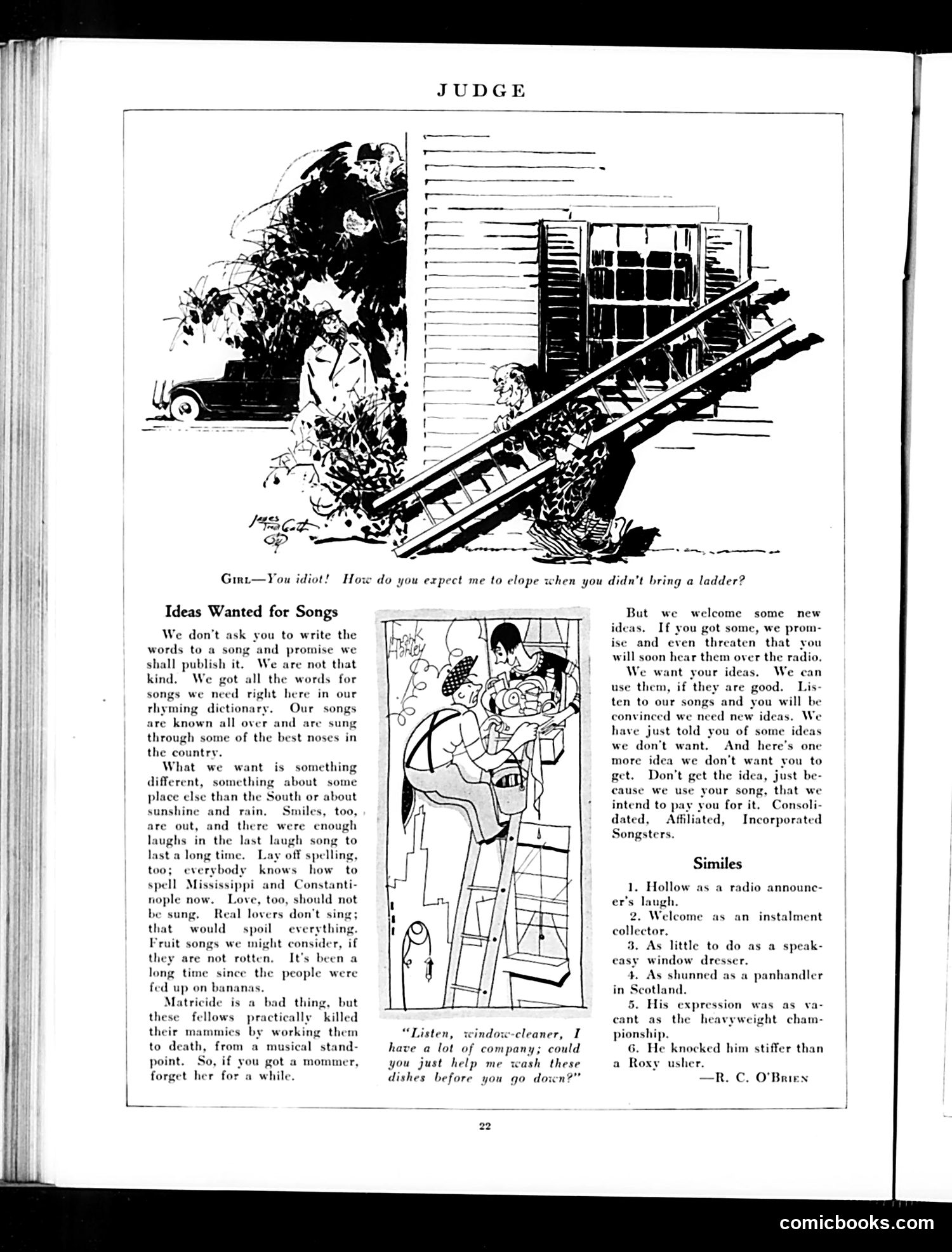
The top cartoon shows a couple attempting an elopement—the woman scolds the man for forgetting a ladder, implying they're escaping from a building (likely her parents' house). This is a standard romantic-comedy gag about young lovers circumventing parental authority. The main article satirizes popular songwriting of the era. Judge mocks the formula-driven, clichéd nature of commercial songs—criticizing overused themes (sunshine, rain, "Smiles," love songs, spelling songs like "Mississippi"). The magazine claims to receive constant song pitches yet refuses to pay contributors, turning the tables on songwriters seeking publication. The "Similes" section offers humorous comparisons reflecting 1920s-30s culture: radio announcers as insincere, installment collectors as unwelcome, speakeasies operating covertly, and the "Roxy usher" (referencing the famous Roxy theater chain's famously aggressive ushers). The satire targets both mass-media mediocrity and commercial exploitation of creative work.
📄 Transcribed text from this page (OCR, searchable)
Machine-transcribed from the original scan — historical spelling and the odd misread are preserved.
JUDGE Gint—You idiot!’ How do you expect me to elope when you didn't bring a ladder? Ideas Wanted for Songs We don’t ask you to write the words to a song and promise we shall publish it. We are not that kind. We got all the words for songs we need right here in our rhyming dictionary. Our songs are known all over and are sung through some of the best noses in the country. What we want is something different, something about some place else than the South or about sunshine and rain, Smiles, too, are out, and there were enough laughs in the last laugh song to last a long time. Lay off spelling, too; everybody knows how to spell Mississippi and Constanti- nople now. Love, too, should not be sung. Real lovers don’t sing; that would = spoil everything. Fruit songs we might consider, if they are not rotten, It’s been a long time since the people were fed up on bananas. Matricide is a bad thing, but these fellows practically killed their mammies by working them to death, from a musical stand- point. if you got a mommer, forget her for a while. “Listen, window-cleaner, I have a lot of company; could you just help me wash these dishes before you go down?” But we welcome some new ideas. If you got some, we prom- ise and even threaten that you will soon hear them over the radio, We want your ideas. We ea use them, if they are good. Lis- ten to our songs and you will be convinced we need new ideas. We have just told you of some ideas we don’t want. And here's one more idea we don’t want you to get. Don’t get the idea, just be- cause we use your song, that we intend to pay you for it. Consoli- dated, Affiliated, Incorporated Songsters. Similes 1. Hollow as a radio announc- er's laugh. 2. Welcome as an instalment collector, As little to do as a speak- casy window dresser. $. As shunned as a panhandler in Scotland. 5. His expression was as va- cant as the heavyweight cham- pionship. 6. He knocked him stiffer than a Roxy usher. —R. C. O'Brien comicbooks.com