
Penny Dreadfuls, 1900 · page 310 of 398
Moths by Ouida — page 310: what you’re looking at
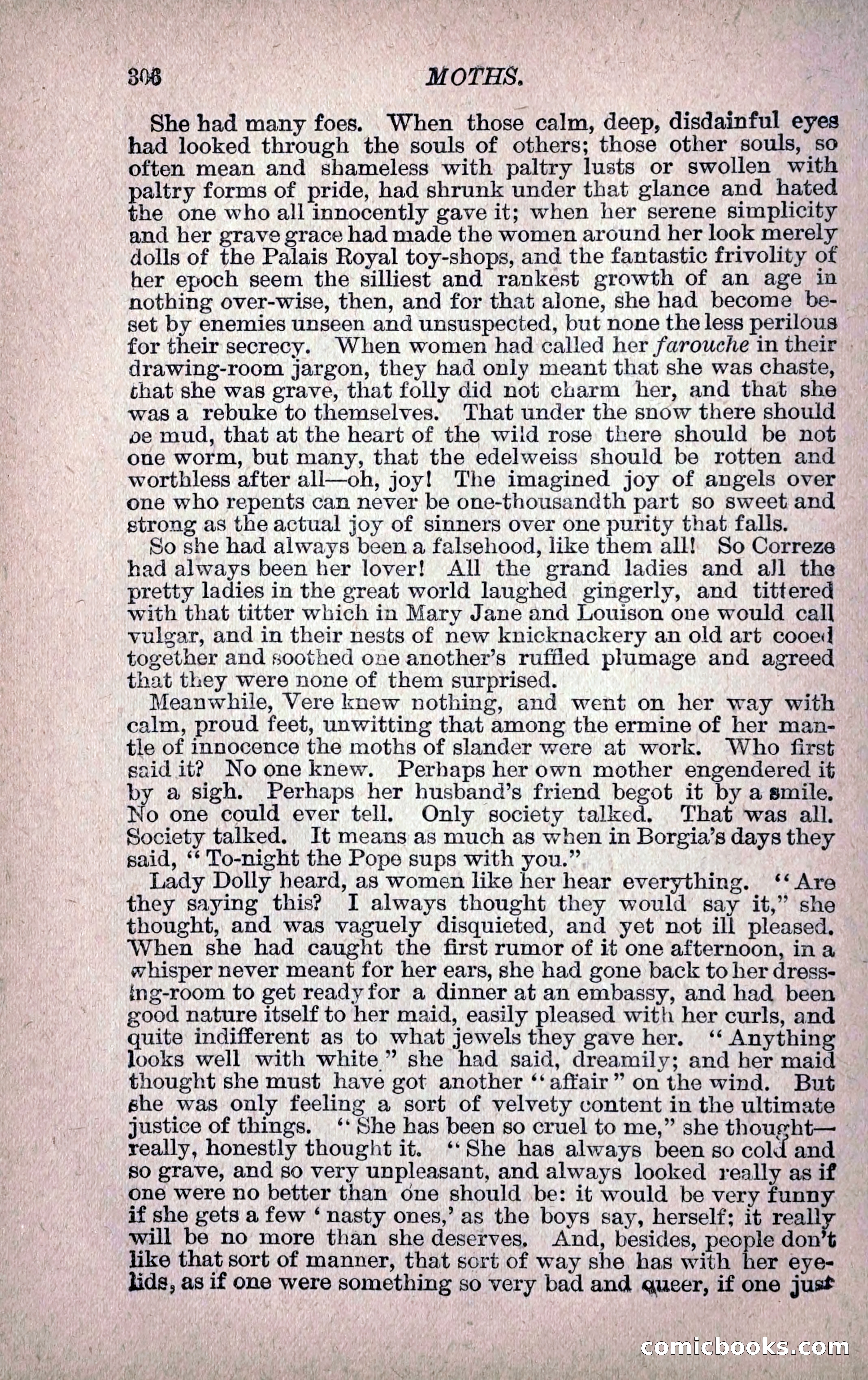
A restored page from Penny Dreadfuls, 1900. Page through the whole issue in the reader above.
📄 Transcribed text from this page (OCR, searchable)
Machine-transcribed from the original scan — historical spelling and the odd misread are preserved.
306 MOTHS. She had many foes. "When those calm, deep, disdainful eyes had looked through the souls of others; those other souls, so often mean and shameless with paltry lusts or swollen with paltry forms of pride, had shrunk under that glance and hated the one who all innocently gave it; when her serene simplicity and her grave grace had made the women around her look merely dolls of the Palais Royal toy-shops, and the fantastic frivolity of her epoch seem the silliest and rankest growth of an age in nothing over-wise, then, and for that alone, she had become be- set by enemies unseen and unsuspected, but none the less perilous for their secrecy. When women had called her farouche in their » drawing-room jargon, they had only meant that she was chaste, chat she was grave, that folly did not charm her, and that she was a rebuke to themselves. That under the snow there should oe mud, that at the heart of the wild rose there should be not one worm, but many, that the edelweiss should be rotten and worthless after all—oh, joy! The imagined joy of angels over one who repents can never be one-thousandth part so sweet and strong as the actual joy of sinners over one purity that falls. So she had always been a falsehood, like them all! So Correze had always been her lover! All the grand ladies and alJl the pretty ladies in the great world laughed gingerly, and tittered with that titter which in Mary Jane and Louison one would call vulgar, and in their nests of new knicknackery an old art cooed together and soothed one another’s ruffied plumage and agreed that they were none of them surprised. Meanwhile, Vere knew nothing, and went on her way with calm, proud feet, unwitting that among the ermine of her man- tle of innocence the moths of slander were at work. Who first said it? Noone knew. Perhaps her own mother engendered it by a sigh. Perhaps her husband’s friend begot it by a smile, No one could ever tell. Only society talked. That was all. Society talked. It means as much as when in Borgia’s days they said, ‘* To-night the Pope sups with you.” Lady Dolly heard, as women like her hear everything. ‘‘ Are they saying this? I always thought they would say it,” she thought, and was vaguely disquieted, and yet not ill pleased. When she had caught the first rumor of it one afternoon, in a whisper never meant for her ears, she had gone back to her dress- ing-room to get readyfor a dinner at an embassy, and had been good nature itself to her maid, easily pleased with her curls, and quite indifferent as to what jewels they gave her. ‘ Anything looks well with white ” she had said, dreamily; and her maid thought she must have got another ‘‘affair” on the wind. But she was only feeling a sort of velvety content in the ultimate justice of things. ‘* She has been so cruel to me,” she thought— really, honestly thought it. ‘She has always been so cold and so grave, and so very unpleasant, and always looked really as if one were no better than one should be: it would be very funny if she gets a few ‘ nasty ones,’ as the boys say, herself; it really will be no more than she deserves, And, besides, people don’t like that sort of manner, that sort of way she has with her eye- lids, as if one were something so very bad and queer, if one just comicbooks.com