
Penny Dreadfuls, 1900 · page 311 of 398
Moths by Ouida — page 311: what you’re looking at
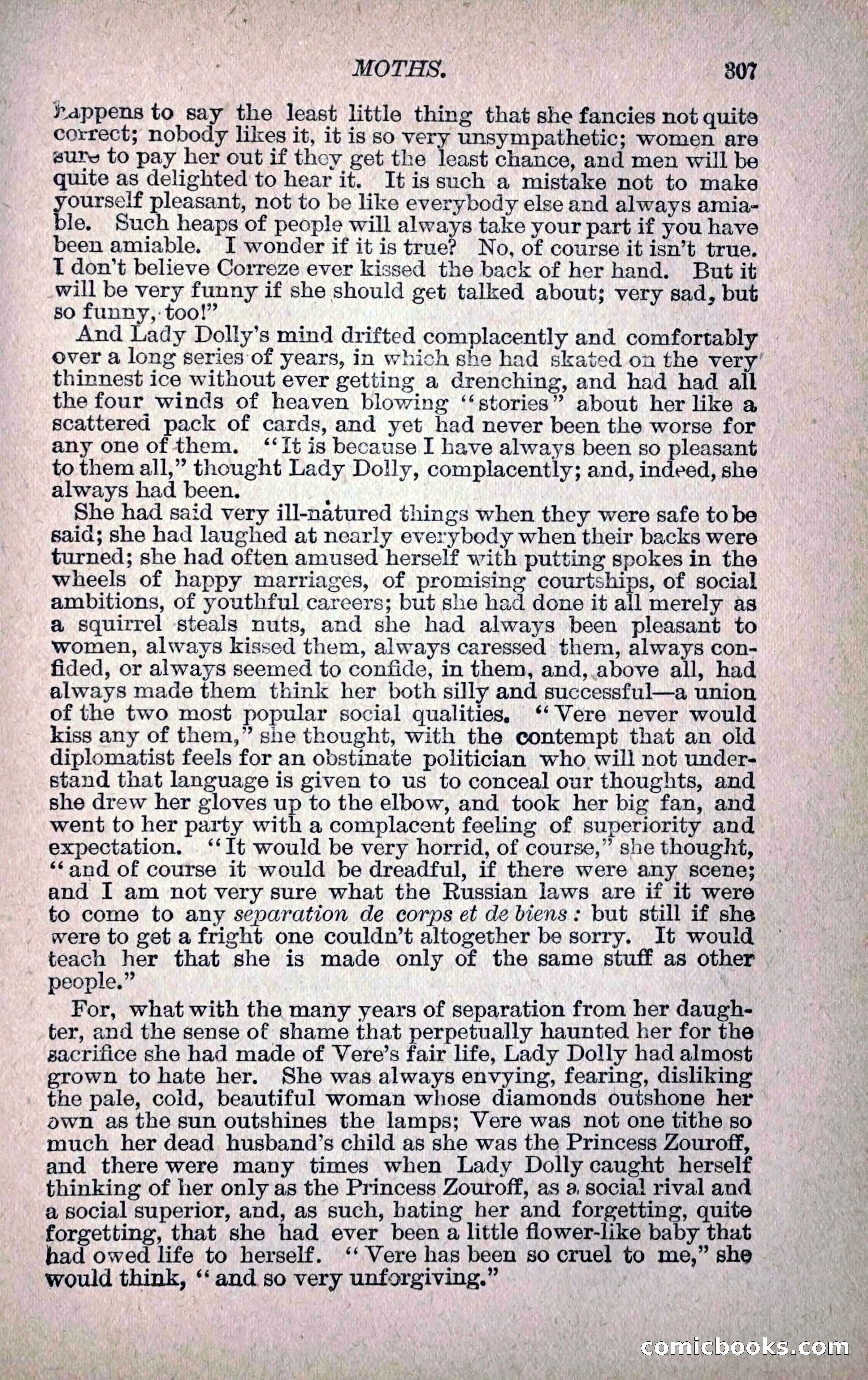
A restored page from Penny Dreadfuls, 1900. Page through the whole issue in the reader above.
📄 Transcribed text from this page (OCR, searchable)
Machine-transcribed from the original scan — historical spelling and the odd misread are preserved.
MOTHS. 307 yappens to say the least little thing that she fancies not quite correct; nobody likes it, it is so very unsympathetic; women are eure to pay her out if they get the least chance, and men will be quite as delighted to hear it. Itissuch a mistake not to make yourself pleasant, not to be like everybody else and always amia- ble. Such heaps of people will always take your part if you have been amiable. I wonder if it is true? No, of course it isn’t true. 1 don’t believe Correze ever kissed the back of her hand. But it will be very funny if she should get talked about; very sad, but so funny,: too!” And Lady Dolly’s mind drifted complacently and comfortably — over a long series of years, in which she had skated on the very’ thinnest ice without ever getting a drenching, and had had all the four winds of heaven blowing ‘‘stories” about her like a scattered pack of cards, and yet had never been the worse for any one of them. ‘‘{tis because I have always been so pleasant to them all,” thought Lady Dolly, complacently; and, indeed, she always had been. ( She had said very ill-natured things when they were safe to be said; she had laughed at nearly everybody when their backs were turned; she had often amused herself with putting spokes in the wheels of happy marriages, of promising courtships, of social ambitions, of youthful careers; but she had done it all merely as a squirrel steals nuts, and she had always been pleasant to women, always kissed them, always caressed them, always con- fided, or always seemed to confide, in them, and, above all, had always made them think her both silly and successful—a union of the two most popular social qualities, ‘‘ Vere never would kiss any of them,” she thought, with the contempt that an old diplomatist feels for an obstinate politician who will not under- stand that language is given to us to conceal our thoughts, and she drew her gloves up to the elbow, and took her big fan, and went to her party with a complacent feeling of superiority and expectation. ‘‘It would be very horrid, of course,” she thought, ‘‘and of course it would be dreadful, if there were any scene; and I am not very sure what the Russian laws are if it were to come to any separation de corps et de biens: but still if she _ were to get a fright one couldn’t altogether be sorry. It would teach her that she is made only of the same stuff as other people.” For, what with the many years of separation from her daugh- ter, and the sense of shame that perpetually haunted her for the sacrifice she had made of Vere’s fair life, Lady Dolly had almost grown to hate her. She was always envying, fearing, disliking the pale, coid, beautiful woman whose diamonds outshone her own as the sun outshines the lamps; Vere was not one tithe so much her dead husband’s child as she was the Princess Zouroff, and there were many times when Lady Dolly caught herself thinking of her only as the Princess Zouroff, as a, social rival and a social superior, and, as such, bating her and forgetting, quite forgetting, that she had ever been a little flower-like baby that had owed life to herself. ‘‘ Vere has been so cruel to me,” she would think, ‘‘and so very unforgiving.” comicboo <n Ge)