
Penny Dreadfuls, 1860 · page 169 of 400
The Mysteries of the Court of London — page 169: what you’re looking at
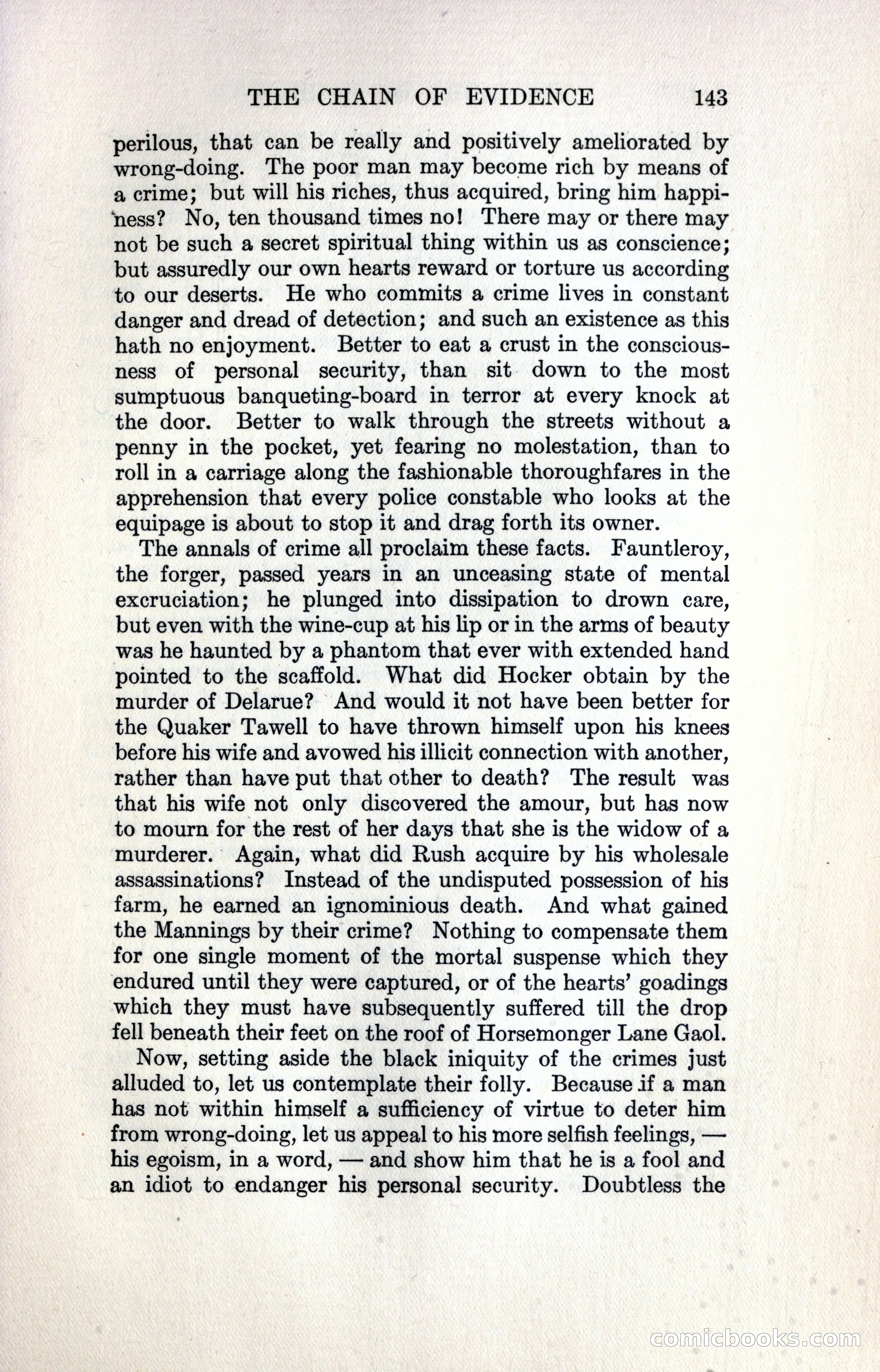
A restored page from Penny Dreadfuls, 1860. Page through the whole issue in the reader above.
📄 Transcribed text from this page (OCR, searchable)
Machine-transcribed from the original scan — historical spelling and the odd misread are preserved.
THE CHAIN OF EVIDENCE 143 perilous, that can be really and positively ameliorated by wrong-doing. The poor man may become rich by means of a crime; but will his riches, thus acquired, bring him happi- ness? No, ten thousand times no! There may or there may not be such a secret spiritual thing within us as conscience; but assuredly our own hearts reward or torture us according to our deserts. He who commits a crime lives in constant danger and dread of detection; and such an existence as this hath no enjoyment. Better to eat a crust in the conscious- ness of personal security, than sit down to the most sumptuous banqueting-board in terror at every knock at the door. Better to walk through the streets without a penny in the pocket, yet fearing no molestation, than to roll in a carriage along the fashionable thoroughfares in the apprehension that every police constable who looks at the equipage is about to stop it and drag forth its owner. The annals of crime all proclaim these facts. Fauntleroy, the forger, passed years in an unceasing state of mental excruciation; he plunged into dissipation to drown care, but even with the wine-cup at his lip or in the arms of beauty was he haunted by a phantom that ever with extended hand pointed to the scaffold. What did Hocker obtain by the murder of Delarue? And would it not have been better for the Quaker Tawell to have thrown himself upon his knees before his wife and avowed his illicit connection with another, rather than have put that other to death? The result was that his wife not only discovered the amour, but has now to mourn for the rest of her days that she is the widow of a murderer. Again, what did Rush acquire by his wholesale assassinations? Instead of the undisputed possession of his farm, he earned an ignominious death. And what gained the Mannings by their crime? Nothing to compensate them for one single moment of the mortal suspense which they endured until they were captured, or of the hearts’ goadings which they must have subsequently suffered till the drop fell beneath their feet on the roof of Horsemonger Lane Gaol. Now, setting aside the black iniquity of the crimes just alluded to, let us contemplate their folly. Because if a man has not within himself a sufficiency of virtue to deter him from wrong-doing, let us appeal to his more selfish feelings, — his egoism, in a word, — and show him that he is a fool and an idiot to endanger his personal security. Doubtless the CONNIEOOO@ SS (GO)