
Pulp Fiction, 1922 · page 56 of 202
Adventure Magazine Cover — page 56: what you’re looking at
A restored page from Pulp Fiction, 1922. Page through the whole issue in the reader above.
📄 Transcribed text from this page (OCR, searchable)
Machine-transcribed from the original scan — historical spelling and the odd misread are preserved.
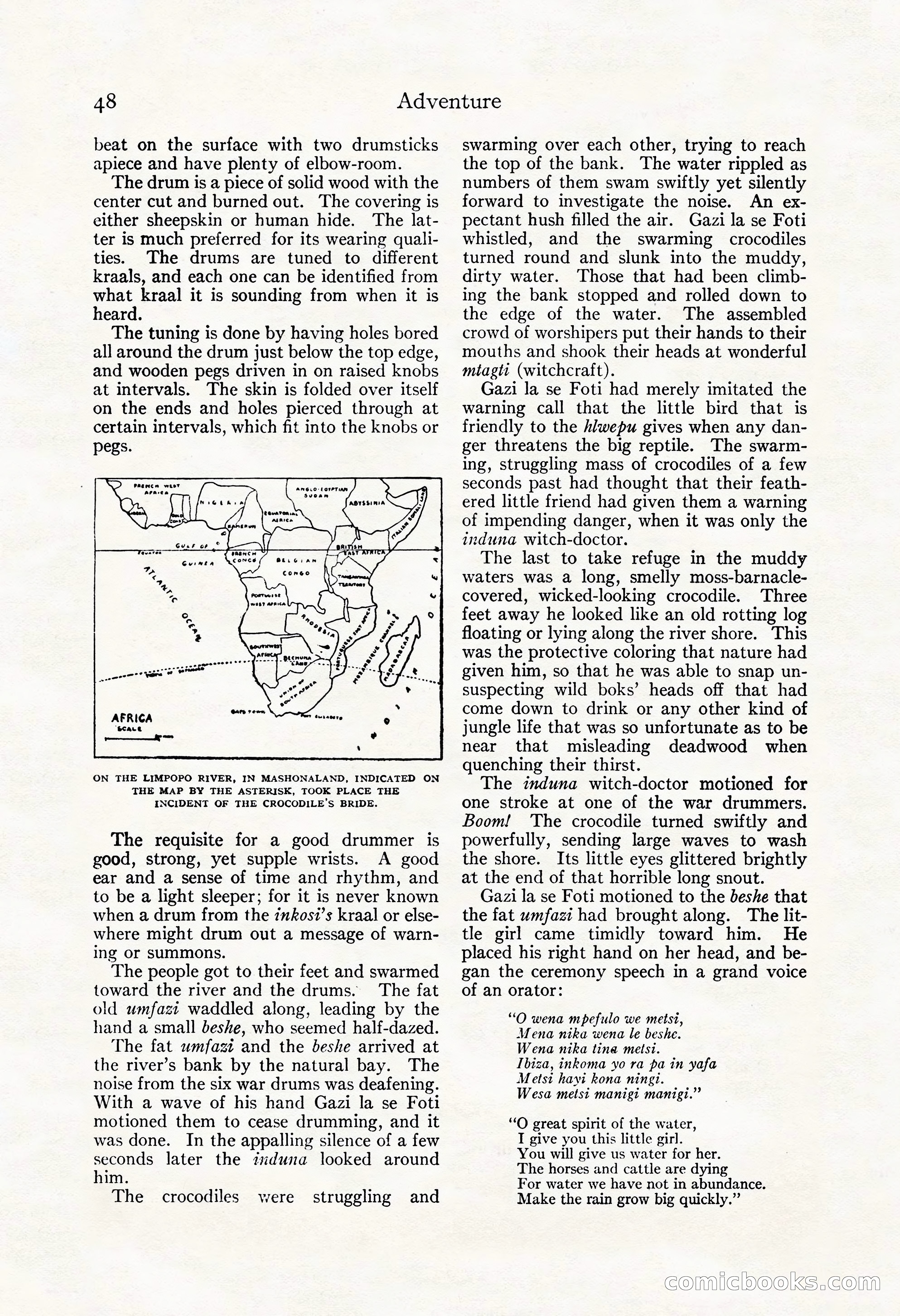
48 beat on the surface with two drumsticks apiece and have plenty of elbow-room. The drum is a piece of solid wood with the center cut and burned out. The covering is either sheepskin or human hide. The lat- ter is much preferred for its wearing quali- ties. The drums are tuned to different kraals, and each one can be identified from what kraal it is sounding from when it is heard. The tuning is done by having holes bored all around the drum just below the top edge, and wooden pegs driven in on raised knobs at intervals. The skin is folded over itself on the ends and holes pierced through at certain intervals, which fit into the knobs or pegs. Cit £ AFRICA ‘ecace om e ON THE LIMPOPO RIVER, IN MASHONALAND, INDICATED ON THE MAP BY THE ASTERISK, TOOK PLACE THE INCIDENT OF THE CROCODILE’S BRIDE. The requisite for a good drummer is good, strong, yet supple wrists. A good ear and a sense of time and rhythm, and to be a light sleeper; for it is never known when a drum from the 7kosz’s kraal or else- where might drum out a message of warn- Ing or summons. The people got to their feet and swarmed toward the river and the drums. The fat old umfazt waddled along, leading by the hand a small beshe, who seemed half-dazed. The fat umfazt and the beshe arrived at the river’s bank by the natural bay. The noise from the six war drums was deafening. With a wave of his hand Gazi la se Foti motioned them to cease drumming, and it was done. In the appalling silence of a few seconds later the zxduna looked around him. The _ crocodiles were struggling and Adventure swarming over each other, trying to reach the top of the bank. The water rippled as numbers of them swam swiftly yet silently forward to investigate the noise. An ex- pectant hush filled the air. Gazi la se Foti whistled, and the swarming crocodiles turned round and slunk into the muddy, dirty water. Those that had been climb- ing the bank stopped and rolled down to the edge of the water. The assembled crowd of worshipers put their hands to their mouths and shook their heads at wonderful miagti (witchcraft). Gazi la se Foti had merely imitated the warning call that the little bird that is friendly to the klwepu gives when any dan- ger threatens the big reptile. The swarm- ing, struggling mass of crocodiles of a few seconds past had thought that their feath- ered little friend had given them a warning of impending danger, when it was only the induna witch-doctor. The last to take refuge in the muddy waters was a long, smelly moss-barnacle- covered, wicked-looking crocodile. Three feet away he looked like an old rotting log floating or lying along the river shore. This was the protective coloring that nature had given him, so that he was able to snap un- suspecting wild boks’ heads off that had come down to drink or any other kind of jungle life that was so unfortunate as to be near that misleading deadwood when quenching their thirst. The induna witch-doctor motioned for one stroke at one of the war drummers. Boom! The crocodile turned swiftly and powerfully, sending large waves to wash the shore. Its little eyes glittered brightly at the end of that horrible long snout. Gazi la se Foti motioned to the beshe that the fat umfazi had brought along. The lit- tle girl came timidly toward him. He placed his right hand on her head, and be- gan the ceremony speech in a grand voice of an orator: “O wena mpefulo we metst, Mena ntka wena le beshe. Wena nika tina mets. Ibiza, inkoma vo ra pa in yafa Metst havi kona ning. Wesa metst manigi manigt.” “O great spirit of the water, I give you this little girl. You will give us water for her. The horses and cattle are dying For water we have not in abundance. Make the rain grow big quickly.” C@ (Cc DOOKS C@