
Pulp Fiction, 1922 · page 125 of 200
Adventure Magazine Cover — page 125: what you’re looking at
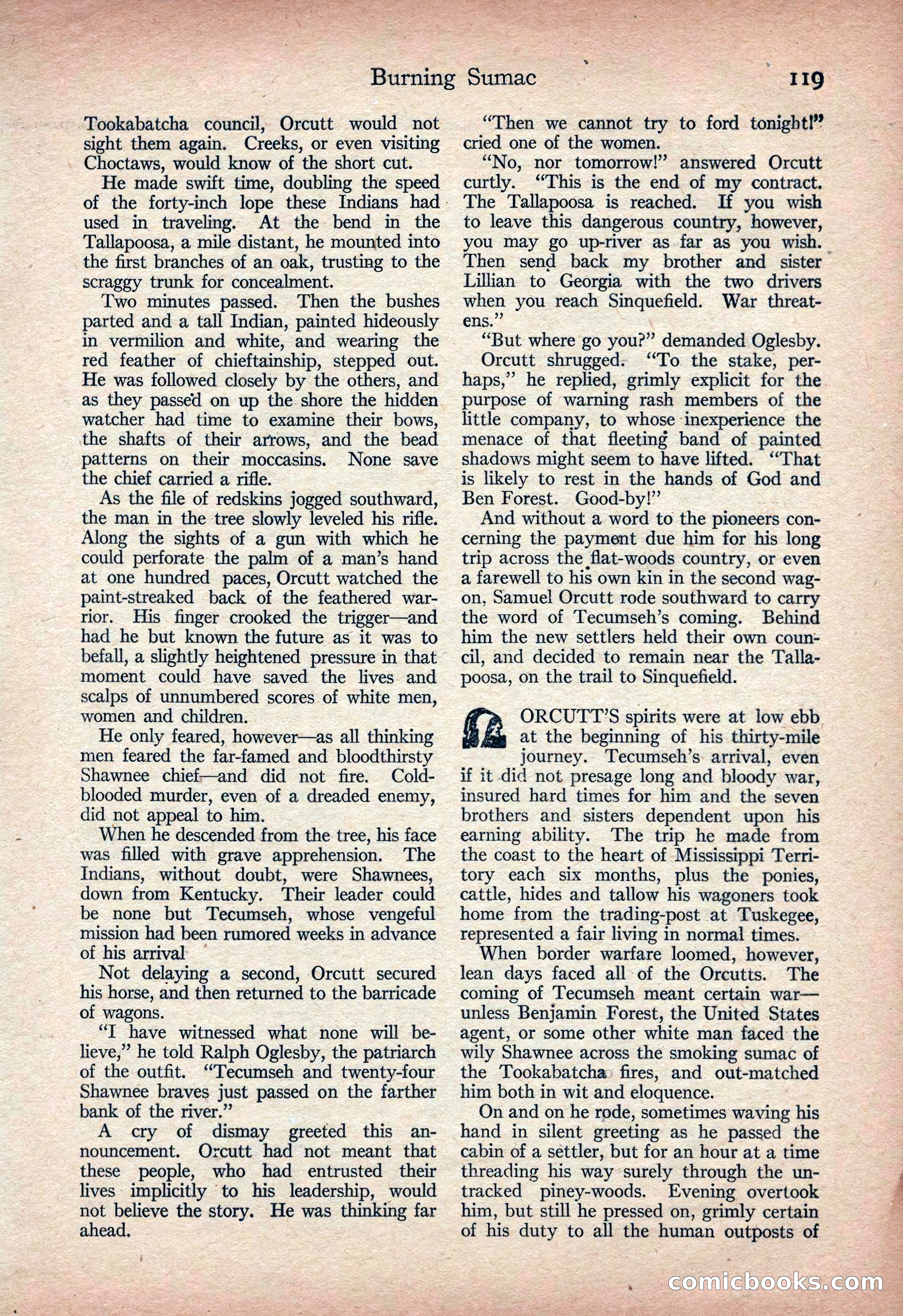
A restored page from Pulp Fiction, 1922. Page through the whole issue in the reader above.
📄 Transcribed text from this page (OCR, searchable)
Machine-transcribed from the original scan — historical spelling and the odd misread are preserved.
nk YP ee tte. S Burning Sumac Tookabatcha council, Orcutt would not sight them again. Creeks, or even visiting Choctaws, would know of the short cut. He made swift time, doubling the speed of the forty-inch lope these Indians had - used in traveling. At the bend in the Tallapoosa, a mile distant, he mounted into the first branches of an oak, trusting to the scraggy trunk for concealment. Two minutes passed. Then the bushes parted and a tall Indian, painted hideously in vermilion and white, and wearing the | red feather of chieftainship, stepped out. He was followed closely by the others, and as they passed on up the shore the hidden watcher had time to examine their bows, the shafts of their arrows, and the bead patterns on their moccasins. None save the chief carried a rifle. As the file of redskins jogged southward, the man in the tree slowly leveled his rifle. Along the sights of a gun with which he could perforate the palm of a man’s hand at one hundred paces, Orcutt watched the paint-streaked back of the feathered war- rior. His finger crooked the trigger—and had he but known the future as it was to befall, a slightly heightened pressure in that moment could have saved the lives and scalps of unnumbered scores of white men, women and children. He only feared, however—as all thinking men feared the far-famed and bloodthirsty Shawnee chief—and did not fire. Cold- blooded murder, even of a dreaded enemy, did not appeal to him. When he descended from the tree, his face was filled with grave apprehension. ‘The Indians, without doubt, were Shawnees, down from Kentucky. Their leader could be none but Tecumseh, whose vengeful mission had been rumored weeks in advance of his arrival — Not delaying a second, Orcutt secured his horse, and then returned to the barricade of wagons. “I have witnessed what none will be- lieve,” he told Ralph Oglesby, the patriarch of the outfit. “Tecumseh and twenty-four Shawnee braves just passed on the farther bank of the river.” A cry of dismay greeted this an- nouncement. Orcutt had not meant that these people, who had entrusted their lives implicitly to his leadership, would not believe the story. He was thinking far ahead, 119 “Then we cannot try to ford tonight!” cried one of the women. “No, nor tomorrow!’ answered Orcutt curtly. “This is the end of my contract. The Tallapoosa is reached. If you wish to leave this dangerous country, however, you may go up-river as far as you wish. Then send back my brother and sister Lilian to Georgia with the two drivers when you reach Sinquefield. War threat- ens.” “But where go you?” demanded Oglesby. Orcutt shrugged: ‘To the stake, per- haps,” he replied, grimly explicit for the purpose of warning rash members of the little company, to whose ‘inexperience the menace of that fleeting band of painted shadows might seem to have lifted. ‘That is likely to rest in the hands of God and Ben Forest. Good-by!” And without a word to the pioneers con- cerning the payment due him for his long trip across the flat-woods country, or even a farewell to his own kin in the second wag- on, Samuel Orcutt rode southward to carry the word of Tecumseh’s coming. Behind him the new settlers held their own coun- cil, and decided to remain near the Talla- poosa, on the trail to Sinquefield. ORCUTT’S spirits were at low ebb at the beginning of his thirty-mile journey. Tecumseh’s arrival, even if it did not presage long and bloody war, insured hard times for him and the seven brothers and sisters dependent upon his earning ability. The trip he made from the coast to the heart of Mississippi Terri- tory each six months, plus the ponies, cattle, hides and tallow his wagoners took home from the trading-post at Tuskegee, represented a fair living in normal times. When border warfare loomed, however, lean days faced all of the Orcutis. The coming of Tecumseh meant certain war— unless Benjamin Forest, the United States agent, or some other white man faced the wily Shawnee across the smoking sumac of the Tookabatcha: fires, and out-matched him both in wit and eloquence. On and on he rode, sometimes waving his hand in silent greeting as he passed the cabin of a settler, but for an hour at a time threading his way surely through the un- tracked piney-woods. Evening overtook him, but still he pressed on, grimly certain of his duty to all the human outposts of Echoo com <S (E(9) m