
Pulp Fiction, 1922 · page 55 of 200
Adventure Magazine Cover — page 55: what you’re looking at
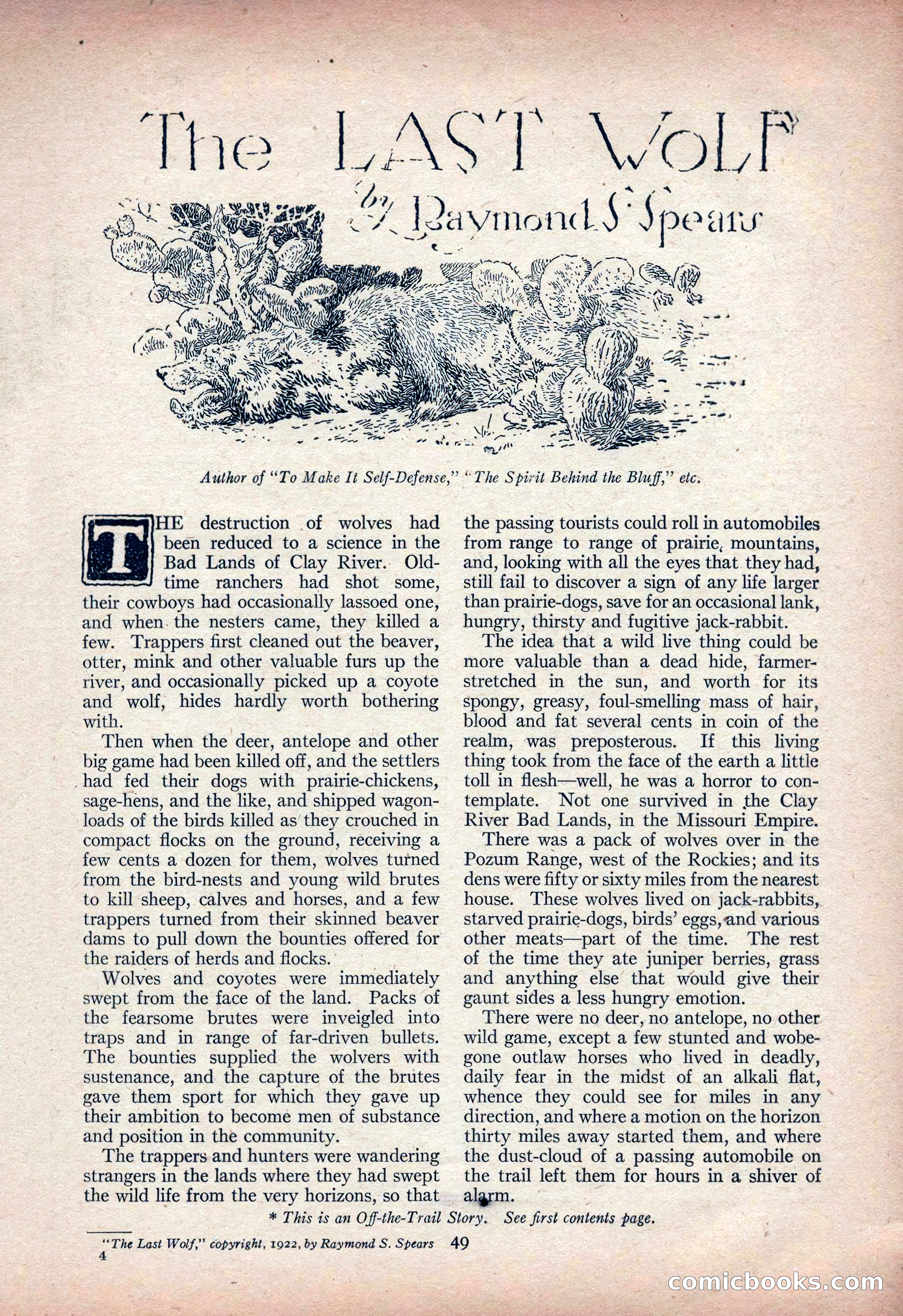
A restored page from Pulp Fiction, 1922. Page through the whole issue in the reader above.
📄 Transcribed text from this page (OCR, searchable)
Machine-transcribed from the original scan — historical spelling and the odd misread are preserved.
ee \ NEF E/ Sie Pe |) ¥ 3 A j § > C > 7. ce oa VINONCL [>< ra ae @e - om Yael) ae op Oe Bae el ~ ~ é - ern. » oe NNO ay WSS Se x > Be. et yes ~ its U ~N x v wvce a aS — on SGA. aos yea WSS | ' At inate ' 7 Ss 3 > Ssh te z» he) Author of ‘To Make Ii Self-Defense,” “The Spirit Behind the Bluff,” etc. HE destruction of wolves had been reduced to a science in the Bad Lands of Clay River. Old- time ranchers had shot some, their cowboys had occasionally lassoed one, and when. the nesters came, they killed a few. Trappers first cleaned out the beaver, otter, mink and other valuable furs up the river, and occasionally picked up a coyote and wolf, hides hardly worth bothering with. Then when the deer, antelope and other big game had been killed off, and the settlers -had fed their dogs with prairie-chickens, sage-hens, and the like, and shipped wagon- . loads of the birds killed as’ they crouched in compact flocks on the ground, receiving a few cents a dozen for them, wolves turned from the bird-nests and young wild brutes to kill sheep, calves and horses, and a few trappers turned from their skinned beaver dams to pull down the bounties offered for the raiders of herds and flocks. Wolves and coyotes were immediately swept from the face of the land. Packs of the fearsome brutes were inveigled into traps and in range of far-driven bullets. The bounties supplied the wolvers with sustenance, and the capture of the brutes gave them sport for which they gave up their ambition to become men of substance and position in the community. The trappers and hunters were wandering strangers in the lands where they had swept the wild life from the very horizons, so that the passing tourists could roll in automobiles from range to range of prairie, mountains, and, looking with all the eyes that they had, still fail to discover a sign of any life larger than prairie-dogs, save for an occasional lank, hungry, thirsty and fugitive jack-rabbit. The idea that a wild live thing could be more valuable than a dead hide, farmer- stretched in the sun, and worth for its spongy, greasy, foul-smelling mass of hair, blood and fat several cents in coin of the realm, was preposterous. If this living thing took from the face of the earth a littie toll in flesh—well, he was a horror to con- template. Not one survived in the Clay River Bad Lands, in the Missouri Empire. There was a pack of wolves over in the Pozum Range, west of the Rockies; and its dens were fifty or sixty miles from the nearest house. These wolves lived on jack-rabbits, starved prairie-dogs, birds’ eggs,and various other meats—part of the time. The rest of the time they ate juniper berries, grass and anything else that would give their gaunt sides a less hungry emotion. There were no deer, no antelope, no other wild game, except a few stunted and wobe- gone outlaw horses who lived in deadly, daily fear in the midst of an alkali flat, whence they could see for miles in any direction, and where a motion on the horizon thirty miles away started them, and where the dust-cloud of a passing automobile on the trail left them for hours in a shiver of alarm. * This 1s an Off-the-Trail Story. See first contents page. < The Last Wolf,” copyright, 1922, by Raymond S. Spears 49 COMIELOO (E)