
Pulp Fiction, 1922 · page 184 of 196
Adventure, February 20, 1922 — page 184: what you’re looking at
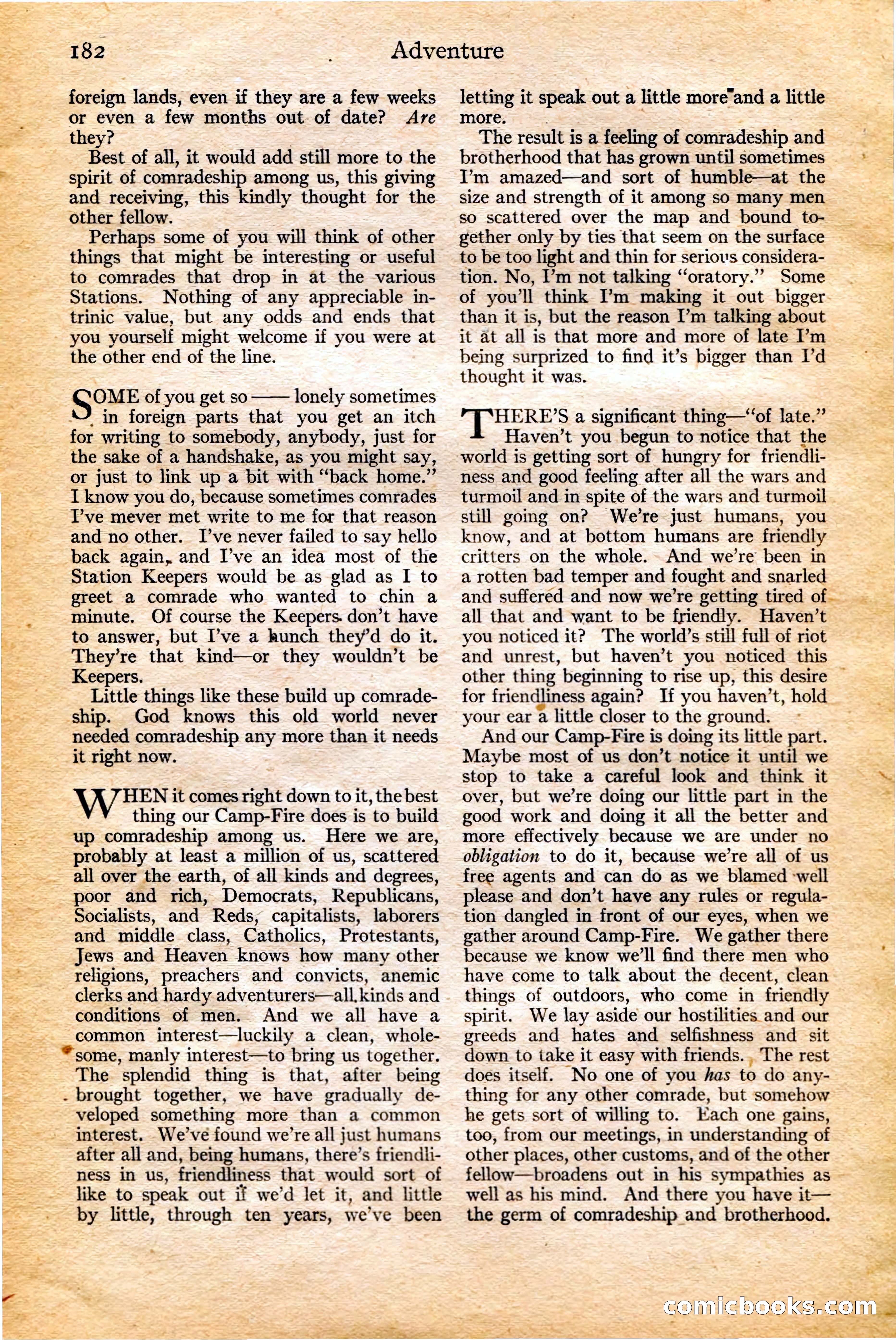
A restored page from Pulp Fiction, 1922. Page through the whole issue in the reader above.
📄 Transcribed text from this page (OCR, searchable)
Machine-transcribed from the original scan — historical spelling and the odd misread are preserved.
‘up comradeship among us. 182 foreign lands, even if they are a few weeks or even a few months out of date? Are they? 3 Best of all, it would add still more to the spirit of comradeship among us, this giving and receiving, this kindly thought for the other fellow. Perhaps some of you will think of other things that might be interesting or useful to comrades that drop in at the various Stations. Nothing of any appreciable in- trinic value, but any odds and ends that - you yourself might welcome if you were at the other end of the line. SOME of you get so —— lonely sometimes 7 in foreign parts that you get an itch for writing to somebody, anybody, just for the sake of a handshake, as you might say, or just to link up a bit with “back home.” I know you do, because sometimes comrades I’ve mever met write to me for that reason and no other. I’ve never failed to say hello back again, and I’ve an idea most of the Station Keepers would be as glad as I to greet a comrade who wanted to chin a minute. Of course the Keepers. don’t have to answer, but I’ve a hunch they'd do it. They’re that kind—or they wouldn’t be Keepers. Little things like these build up comrade- * ship. God knows this old world never needed comradeship any more than it needs it right now. WHEN it comes right down to it, the best thing our Camp-Fire does is to build Here we are, probably at least a million of us, scattered _ all over the earth, of all kinds and degrees, _.. poor and rich, Democrats, Republicans, Socialists, and Reds, capitalists, laborers and middle class, Catholics, Protestants, Jews and Heaven knows how many other religions, preachers and convicts, anemic clerks and hardy adventurers—all. kinds and And we all have a common interest—luckily a clean, whole- conditions of men. some, manly interest—to bring us together. The splendid thing is that, after being - brought together, we have gradually de- veloped something more than a common interest. _We’vé found we're all just humans after all and, being humans, there’s friendli- ness in us, friendliness that would sort of like to speak out if we'd let it, and little by little, through ten years, we’ve been Adventure letting it speak out a little more“and a little more. | | The result is a feeling of comradeship and brotherhood that has grown until sometimes I’m amazed—and sort of humble—at the size and strength of it among so many men so scattered over the map and bound to- gether only by ties that seem on the surface to be too light and thin for serious considera- tion. No, I’m not talking “oratory.”’ Some of you'll think I’m making it out bigger. than it is, but the reason I’m talking about it at all is that more and more of late I’m being surprized to find it’s bigger than I’d thought it was. apaEsss a significant thing—‘‘of late.” Haven’t you begun to notice that the world is getting sort of hungry for friendli- ness and good feeling after all the wars and turmoil and in spite of the wars and turmoil still going on? We're just humans, you know, and at bottom humans are friendly critters on the whole. And we’re been in a rotten bad temper and fought and snarled and suffered and now we're getting tired of all that and want to be friendly. Haven’t you noticed it? The world’s still full of riot and unrest, but haven’t you noticed this other thing beginning to rise up, this desire for friendliness again? If you haven't, hold your ear a little closer to the ground. And our Camp-Fire is doing its little part. Maybe most of us don’t notice it until we stop to take a careful look and think it over, but we’re doing our little part in the good work and doing it all the better and more effectively because we are under no obligation to do it, because we’re all of us free agents and can do as we blamed ‘well please and don’t have any rules or regula- tion dangled in front of our eyes, when we gather around Camp-Fire. We gather there because we know we'll find there men who have come to talk about the decent, clean things of outdoors, who come in friendly spirit. We lay aside our hostilities and our greeds and hates and selfishness and sit down to take it easy with friends. , The rest does itself. No one of you has to do any- thing for any other comrade, but somehow he gets sort of willing to. Each one gains, too, from our meetings, in understanding of other places, other customs, and of the other fellow—broadens out in his sympathies as - well as his mind. And there you have it— the germ of comradeship and brotherhood. Eomicboo ° a