
Pulp Fiction, 1922 · page 72 of 196
Adventure, February 20, 1922 — page 72: what you’re looking at
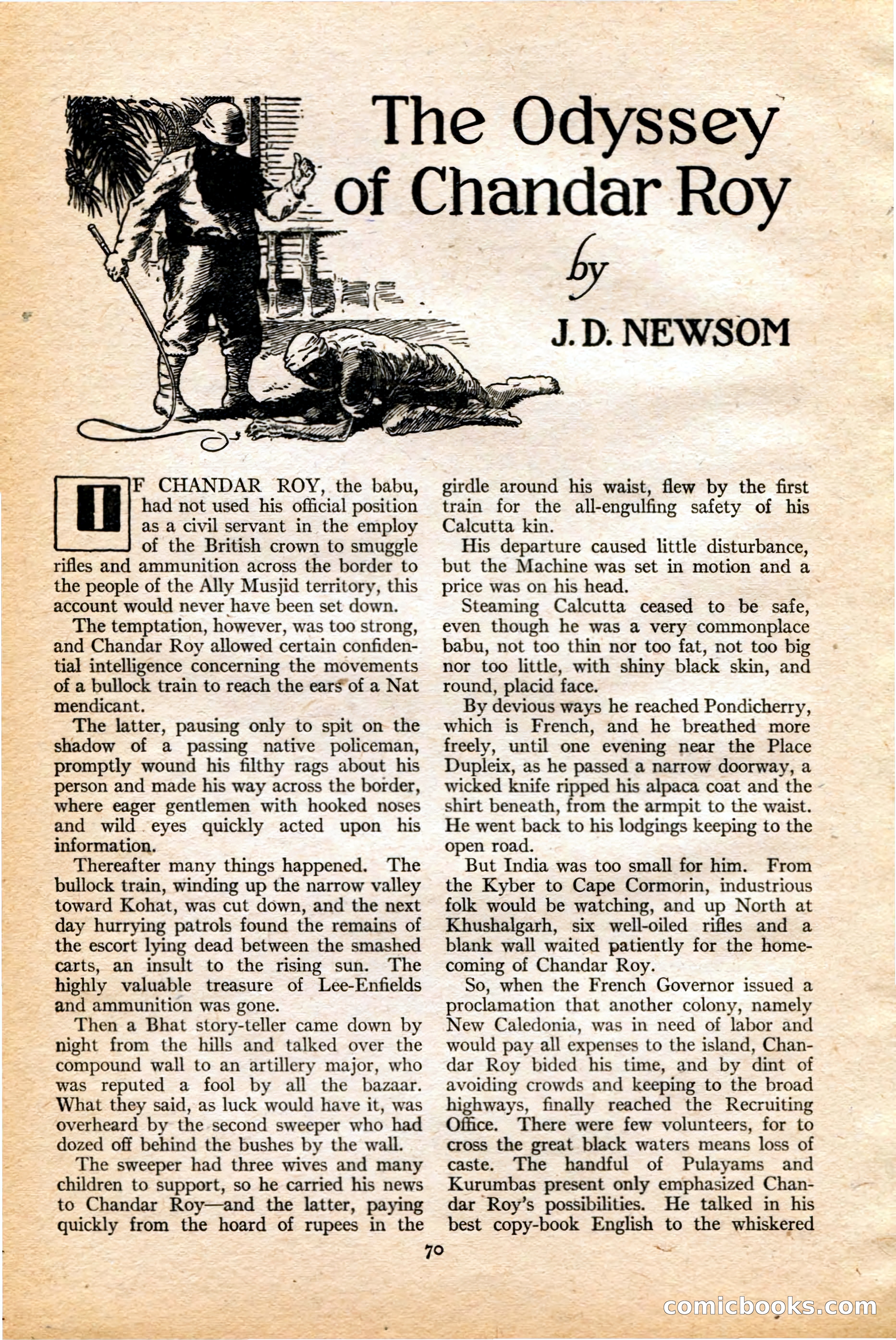
A restored page from Pulp Fiction, 1922. Page through the whole issue in the reader above.
📄 Transcribed text from this page (OCR, searchable)
Machine-transcribed from the original scan — historical spelling and the odd misread are preserved.
a52 ee F CHANDAR ROY, the babu, had not used his official position as a civil servant in the employ of the British crown to smuggle rifles and ammunition across the border to the people of the Ally Musjid territory, this account would never have been set down. The temptation, however, was too strong, and Chandar Roy allowed certain confiden- tial intelligence concerning the movements of a bullock train to reach the ears’of a Nat mendicant. The latter, pausing only to spit on the shadow of a passing native policeman, promptly wound his filthy rags about his person and made his way across the border, where eager gentlemen with hooked noses and wild eyes quickly acted upon his information. Thereafter many things happened. The bullock train, winding up the narrow valley toward Kohat, was cut down, and the next day hurrying patrols found the remains of the escort lying dead between the smashed carts, an insult to the rising sun. The highly valuable treasure of Lee-Enfields and ammunition was gone. Then a Bhat story-teller came down by night from the hills and talked over the compound wall to an artillery major, who was reputed a fool by all the bazaar. S14 4 - What they said, as luck would have it, was overheard by the second sweeper who had dozed off behind the bushes by the wall. The sweeper had three wives and many children to support, so he carried his news to Chandar Roy—and the latter, paying quickly from the hoard of rupees in the 79 The Odyssey ? of Chandar Roy by J.D. NEWSOM S* JAE Lota Ya girdle around his waist, flew by the first train for the all-engulfing safety of his Calcutta kin. His departure caused little disturbance, but the Machine was set in motion and a price was on his head. Steaming Calcutta ceased to be safe, even though he was a very commonplace babu, not too thin nor too fat, not too big nor too little, with shiny black skin, and round, placid face. By devious ways he reached Pondicherry, which is French, and he breathed more freely, until one evening near the Place Dupleix, as he passed a narrow doorway, a wicked knife ripped his alpaca coat and the shirt beneath, from the armpit to the waist. He went back to his lodgings keeping to the open road. But India was too small for him. From the Kyber to Cape Cormorin, industrious folk would be watching, and up North at Khushalgarh, six well-oiled rifles and a blank wall waited patiently for the home- coming of Chandar Roy. So, when the French Governor issued a proclamation that another colony, namely New Caledonia, was in need of labor and would pay all expenses to the island, Chan- dar Roy bided his time, and by dint of avoiding crowds and keeping to the broad highways, finally reached the Recruiting Office. There were few volunteers, for to cross the great black waters means loss of caste. The handful of Pulayams and Kurumbas present only emphasized Chan- dar Roy’s possibilities. He talked in his best copy-book English to the whiskered ~. — (E@) (SO AM book Sits